
Houbara bustard display on the Canary steppes
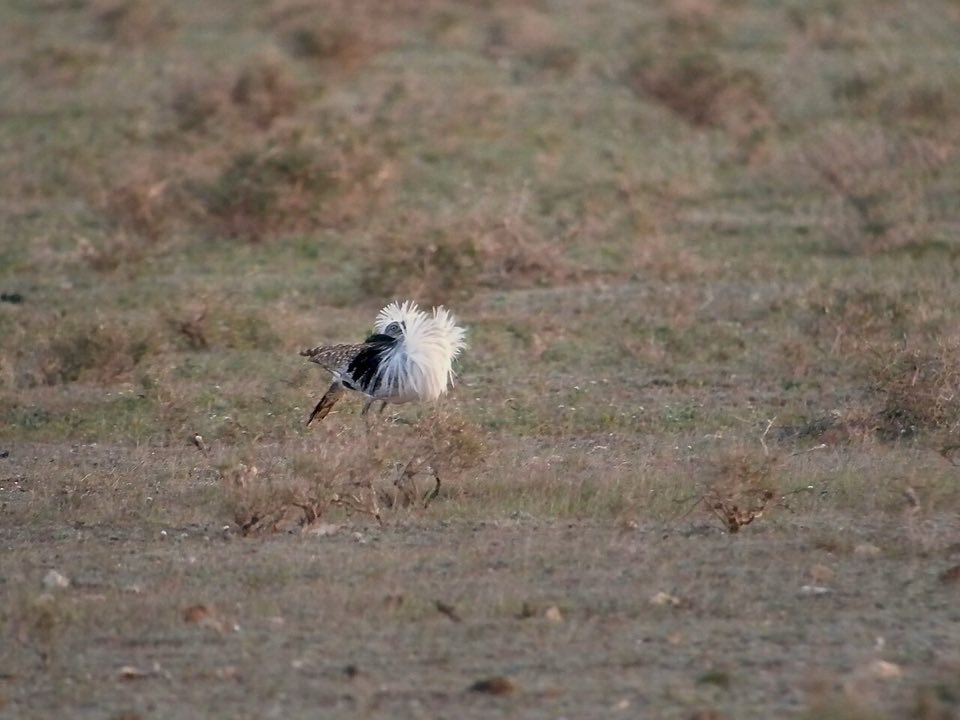
Canarian houbara (Chlamydotis undulata fuertaventurae) — c. 800 birds on Fuerteventura and Lanzarote; cream-coloured courser, black-bellied sandgrouse, stone-curlew, lesser short-toed lark, Barbary falcon. Fuerteventura (El Cotillo, Tindaya) and Lanzarote (El Jable), Canary Islands, Spain.
Best time: 1 Jan – 28 Feb (January to February). Where: El Cotillo plains (Fuerteventura), Tindaya plains (Fuerteventura), El Jable, Teguise (Lanzarote) (Spain). Time of day: Be at the viewpoint before dawn: displays run from first light to about 2 h after sunrise and briefly before sunset.
- You can go on your own
- Free
- Telescope recommended
- Sound 1/5
Open it in the interactive calendarSunrise and sunset listening times for the day you pick, and the map.
When is the best time?
Peak: 1 Jan – 28 Feb. January and February: males strut and 'white-ball' on their dispersed leks at first light; courtship runs December to March, eggs February to April
Active from 1 Dec to 31 Mar (December to March) in a typical year.
Time of day
Be at the viewpoint before dawn: displays run from first light to about 2 h after sunrise and briefly before sunset; by mid morning the birds are walking in the shimmer and almost invisible.
- Dawn display: 30 min before sunrise → 2 h after sunrise
- Evening display: 90 min before sunset → sunset
What will you hear?
Silent theatre: a male running in circles with neck plumes thrown over his head like a white ball, visible for a kilometre at dawn. The soundscape is the trade wind, lesser short-toed larks, stone-curlews and coursers at first light — the plains are otherwise among the quietest places in Spain.
Binoculars?
Telescope recommended. Males display 300 m to a kilometre away on open stony plains; a scope is essential, binoculars find the white 'ball' first.
Where to go
- El Cotillo plains (Fuerteventura) — Stony plain south-east of El Cotillo with a low observation rise; birds to the south and north; reach on foot or bike from the village, no hide, no shade. Map
- Tindaya plains (Fuerteventura) — Plains around the sacred mountain of Tindaya; watch from the tracks. Map
- El Jable, Teguise (Lanzarote) — Sand plain between Sóo and Famara — Lanzarote's main houbara steppe (c. 570 birds on the island). Map
How to go on your own, and what it costs
El Cotillo: from the village take the unpaved track south-east on to the plain before dawn (on foot, bike or car on the existing track) and wait at the low rise; stay on the track. Tindaya: the tracks off the FV-10 around Tindaya village. Lanzarote: the LZ-401/LZ-402 tracks across El Jable between Sóo and Famara. All free, no permits; no off-road driving.
Cost: Free.
Field-recording notes
A visual event on open ground where the trade wind blows all day; the quietest hours are the hour before sunrise, which is also the display hour. Houbaras are endangered and extremely wary (20 m take-off distance): stay on the tracks, never walk towards a displaying male, never drive off-road (the steppes are SPAs and off-piste driving is illegal). Power lines and fences kill birds that flush — don't flush them. Tourist traffic starts at El Cotillo from 09:00.
Sources
- LIFE Hubara Canarias (SEO/BirdLife) – population and SPAs
- Birdingplaces – El Cotillo plains (dawn watch, access)
- Wikipedia – Canarian houbara (courtship December–March)
Similar spectacles
 Great snipe lek at FokstumyraThe great snipe's extraordinary accelerating clicks, rattles and whistles from a group of males displaying on the bog, ruff males in silent lek nearby, whimbrel bubbling, bluethroat song, cranes bugling, snipe drumming everywhere, willow grouse cackling.
 Capercaillie and black grouse leks in the eastern forestsCapercaillie's clicking, cork-pop and grinding song from pine bog edges, wing-beats of cocks flying in, black grouse bubbling on the open bogs; cranes, whooper swans and Tengmalm's owl in the same nights.
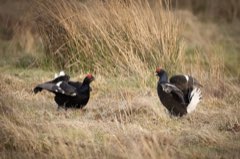 Black grouse leksBubbling 'rookooing' from displaying males, hissing 'tchu-wee' sneezes and flutter jumps; curlew and snipe often in the same soundscape.
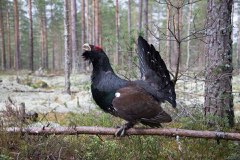 Capercaillie and black grouse — the ones you do not visitThe capercaillie's accelerating clicks, 'cork-pop' and grinding — a very quiet song (audible to ~200 m) that is almost never recorded in Germany without a permit. Black grouse bubbling in the Alps.
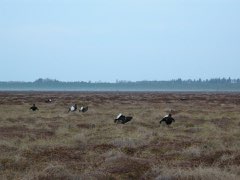 Black grouse leks in the AlpsBubbling 'rookooing' and hissing from males on snow patches at the treeline, ring ouzels, water pipits, and meltwater.
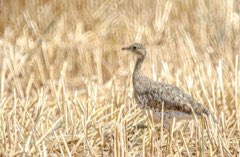 La Crau steppe: little bustard, sandgrouse & stone-curlewLittle bustards' dry 'prrrt' with a foot-stamp and wing-whirr jump, sandgrouse 'catar-catar' flights to drinking pools, calandra larks in continuous song-flight, stone-curlews at dusk.
More: all spectacles in Spain · leks · Spain in January · Spain in February