
Wintering cranes in the Extremadura dehesa
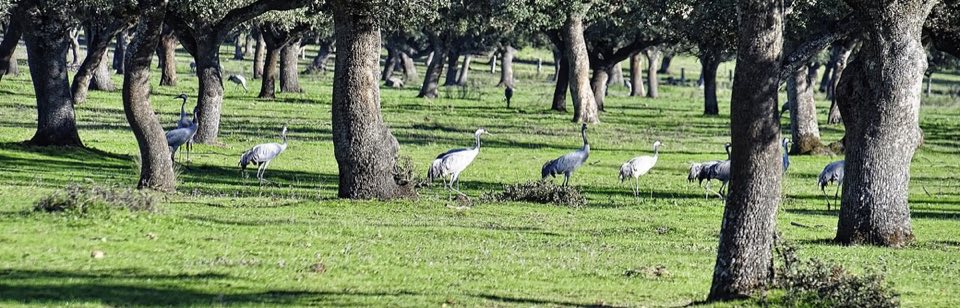
Common crane (Grus grus). Vegas Altas del Guadiana, Badajoz; Cáceres, Spain.
Best time: 20 Nov – 10 Feb (November to February). Where: Parque Periurbano Moheda Alta, Navalvillar de Pela, Embalse de Orellana / Zorita (Vegas Altas), Embalse de Arrocampo, Saucedilla (Cáceres) (Spain). Time of day: The roost fills from an hour before sunset until after dark, in waves.
- You can go on your own
- Free
- Binoculars helpful
- Sound 5/5
Open it in the interactive calendarSunrise and sunset listening times for the day you pick, and the map.
When is the best time?
Peak: 20 Nov – 10 Feb. Late Nov to early Feb (Extremadura hosts about 44% of Western Europe's wintering cranes)
Active from 20 Oct to 5 Mar (October to March) in a typical year.
Time of day
The roost fills from an hour before sunset until after dark, in waves; departure in the half hour around sunrise. By day, bugling families in the dehesa from mid morning.
- Roost arrival: 1 h before sunset → 30 min after last light
- Dawn departure: 30 min before sunrise → 30 min after sunrise
What will you hear?
Tens of thousands of cranes flying into the roosts at sunset in wave after wave, bugling in the acorn dehesa by day, with wintering lapwings, golden plovers and greylags.
Binoculars?
Binoculars helpful. Waves fly in overhead at dusk; binoculars from the Moheda Alta observatories for the roost across the water.
Where to go
- Parque Periurbano Moheda Alta, Navalvillar de Pela — Three observatories for the main roost (30,000+ birds); the interpretation centre's opening has been erratic in recent winters. Map
- Embalse de Orellana / Zorita (Vegas Altas) — Rice stubble feeding areas and reservoir-edge roosts. Map
- Embalse de Arrocampo, Saucedilla (Cáceres) — Warm-water reservoir with hides; cranes plus purple swamphen and bitterns. Map
How to go on your own, and what it costs
Moheda Alta: from Navalvillar de Pela take the EX-115 and the signed track to the park; three free observatories by the roost (interpretation centre hours unreliable). Orellana, Zorita and Arrocampo: public roads and the Arrocampo hides (free, from Saucedilla). Record from roads and observatories only — the dehesa is private.
Cost: Free.
Field-recording notes
Dehesa is private farmland — record from the roads and the public observatories. Hunting season runs Oct–Feb with weekend shooting on many estates. The Festival de las Grullas in Navalvillar de Pela (late Nov/early Dec) brings crowds to Moheda Alta; midweek dusk is quiet. Irrigation pumps in the rice fields are the main mechanical noise.
Sources
Similar spectacles
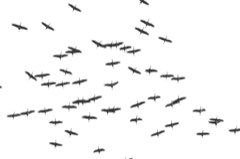 Wintering cranes at ArjuzanxWaves of cranes dropping into the flooded roost after dark, a continuous rolling chorus that carries for kilometres over the pine plantations.
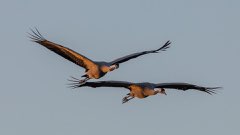 Common cranes buglingTrumpeting bugles carrying over 2 km, unison calls from pairs, and the low rolling contact calls of a roosting group in the reeds.
 Winter wetlands: geese, ducks & cranesGoose flights at dawn, whistling wigeon rafts, cranes bugling as they pass north in late winter.
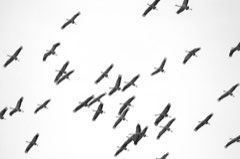 Cranes at Lac du DerTens of thousands of cranes bugling as they leave the lake at first light in wave after wave, then the evening return with the sky full of trumpeting skeins.
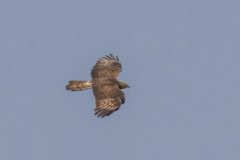 Pyrenean passes: raptor, stork, pigeon & crane migrationMostly visual, but woodpigeon flocks pass with a rush of wings, cranes bugle over the pass, and pre-dawn passerine flight calls stream through — with gunfire from the neighbouring hunting passes.
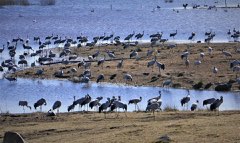 Spring crane staging: Hornborgasjön and PulkenThousands of cranes bugling in chorus — trumpeting that carries for kilometres, rising to a roar when a flock lifts; unison calls of pairs, wing noise of landing flocks, whooper swans and lapwings in the background.
More: all spectacles in Spain · cranes · winter geese, swans and ducks · Spain in January · Spain in February · Spain in November · Spain in December