
Brazzaville: the Congo river and the Djoué at dawn
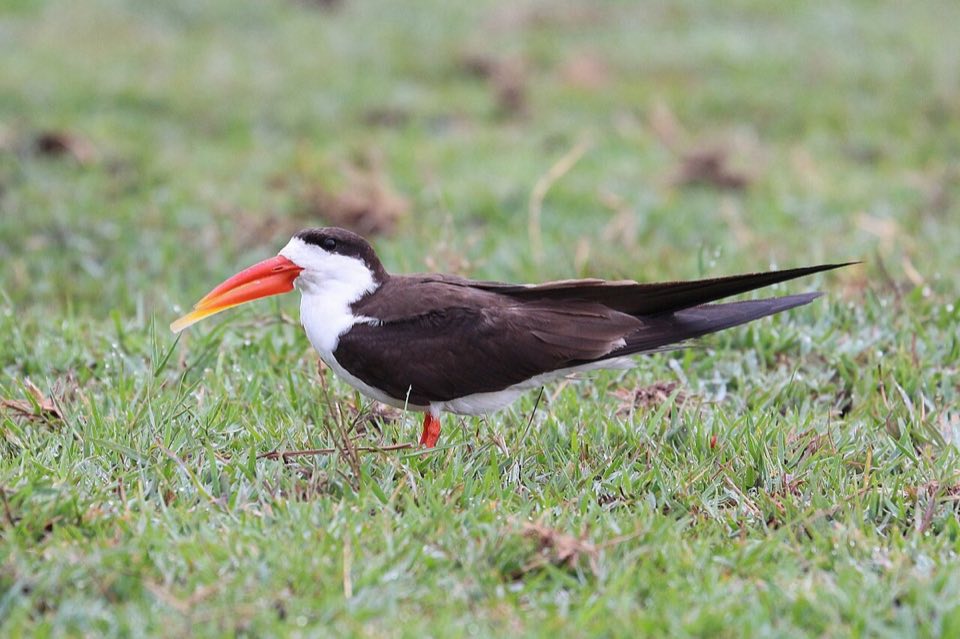
Herons, egrets, African skimmer (seasonal sandbars), pied and giant kingfishers, palm-nut vulture, weaver colonies; fruit bats over the city; frogs on the Djoué. Brazzaville and the Djoué river, Republic of the Congo.
Best time: 1 Jul – 30 Sep (July to September). Where: Corniche and the Rapides du Djoué, Ile Mbamou channel (Republic of the Congo). Time of day: From first light to about 08:00 on the river corniche and the Djoué mouth, before the city's traffic.
- You can go on your own
- Free
- Binoculars helpful
- Sound 2/5
Open it in the interactive calendarSunrise and sunset listening times for the day you pick, and the map.
When is the best time?
Peak: 1 Jul – 30 Sep. July to September: low water exposes the sandbars for skimmers and terns, and the dry season gives the stillest mornings
Active from 1 Jan to 31 Dec (all year) in a typical year.
Time of day
From first light to about 08:00 on the river corniche and the Djoué mouth, before the city's traffic; weaver colonies loud all day in the breeding season (rains)
- River dawn: first light → 08:00
What will you hear?
Not a spectacle but a way in: the Congo river's rapids below the city, kingfishers and herons at the Djoué mouth, weaver colonies in the riverside trees, and the two capitals' noise across the water.
Binoculars?
Binoculars helpful. Kingfishers and herons at the Djoué mouth at close range; binoculars for skimmers on the sandbars.
Where to go
- Corniche and the Rapides du Djoué — Public river front south of the city; the rapids and the Djoué confluence. Map
- Ile Mbamou channel — Pirogue trips into the river islands from the port; sandbars at low water. Map
How to go on your own, and what it costs
Taxi to the Corniche or the Rapides du Djoué at first light; walk the public bank. Pirogue hire to the islands is a negotiation at the port.
Cost: Free; pirogue hire by negotiation, check current prices.
Field-recording notes
Public riverbank, no permits; be aware of the sensitivities around photographing the river border with Kinshasa and any military installations. The river is a shipping lane and Kinshasa's noise carries across at night. Useful for testing rigs, for the rapids, and as a first morning in the country.
Sources
Similar spectacles
 Tåkern: booming bitterns in Europe's biggest reedbedsThe deep, bottle-blown 'whump' of bitterns booming across the reeds, several males answering; reed, sedge and Savi's warblers, water rail squeals, cranes and geese; at Väversunda in late May the strange clicking display of great snipe towards nightfall.
 Monte Alén: the Río Muni rainforest dawn, elephants and the goliath frog riversA Central African lowland chorus: hornbills whooshing overhead, the bubbling of greenbuls and the far pant-hoots of chimpanzees, mandrill grunts, elephant rumbles at the swamp edge. The goliath frog itself is nearly silent (no vocal sac) — its rivers are a night of other frogs and the roar of water over rock.
 Obô forest dawn: São Tomé's endemic birds above Bom SucessoA dawn chorus made of species found nowhere else: the oriole's fluting, the thrush, the weavers' chatter, the giant sunbird's rattle from the canopy, speirops flocks; the croak of the dwarf olive ibis in the deep forest at Monte Carmo in the first light, and the scops owl's whistle after dark. Dripping forest, streams, no traffic.
 Swift screaming partiesHigh-speed screaming packs racing around rooftops, doppler passes at head height, and the sound of summer evenings.
 Müritz: cranes, ospreys and sea eagles in summerCrane pairs duetting at dawn from the bogs, bittern booming, osprey whistles over the lakes, eagle calls, woodlark and nightjar on the sandy heaths at dusk, marsh frogs; in autumn thousands of cranes flying into Rederangsee.
 Bee-eater & roller coloniesRolling 'prruip' calls of bee-eaters overhead all day, the crow-like chatter of rollers.
More: all spectacles in the Republic of the Congo · dawn choruses · the Republic of the Congo in July · the Republic of the Congo in August · the Republic of the Congo in September