
Swift screaming parties
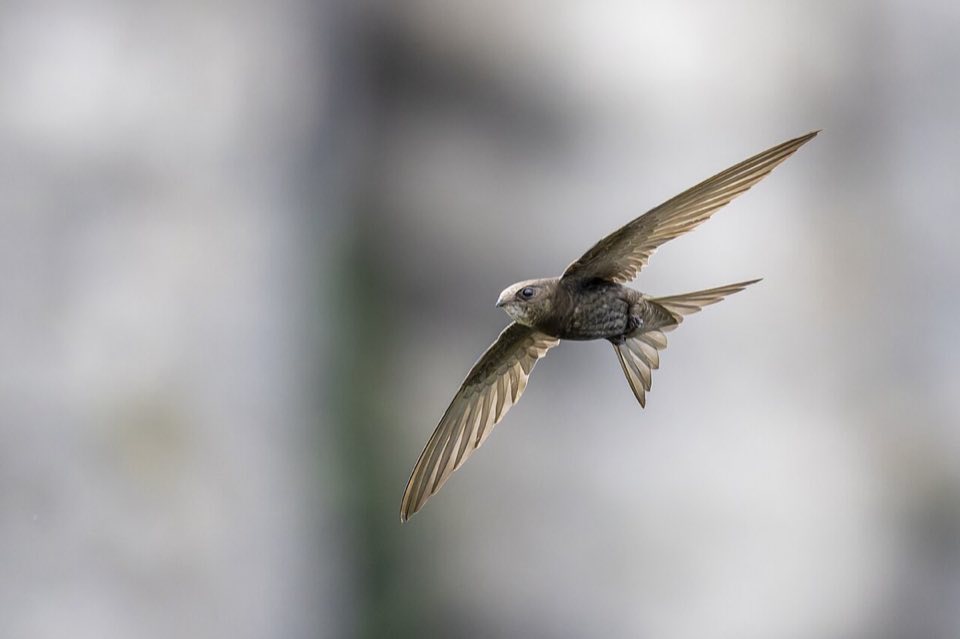
Common swift (Apus apus). Towns and villages nationwide, United Kingdom.
Best time: 1 Jun – 15 Jul (June to July). Where: Oxford University Museum of Natural History tower, Cambridge old town and colleges (United Kingdom). Time of day: Screaming parties race the rooftops in the last hour before sunset and right through dusk on warm evenings.
- You can go on your own
- Free
- No binoculars needed
- Sound 4/5
Open it in the interactive calendarSunrise and sunset listening times for the day you pick, and the map.
When is the best time?
Peak: 1 Jun – 15 Jul. June to mid July (they leave in early Aug)
Active from 5 May to 10 Aug (May to August) in a typical year.
Time of day
Screaming parties race the rooftops in the last hour before sunset and right through dusk on warm evenings; a shorter, quieter bout in the first hour after sunrise.
- Evening screaming: 1 h before sunset → last light
- Morning parties: sunrise → 1 h after sunrise
What will you hear?
High-speed screaming packs racing around rooftops, doppler passes at head height, and the sound of summer evenings.
Binoculars?
No binoculars needed. Screaming packs at rooftop and head height — naked eye.
Where to go
- Oxford University Museum of Natural History tower — Long-studied colony; college quads nearby are enclosed and relatively quiet. Map
- Cambridge old town and colleges — Enclosed courts give good rooftop acoustics. Map
How to go on your own, and what it costs
Stand in the street: Parks Road outside the Oxford University Museum at dusk, or the lanes and courts of central Cambridge (many college courts are open to walkers by day; the streets are free at any hour). No permits.
Cost: Free.
Field-recording notes
Great doppler material — rooftop or courtyard rigs, stereo or ambisonic, catch the passes from all sides. Urban noise is the constraint; late evening and Sundays are quietest.
Sources
Similar spectacles
 Midnight-sun taiga chorus in PasvikBluethroat and redwing song across bog and pine, brambling, cuckoo, whooper swans and cranes from the lakes, red-necked phalarope, spotted redshank, hawk owl screeching, the Pasvik river; a bear may pass — Norway's densest brown bear population.
 Thrush nightingale nights in eastern DenmarkThe thrush nightingale's slower, more percussive song than its southern cousin — loud whistles, clacking and rattles — from damp scrub, often several males in earshot; marsh warblers mimicking, woodcock roding overhead, cuckoo, grasshopper warbler.
 Vejlerne: bitterns, cranes and Northern Europe's largest reedbedsBittern booming from several directions at once, spotted crake whiplashes, water rail squeals, cranes trumpeting at dawn, bearded reedlings pinging, greylag families, black terns over the lagoons; wind in 8 km of reed.
 Brenne, land of a thousand pondsWhiskered tern colonies chattering over the water-lily beds, purple herons, little bittern barks, black-necked grebe trills, and at night a tree frog chorus from every pond.
 Marsh dawn chorus: Brière and DombesBittern booms across the reed, great reed warbler rasps, bluethroat song from the willows, heronries croaking, whiskered terns overhead, and a marsh frog chorus that runs all night.
 Reedbed dawn on Europe's largest steppe lakeGreat reed warbler's grating song from every reed clump, Savi's reeling, moustached warbler, bittern booming, marsh frogs, spoonbill colony chatter, black-headed gull colonies, the reeds themselves in the morning breeze.
More: all spectacles in the United Kingdom · dawn choruses · the United Kingdom in June · the United Kingdom in July