
Cranes
13 places to see and hear cranes in the wild, in 8 countries from Sweden to Angola: when each one peaks, where to go on your own, what it costs and what you will hear. Wild animals only, no zoos.
Best time, place by place
| Spectacle | Country | Peak | On your own? |
|---|---|---|---|
| Spring crane staging: Hornborgasjön and Pulken | Sweden | 25 Mar – 12 Apr | You can go on your own |
| Cranes dancing on the dune heaths and bogs | Denmark | 15 Mar – 20 Apr | You can go on your own |
| Vejlerne: bitterns, cranes and Northern Europe's largest reedbeds | Denmark | 20 Apr – 5 Jun | You can go on your own |
| Common cranes bugling | United Kingdom | 1 Dec – 15 Mar | You can go on your own |
| Müritz: cranes, ospreys and sea eagles in summer | Germany | 20 Apr – 10 Jun and 20 Sep – 31 Oct | You can go on your own |
| Crane autumn staging: Rügen-Bock, Linum, Diepholz, Müritz | Germany | 5 Oct – 31 Oct | You can go on your own |
| Pyrenean passes: raptor, stork, pigeon & crane migration | France | 20 Aug – 5 Nov | You can go on your own |
| Cranes at Lac du Der | France | 20 Oct – 20 Nov and 10 Feb – 10 Mar | You can go on your own |
| Wintering cranes at Arjuzanx | France | 15 Nov – 15 Feb | Partly on your own |
| Winter wetlands: geese, ducks & cranes | Italy | 1 Dec – 28 Feb | Partly on your own |
| Cranes at Laguna de Gallocanta | Spain | 1 Nov – 30 Nov and 15 Feb – 10 Mar | You can go on your own |
| Wintering cranes in the Extremadura dehesa | Spain | 20 Nov – 10 Feb | You can go on your own |
| Okavango headwaters: the Cuito source lakes and the Cuando | Angola | 15 Jun – 30 Sep | Partly on your own |
Where to go, north to south
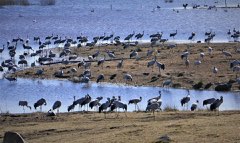 Spring crane staging: Hornborgasjön and PulkenThousands of cranes bugling in chorus — trumpeting that carries for kilometres, rising to a roar when a flock lifts; unison calls of pairs, wing noise of landing flocks, whooper swans and lapwings in the background.
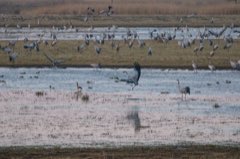 Cranes dancing on the dune heaths and bogsCrane pairs duetting and bugling across the wet dune slacks at first light, the dance's wing-flaps, curlew, golden plover and snipe drumming around them; ravens; the North Sea in Thy.
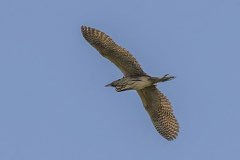 Vejlerne: bitterns, cranes and Northern Europe's largest reedbedsBittern booming from several directions at once, spotted crake whiplashes, water rail squeals, cranes trumpeting at dawn, bearded reedlings pinging, greylag families, black terns over the lagoons; wind in 8 km of reed.
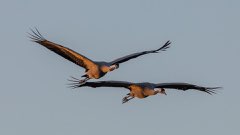 Common cranes buglingTrumpeting bugles carrying over 2 km, unison calls from pairs, and the low rolling contact calls of a roosting group in the reeds.
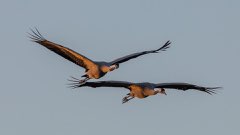 Müritz: cranes, ospreys and sea eagles in summerCrane pairs duetting at dawn from the bogs, bittern booming, osprey whistles over the lakes, eagle calls, woodlark and nightjar on the sandy heaths at dusk, marsh frogs; in autumn thousands of cranes flying into Rederangsee.
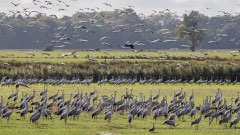 Crane autumn staging: Rügen-Bock, Linum, Diepholz, MüritzWaves of trumpeting families flying in at dusk, the roost's night-long murmur over shallow water, dawn's mass departure with tens of thousands calling at once; greylag and white-fronted geese in the same flights.
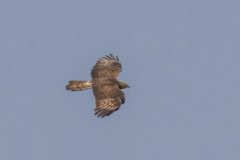 Pyrenean passes: raptor, stork, pigeon & crane migrationMostly visual, but woodpigeon flocks pass with a rush of wings, cranes bugle over the pass, and pre-dawn passerine flight calls stream through — with gunfire from the neighbouring hunting passes.
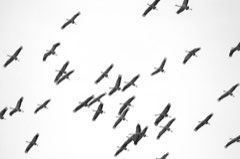 Cranes at Lac du DerTens of thousands of cranes bugling as they leave the lake at first light in wave after wave, then the evening return with the sky full of trumpeting skeins.
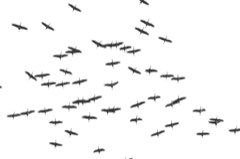 Wintering cranes at ArjuzanxWaves of cranes dropping into the flooded roost after dark, a continuous rolling chorus that carries for kilometres over the pine plantations.
 Winter wetlands: geese, ducks & cranesGoose flights at dawn, whistling wigeon rafts, cranes bugling as they pass north in late winter.
 Cranes at Laguna de GallocantaUp to 100,000 cranes lifting off the salt lagoon at first light in a continuous trumpeting roar that lasts half an hour, then skeins bugling over the steppe villages.
 Wintering cranes in the Extremadura dehesaTens of thousands of cranes flying into the roosts at sunset in wave after wave, bugling in the acorn dehesa by day, with wintering lapwings, golden plovers and greylags.
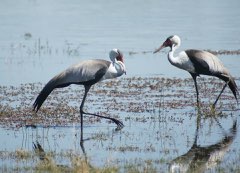 Okavango headwaters: the Cuito source lakes and the CuandoOne of the least-recorded soundscapes in Africa: hippos and Pel's fishing owl on the Cuito, frog choruses on peat-edged source lakes, wattled cranes over the floodplains, the miombo dawn with its cuckoos and barbets, and no engine for days.