
Sherbro and the Turtle Islands — terns, waders and turtle beaches
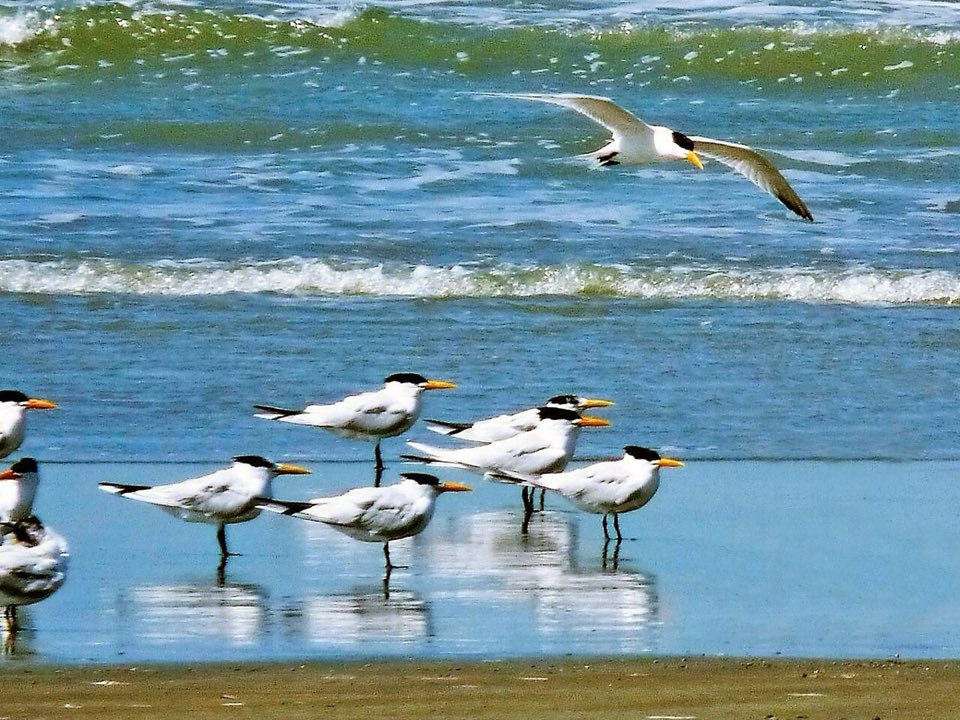
Royal, Caspian & sandwich terns, grey-headed gull, wintering whimbrel, godwits and sanderling; green, olive ridley and leatherback turtles nesting; humpback dolphins. Turtle Islands & Sherbro Island, Bonthe district, Sierra Leone.
Best time: 15 Nov – 28 Feb (November to February). Where: Turtle Islands (Nyangai, Sei, Bakie), Bonthe, Sherbro Island (Sierra Leone). Time of day: High-tide roosts in the 2 hours around high water.
- Partly on your own
- Low cost
- Binoculars essential
- Sound 3/5
Open it in the interactive calendarSunrise and sunset listening times for the day you pick, and the map.
When is the best time?
Peak: 15 Nov – 28 Feb. Mid November to end of February for the roosts; turtle nesting mainly in the rains (roughly June–October, poorly monitored)
Active from 15 Oct to 30 Apr (October to April) in a typical year.
Time of day
High-tide roosts in the 2 hours around high water; village evenings on the islands are their own soundscape
- Morning roost: sunrise → 2 h after sunrise
- Evening roost: 90 min before sunset → sunset
Depends on the tide: best around high tide. Check local tide tables.
What will you hear?
Tern and wader roosts on white sandbanks between eight Sherbro-speaking fishing islands, surf, and the villages' evening singing; dolphins in the channels.
Binoculars?
Binoculars essential. Tern and wader roosts on sandbanks 100–300 m from the boat; binoculars needed. Turtle nights are red torch only.
Where to go
- Turtle Islands (Nyangai, Sei, Bakie) — 3-hour boat from Freetown or from Bonthe; transport is erratic. Hoong island is closed to visitors (initiation island). Nyangai is disappearing to erosion. Map
- Bonthe, Sherbro Island — Old port town and base for boats to the islands. Map
How to go on your own, and what it costs
Public boat Freetown–Bonthe or road to Bonthe via Mattru Jong, then a hired boat to the islands; no park, no fee, but village permission and a gift. Not a place to go without time in hand.
Cost: Boat charter and village contribution — check current prices locally.
Free or no-guide alternative: Sherbro Island's own beaches and the Bonthe waterfront have tern roosts and waders for free without the further crossing.
Field-recording notes
No infrastructure: you stay in a village with permission (a gift to the chief) and hire a boat by the day. Salt, humidity and no charging. Village sound is part of any night here. Turtle nesting is real but unmonitored — if you find a nesting female, red light, distance, no flash.
Sources
Similar spectacles
 Conkouati-Douli: humpback whales and leatherback nestingBlows and breaches from the beach, humpback song on a hydrophone from a drifting pirogue, and at night the digging and heavy breathing of a leatherback on a wild beach with no lights for 50 km; chimpanzees pant-hooting from the lagoon islands at dawn.
 Kartong — wetland pools, Allahein river mouth and turtle beachCrakes and pygmy geese in the sand-mine pools, a wader roost at the Allahein mouth, and on rainy-season nights the beach with the surf and, if you are lucky, a nesting green turtle's breathing.
 Bioko's southern beaches: leatherbacks, green turtles and the Caldera primatesBlack-sand surf, then the scrape and sigh of a leatherback digging a few metres away. At dawn the forest behind Moaba is one of the richest primate choruses in Africa: drill grunts and crowing, the chatter of red-eared monkeys, colobus roars, hornbills and the Bioko race of the grey parrot. Waterfalls drop straight onto the beach between the nesting bays.
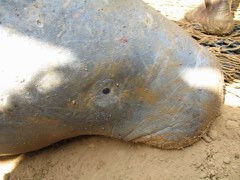 Mangroves of the Congo mouth: manatees, turtle beaches and the only marine park in the DRCA mangrove dawn: the drip and click of the Rhizophora at low water, kingfishers, herons, fish eagles, the blow of a manatee surfacing in a side channel (a short, sharp exhalation, easy to miss), hippos grunting in the back creeks; at night on the beach, surf and a nesting ridley's scraping — and the Congo's current audible against the sandbanks at Banana.
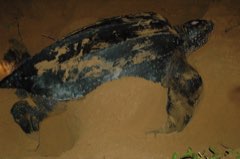 Sea turtle nesting on Liberia's beachesA leatherback's long sighing breaths and flippers throwing sand on an empty Atlantic beach with surf and, behind, the forest's night — a sighting spectacle first, but the breathing of a two-metre animal beside you is a sound to keep.
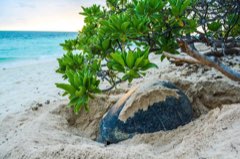 Sea turtles nesting at Grand-BérébyMostly a sight, but the sound is worth having: the heavy breathing and sand-throwing of a leatherback digging, flippers slapping wet sand, and the surf of the Gulf of Guinea behind it.
More: all spectacles in Sierra Leone · sea turtles · seabird colonies · Sierra Leone in January · Sierra Leone in February · Sierra Leone in November · Sierra Leone in December