
Yankari: elephants on the Gaji river and Wikki nights
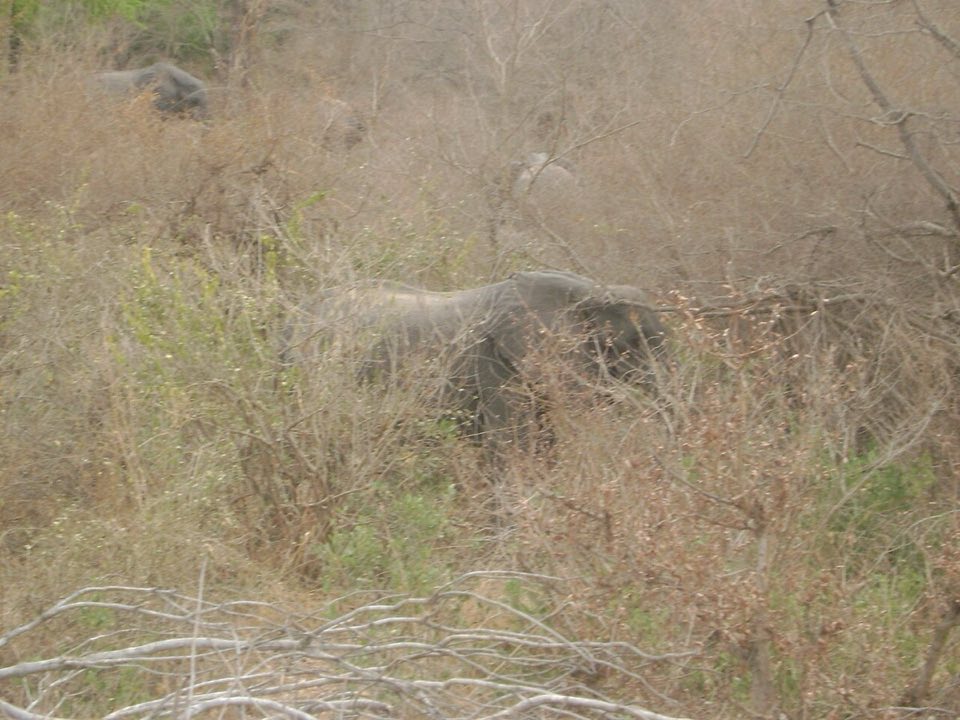
Savanna elephant (Nigeria's largest population, a few hundred), buffalo, waterbuck, roan, olive baboon, hippo; lion (very few); nightjars, owls, bats at Wikki. Yankari Game Reserve, Bauchi State, Nigeria.
Best time: 1 Feb – 30 Apr (February to April). Where: Wikki Camp and Wikki Warm Spring, Gaji river – game-viewing loop (Nigeria). Time of day: Park safari trucks go out at about 07:30 and 15:30.
- Partly on your own
- Entry fee
- Binoculars essential
- Sound 4/5
Open it in the interactive calendarSunrise and sunset listening times for the day you pick, and the map.
When is the best time?
Peak: 1 Feb – 30 Apr. February to April: late dry season, hot, with the herds on the Gaji river pools
Active from 1 Nov to 15 May (November to May) in a typical year.
Time of day
Park safari trucks go out at about 07:30 and 15:30; the Wikki Warm Spring valley is loud with bats, nightjars and baboons from dusk to about 22:00
- Morning truck: 07:30 → 10:30
- Afternoon truck: 15:30 → sunset
- Wikki valley at night: last light → 22:00
What will you hear?
Elephants at the Gaji river pools, baboon troops around Wikki camp, a savanna dawn of francolins, doves and hornbills, and at night the warm-spring valley's bats, nightjars and owls.
Binoculars?
Binoculars essential. Elephants at the Gaji pools are seen from the safari truck at 100–300 m; binoculars needed. Wikki nights are ears only.
Where to go
- Wikki Camp and Wikki Warm Spring — The reserve's only accommodation, 43 km inside the gate; the spring's gallery forest is a night soundscape in itself. Map
- Gaji river – game-viewing loop — Where the elephants concentrate late in the dry season; only in the park's own vehicles. Map
How to go on your own, and what it costs
Bus to Bauchi (several long-distance lines), chartered car to the gate (about ₦5,000 in 2021) and on to Wikki; pay gate entry and book the reserve's own safari truck at the camp. Walking around Wikki camp and the spring needs no guide; the game tracks are in reserve vehicles only.
Cost: Gate entry ₦2,000 adult, ₦800 student/child (2021); Wikki Warm Spring ₦500; safari truck and chalets extra (from ₦1,800 a hostel bed); check current prices.
Free or no-guide alternative: Inside the reserve nothing is free, but the entry fee alone buys the Wikki valley at night and the camp dawn — no truck needed. Outside, the Bauchi–Gombe road skirts the reserve's savanna and is public.
Who runs access
- Yankari Game Reserve – park safari trucks and Wikki Camp (park authority) — Reserve-run; the only way onto the game tracks
Field-recording notes
Private vehicles are not allowed on the game tracks — viewing is from the reserve's open safari trucks (loud, and on their timetable), so the productive recording is at Wikki: the spring valley at night and the camp surroundings at dawn. Camp generators and weekend crowds at the spring are the noise sources; midweek in March is quiet. Yankari is a state game reserve, not a national park; fees are paid at the gate. Bauchi State has had security problems; check current travel advice.
Sources
Similar spectacles
 Lobéké bais: elephants, gorillas and grey parrots at the clearingsGrey parrot flocks whistling and screeching over Djangui, elephants splashing, rumbling and trumpeting in the mud of Petite Savane, gorilla chest-beats from the edge, forest hogs grunting, and the rainforest dawn behind it all.
 Odzala-Kokoua: forest elephants and grey parrots at Lango baiElephants blowing, splashing and rumbling in the bai's mineral pools a few metres below the deck, families greeting with trumpets and roars, grey parrot flocks whistling in to drink, forest buffalo grunting in the sedge, and a night of frogs, hyrax and distant hyena.
 Comoé: elephants, hippos and the savanna-forest mosaicHippos bellowing on the Comoé at dusk, elephants at the river pools, lions are not to be expected but spotted hyena whoop; the ground hornbill's booming duet at dawn and the harmattan wind in the gallery forest.
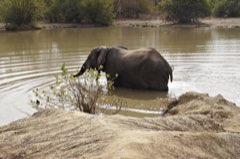 Elephants at the Mole waterholesElephants splashing, rumbling and trumpeting at the waterhole, baboon alarm barks off the escarpment, hyena whoops after dark, and a savanna dawn of helmeted guineafowl, hornbills and doves.
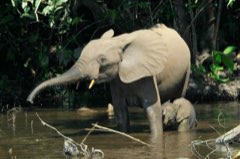 Nouabalé-Ndoki: gorillas and elephants at Mbeli BaiA silverback's chest-beats and a family's contented feeding grunts in the open, from a platform 20 m above one of the Congo Basin's most-watched clearings; elephants splashing at night, sitatunga barking, parrots at dawn, and a rainforest with no engine within a day's walk.
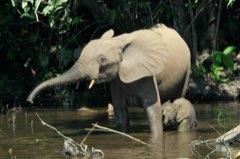 Fazao-Malfakassa: elephants, colobus and ground hornbills in the hillsThe deep booming duet of ground hornbills across dry woodland, the rolling roar of ursine colobus from gallery forest, baboons on the escarpment and — with luck and patience — elephants at a pool at night.
More: all spectacles in Nigeria · elephants · mountain wildlife · Nigeria in February · Nigeria in March · April