
Odzala-Kokoua: forest elephants and grey parrots at Lango bai
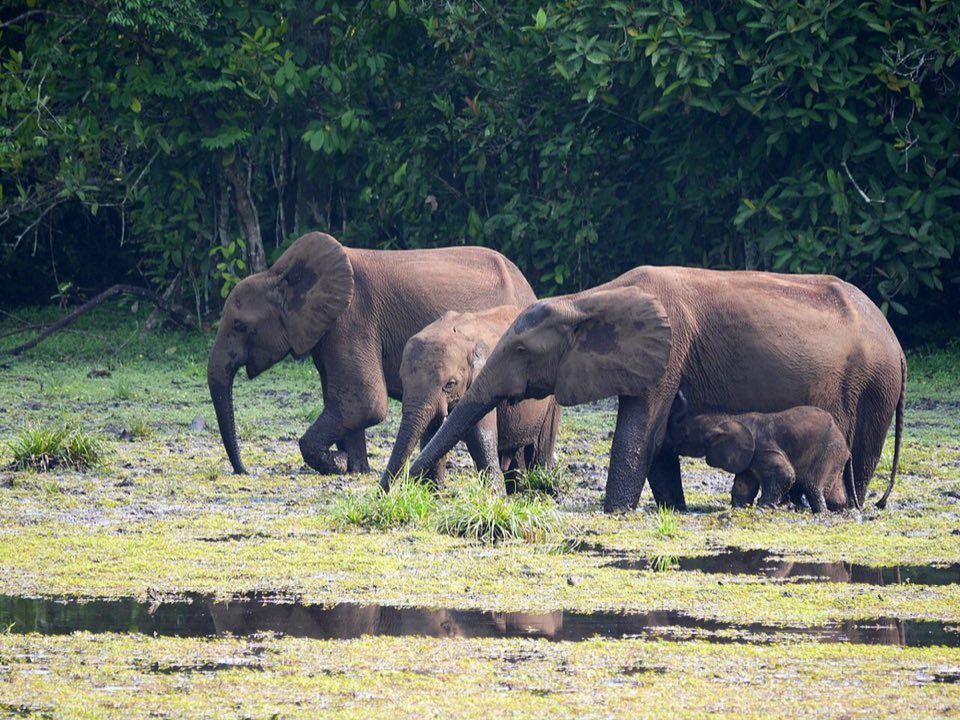
Forest elephant (Loxodonta cyclotis), forest buffalo, bongo, sitatunga, spotted hyena (a forest population), western lowland gorilla; African grey parrot flocks, hartlaub's ducks, Congo peafowl? no — Congo serpent eagle, hornbills. Odzala-Kokoua National Park, Cuvette-Ouest, Republic of the Congo.
Best time: 1 Jul – 15 Sep and 1 Dec – 28 Feb (December to February, July to September). Where: Lango bai and Lango camp, Mboko – savanna and the Lekoli river, Mbomo – park headquarters (Republic of the Congo). Time of day: Elephants use Lango bai through the day and most heavily at night.
- Guide, ranger or boat needed
- Paid trip only
- Binoculars helpful
- Sound 5/5
Open it in the interactive calendarSunrise and sunset listening times for the day you pick, and the map.
When is the best time?
- Peak 1: 1 Jul – 15 Sep — July to mid September: main dry season
- Peak 2: 1 Dec – 28 Feb — December to February: short dry season — bais busy again as forest pools dry
Active from 1 Jun to 28 Feb (June to February) in a typical year.
Time of day
Elephants use Lango bai through the day and most heavily at night; grey parrots arrive in the morning from about an hour after sunrise; the bai's frogs, hyrax and elephants run all night from the camp deck
- Dawn at the bai: 30 min before sunrise → 10:00
- Grey parrots: 1 h after sunrise → 3 h after sunrise
- Elephants through the night: 1 h before sunset → 1 h before sunrise
What will you hear?
Elephants blowing, splashing and rumbling in the bai's mineral pools a few metres below the deck, families greeting with trumpets and roars, grey parrot flocks whistling in to drink, forest buffalo grunting in the sedge, and a night of frogs, hyrax and distant hyena.
Binoculars?
Binoculars helpful. Elephants are a few metres below the Lango deck; binoculars for buffalo and parrots on the far side of the bai.
Where to go
- Lango bai and Lango camp — The camp sits on the edge of the bai: the deck is the recording position. Walks in the bai and the Lango stream (wading) with guides. Map
- Mboko – savanna and the Lekoli river — Camp on the forest–savanna edge; boat trips on the Lekoli for hippos, elephants and parrots at the riverside bais. Map
- Mbomo – park headquarters — Village and African Parks base on the western edge; the road in from Etoumbi. Map
How to go on your own, and what it costs
Entry is only through the park's tourism operation with guides (park rule; forest elephants make unescorted walking illegal and dangerous). Cheapest legal way: contact African Parks Congo about self-arranged visits to the Mbomo headquarters side and day entry with a park guide, and travel overland to Mbomo by bus from Brazzaville via Etoumbi rather than by charter flight; otherwise it is an all-inclusive package through the park's tourism concession.
Cost: The concession camps are all-inclusive at several hundred to over a thousand USD per person per night; park entry and guide fees for self-arranged visits, check current prices with African Parks.
Free or no-guide alternative: There is no free or unguided way to a bai — they are deep in the park. The Mbomo village edge and the Etoumbi–Mbomo road at dawn give the forest chorus and passing parrot and hornbill flocks for nothing.
Who runs access
- African Parks – Odzala-Kokoua (park authority) — Park management; permits and non-package enquiries
Field-recording notes
Access is through the park's tourism concession, whose camps at Lango, Mboko and Ngaga are the only accommodation, and guides accompany all activities (park rule and elephants). That makes it an expensive place to record but also an easy one: the deck over the bai gives elephant recordings at a distance and quality hard to match anywhere. Rigs left on the bai edge overnight need the guides' agreement; hyena and elephants will investigate them. Total humidity, daily storms in the rains (Mar–May, Oct–Nov), and no traffic for 100 km. Filming and commercial recording permits go through African Parks Congo. The camps close for part of the rainy season; ask.
Sources
Similar spectacles
 Lobéké bais: elephants, gorillas and grey parrots at the clearingsGrey parrot flocks whistling and screeching over Djangui, elephants splashing, rumbling and trumpeting in the mud of Petite Savane, gorilla chest-beats from the edge, forest hogs grunting, and the rainforest dawn behind it all.
 Langoué Bai: elephants, gorillas and red river hogs at the Ivindo clearingA bai at night is the best elephant listening in Central Africa: rumbles, trumpets, splashing and the squabbling of family groups at the mineral pools, with tree hyrax, frogs and owls in the forest ring. By day, red river hog groups of fifty, gorilla chest-beats and 'hoo' series from the edge, and the whistles of grey parrots in hundreds.
 Comoé: elephants, hippos and the savanna-forest mosaicHippos bellowing on the Comoé at dusk, elephants at the river pools, lions are not to be expected but spotted hyena whoop; the ground hornbill's booming duet at dawn and the harmattan wind in the gallery forest.
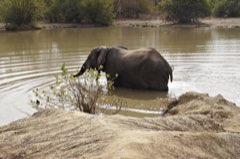 Elephants at the Mole waterholesElephants splashing, rumbling and trumpeting at the waterhole, baboon alarm barks off the escarpment, hyena whoops after dark, and a savanna dawn of helmeted guineafowl, hornbills and doves.
 Yankari: elephants on the Gaji river and Wikki nightsElephants at the Gaji river pools, baboon troops around Wikki camp, a savanna dawn of francolins, doves and hornbills, and at night the warm-spring valley's bats, nightjars and owls.
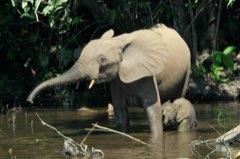 Fazao-Malfakassa: elephants, colobus and ground hornbills in the hillsThe deep booming duet of ground hornbills across dry woodland, the rolling roar of ursine colobus from gallery forest, baboons on the escarpment and — with luck and patience — elephants at a pool at night.
More: all spectacles in the Republic of the Congo · elephants · mountain wildlife · the Republic of the Congo in January · February · the Republic of the Congo in July · the Republic of the Congo in August · the Republic of the Congo in September · the Republic of the Congo in December