
Elephants at the Mole waterholes
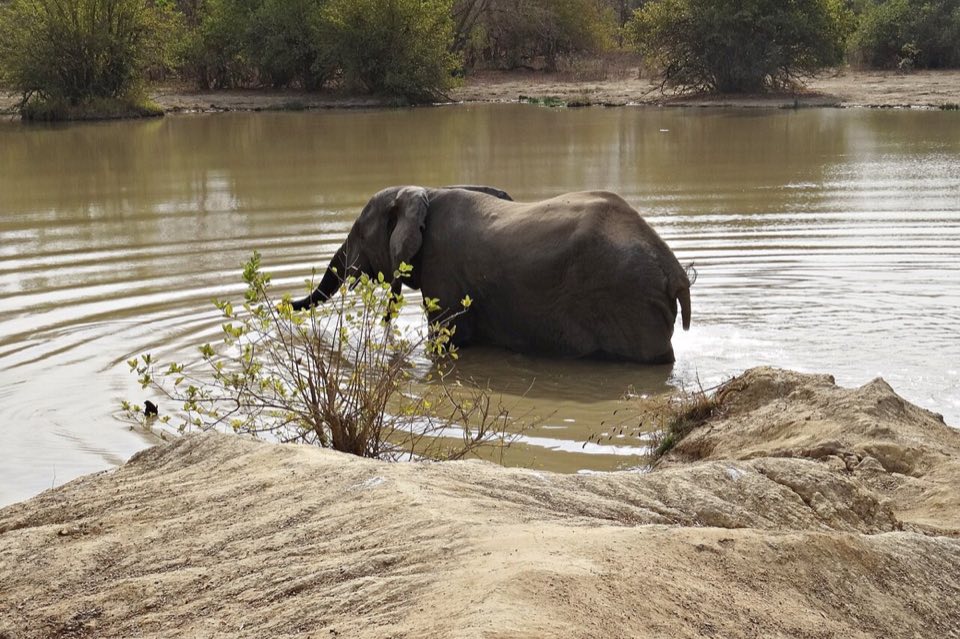
African savanna elephant (Loxodonta africana), with kob, waterbuck, warthog, olive baboon, spotted hyena and Pel's fishing owl. Mole National Park, Savannah Region, Ghana.
Best time: 15 Jan – 31 Mar (January to March). Where: Mole Motel viewpoint and the waterholes below the escarpment, Mognori Eco-Village – canoe trips on the Mole River, Larabanga – access village and mosque (Ghana). Time of day: Walking safaris leave at 07:00 and 15:30.
- Guide, ranger or boat needed
- Entry fee
- Binoculars helpful
- Sound 4/5
Open it in the interactive calendarSunrise and sunset listening times for the day you pick, and the map.
When is the best time?
Peak: 15 Jan – 31 Mar. Mid January to March, when the bush is dry and the herds concentrate on the two waterholes below Mole Motel
Active from 15 Nov to 30 Apr (November to April) in a typical year.
Time of day
Walking safaris leave at 07:00 and 15:30; elephants drink and bathe mainly from mid-morning to early afternoon; hyena, nightjars and Pel's fishing owl from dusk to about midnight
- Morning walk: 07:00 → 10:00
- Elephants at the waterhole: 10:00 → 14:00
- Hyena & owls: last light → 00:00
What will you hear?
Elephants splashing, rumbling and trumpeting at the waterhole, baboon alarm barks off the escarpment, hyena whoops after dark, and a savanna dawn of helmeted guineafowl, hornbills and doves.
Binoculars?
Binoculars helpful. Elephants are at the waterhole 100–200 m below the motel terrace; binoculars help, the ranger walk brings you closer.
Where to go
- Mole Motel viewpoint and the waterholes below the escarpment — The classic vantage; walks with an armed ranger descend to the water. Map
- Mognori Eco-Village – canoe trips on the Mole River — Community-run dugout trips at dawn for hippos' absence but kingfishers, hornbills and (with luck) Pel's fishing owl. Map
- Larabanga – access village and mosque — Where the park road leaves the Tamale–Wa highway; motorbike taxis to the park gate. Map
How to go on your own, and what it costs
Walks are only with an armed park ranger (park rule); self-drive on the park roads is allowed with your own vehicle after paying entry, but you may not leave it. Cheapest legal way: tro-tro Tamale–Larabanga, motorbike taxi to the gate, entry fee plus the ranger-led walk fee at 07:00 or 15:30; the motel terrace over the waterhole needs only the entry fee.
Cost: Park entry plus a per-walk ranger fee, higher for non-Ghanaians; the park website still lists GHS 30 non-national entry, foot safari GHS 10 per hour, guide GHS 15 per person per hour and safari vehicle GHS 80 per hour, but those date from about 2016 — check current prices (park 0244316777).
Free or no-guide alternative: Larabanga village and the public Larabanga–Damongo road lie outside the boundary: nightjars, hyena and the savanna dawn are free from there, and elephants sometimes cross the park road. The waterholes themselves are inside the park and need the entry fee.
Who runs access
- Mole National Park (Wildlife Division) – ranger walks and vehicle safaris (park authority) — Park-run
- Mognori Eco-Village – community canoe safaris (community project) — Community-run with A Rocha Ghana support; dawn canoe trips on the Mole river
Field-recording notes
Walks are with an armed ranger only, and night walks are not offered, so night sound is from the motel terrace or (with the ranger's agreement) a rig left overlooking the waterhole. The motel generator and bar are the main noise sources, both quieter after midnight. Harmattan (Dec–Feb) brings dusty, very dry air — good for propagation over the plain, hard on membranes and lungs. Elephants come within 200 m of the terrace; the rangers set the distance, not you.
Sources
Similar spectacles
 Lobéké bais: elephants, gorillas and grey parrots at the clearingsGrey parrot flocks whistling and screeching over Djangui, elephants splashing, rumbling and trumpeting in the mud of Petite Savane, gorilla chest-beats from the edge, forest hogs grunting, and the rainforest dawn behind it all.
 Odzala-Kokoua: forest elephants and grey parrots at Lango baiElephants blowing, splashing and rumbling in the bai's mineral pools a few metres below the deck, families greeting with trumpets and roars, grey parrot flocks whistling in to drink, forest buffalo grunting in the sedge, and a night of frogs, hyrax and distant hyena.
 Comoé: elephants, hippos and the savanna-forest mosaicHippos bellowing on the Comoé at dusk, elephants at the river pools, lions are not to be expected but spotted hyena whoop; the ground hornbill's booming duet at dawn and the harmattan wind in the gallery forest.
 Yankari: elephants on the Gaji river and Wikki nightsElephants at the Gaji river pools, baboon troops around Wikki camp, a savanna dawn of francolins, doves and hornbills, and at night the warm-spring valley's bats, nightjars and owls.
 Nouabalé-Ndoki: gorillas and elephants at Mbeli BaiA silverback's chest-beats and a family's contented feeding grunts in the open, from a platform 20 m above one of the Congo Basin's most-watched clearings; elephants splashing at night, sitatunga barking, parrots at dawn, and a rainforest with no engine within a day's walk.
 Fazao-Malfakassa: elephants, colobus and ground hornbills in the hillsThe deep booming duet of ground hornbills across dry woodland, the rolling roar of ursine colobus from gallery forest, baboons on the escarpment and — with luck and patience — elephants at a pool at night.
More: all spectacles in Ghana · elephants · mountain wildlife · Ghana in January · Ghana in February · Ghana in March