
Lobéké bais: elephants, gorillas and grey parrots at the clearings
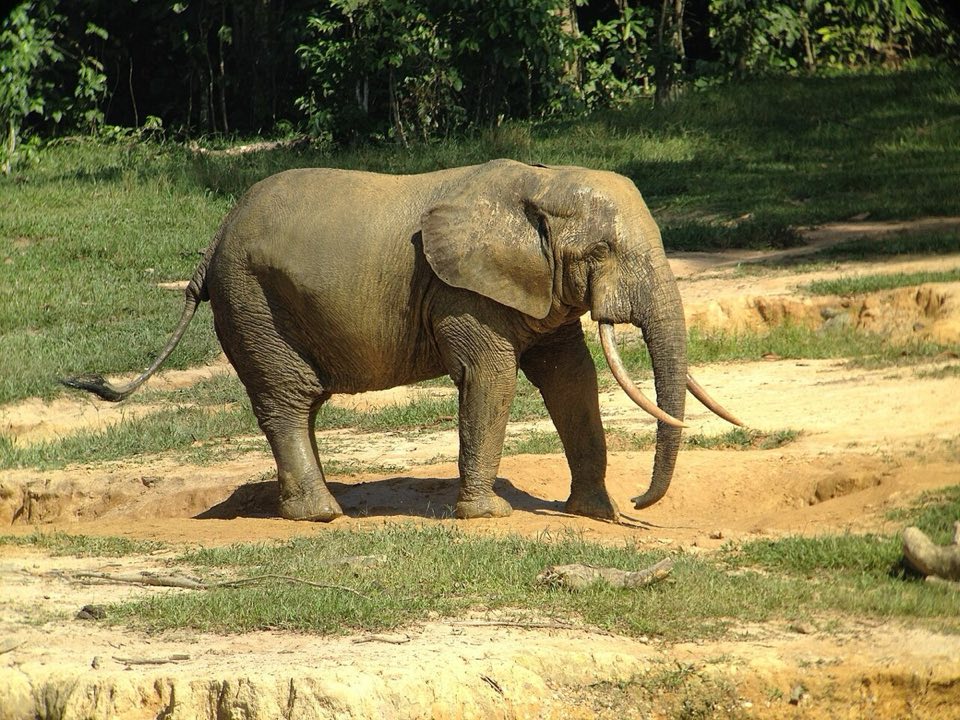
Forest elephant, western lowland gorilla, bongo, sitatunga, giant forest hog, forest buffalo; African grey parrot flocks in hundreds, green pigeons. Lobéké National Park, East Region (Tri-national de la Sangha), Cameroon.
Best time: 15 Dec – 28 Feb (December to February). Where: Petite Savane – mirador, Djangui bai – mirador, Mambélé – park headquarters (Cameroon). Time of day: On the miradors from before first light until about 10:00 and from 15:00 to dark.
- Guide, ranger or boat needed
- Entry fee
- Binoculars essential
- Sound 5/5
Open it in the interactive calendarSunrise and sunset listening times for the day you pick, and the map.
When is the best time?
Peak: 15 Dec – 28 Feb. Mid December to February, the main dry season; a second, shorter dry spell in June–August is also used
Active from 1 Dec to 15 Mar (December to March) in a typical year.
Time of day
On the miradors from before first light until about 10:00 and from 15:00 to dark; grey parrots come to the clearings in the morning from about an hour after sunrise; elephants are most numerous at the bais at night
- Dawn at the mirador: 30 min before sunrise → 10:00
- Grey parrots: 1 h after sunrise → 3 h after sunrise
- Afternoon watch: 15:00 → last light
- Elephants at night: last light → 1 h before sunrise
What will you hear?
Grey parrot flocks whistling and screeching over Djangui, elephants splashing, rumbling and trumpeting in the mud of Petite Savane, gorilla chest-beats from the edge, forest hogs grunting, and the rainforest dawn behind it all.
Binoculars?
Binoculars essential. The miradors overlook the bais at 50–300 m; binoculars needed for gorillas at the edge and parrot flocks, a scope pays.
Where to go
- Petite Savane – mirador — Observation tower about 6 km from the park base; sleeping on the platform is the way to get the night. Map
- Djangui bai – mirador — The grey parrot clearing; a full day's walk from Petite Savane through the forest. Map
- Mambélé – park headquarters — Entry, guides, porters and the park's bungalows; reached from Yokadouma by rough road. Map
How to go on your own, and what it costs
Guides/eco-guards are compulsory (park rule). Cheapest legal way: bus to Yokadouma, shared transport to Mambélé, and arrange the park fee, guide, porters and a mirador night directly at headquarters rather than through an agency.
Cost: Park entry per day plus guide, eco-guard and porter fees; check current prices at Mambélé.
Free or no-guide alternative: There is no free or unguided way to the bais — they are deep inside the park and elephants make unescorted walking dangerous and illegal. The Mambélé–Yokadouma road edge at dawn gives the forest chorus and passing parrot flocks for free.
Who runs access
- Parc national de Lobéké – park guides and miradors (park authority) — Park-run; arrange at the park office (no working website found)
Field-recording notes
Guides and eco-guards are compulsory and porters practical (park rule; elephants on the trails). Miradors hold about five people — book with the park for an overnight on the platform: the night at a bai is the recording. Rain even in the dry season; total humidity; no power. Grey parrots are trapped for the pet trade and the bais are their refuge — no playback, and report trappers to the eco-guards. The road from Yokadouma is a logging road: chainsaws and trucks by day, silence by night.
Sources
Similar spectacles
 Nouabalé-Ndoki: gorillas and elephants at Mbeli BaiA silverback's chest-beats and a family's contented feeding grunts in the open, from a platform 20 m above one of the Congo Basin's most-watched clearings; elephants splashing at night, sitatunga barking, parrots at dawn, and a rainforest with no engine within a day's walk.
 Langoué Bai: elephants, gorillas and red river hogs at the Ivindo clearingA bai at night is the best elephant listening in Central Africa: rumbles, trumpets, splashing and the squabbling of family groups at the mineral pools, with tree hyrax, frogs and owls in the forest ring. By day, red river hog groups of fifty, gorilla chest-beats and 'hoo' series from the edge, and the whistles of grey parrots in hundreds.
 Monte Alén: the Río Muni rainforest dawn, elephants and the goliath frog riversA Central African lowland chorus: hornbills whooshing overhead, the bubbling of greenbuls and the far pant-hoots of chimpanzees, mandrill grunts, elephant rumbles at the swamp edge. The goliath frog itself is nearly silent (no vocal sac) — its rivers are a night of other frogs and the roar of water over rock.
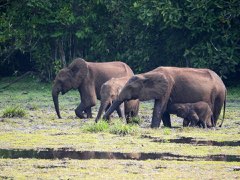 Odzala-Kokoua: forest elephants and grey parrots at Lango baiElephants blowing, splashing and rumbling in the bai's mineral pools a few metres below the deck, families greeting with trumpets and roars, grey parrot flocks whistling in to drink, forest buffalo grunting in the sedge, and a night of frogs, hyrax and distant hyena.
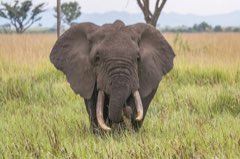 Comoé: elephants, hippos and the savanna-forest mosaicHippos bellowing on the Comoé at dusk, elephants at the river pools, lions are not to be expected but spotted hyena whoop; the ground hornbill's booming duet at dawn and the harmattan wind in the gallery forest.
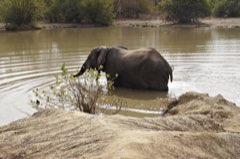 Elephants at the Mole waterholesElephants splashing, rumbling and trumpeting at the waterhole, baboon alarm barks off the escarpment, hyena whoops after dark, and a savanna dawn of helmeted guineafowl, hornbills and doves.
More: all spectacles in Cameroon · elephants · gorillas · mountain wildlife · Cameroon in January · Cameroon in February · Cameroon in December