
Barbary macaque troops in the Middle Atlas cedar forest
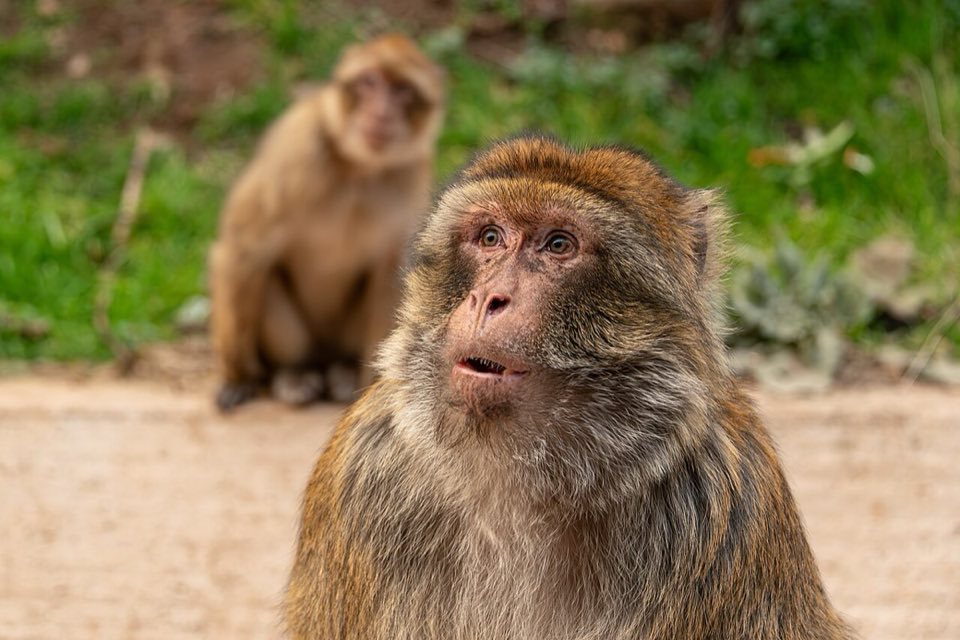
Barbary macaque (Macaca sylvanus). Azrou–Ifrane, Middle Atlas, Morocco.
Best time: 1 Nov – 31 Mar (November to March). Where: Cèdre Gouraud forest, Azrou, Ifrane National Park – Aïn Leuh / Cascades de Ras el Ma, Aguelmame Sidi Ali & Dayet Aoua (Middle Atlas lakes) (Morocco). Time of day: From sunrise until about 10:00 as troops leave the sleeping trees and feed.
- You can go on your own
- Free
- Binoculars helpful
- Sound 3/5
Open it in the interactive calendarSunrise and sunset listening times for the day you pick, and the map.
When is the best time?
Peak: 1 Nov – 31 Mar. Mating season November–March (most vocal, most fighting); births April–June; cedar forest snowbound in January–February
Active from 1 Jan to 31 Dec (all year) in a typical year.
Time of day
From sunrise until about 10:00 as troops leave the sleeping trees and feed; a second bout of calling in the last 2 hours before sunset
- Morning foraging: sunrise → 3 h after sunrise
- Evening return: 2 h before sunset → sunset
What will you hear?
Barks, screams and the soft 'ooh' contact grunts of a troop moving through 30 m Atlas cedars, chest-thumping squabbles in the mating season, with Levaillant's woodpecker, firecrest and nuthatch in the canopy and wind in the cedars.
Binoculars?
Binoculars helpful. Roadside troops are at arm's length; binoculars for wild troops in 30 m cedars and Levaillant's woodpecker.
Where to go
- Cèdre Gouraud forest, Azrou — The habituated roadside troops — easy, but fed, stressed and next to the coach car park. Walk 1–2 km into the forest on the pistes for wild-behaving troops. Map
- Ifrane National Park – Aïn Leuh / Cascades de Ras el Ma — Larger, less habituated troops in the mixed cedar-oak; park HQ in Ifrane. Map
- Aguelmame Sidi Ali & Dayet Aoua (Middle Atlas lakes) — Same excursion: lakes with breeding crested coot, marbled teal and ruddy shelduck, and wintering ducks. Map
How to go on your own, and what it costs
Bus/grand taxi to Azrou, then 6 km on the N13 towards Ifrane to the Cèdre Gouraud turn-off; forest pistes are open and free. Ifrane NP has no gate or fee; the Aïn Leuh road and the lake circuit are public. No feeding, no permit needed for day recording.
Cost: Free (2026).
Field-recording notes
Do not feed or approach the macaques — tourist-fed troops show measurable stress and poorer health, and feeding is prohibited in the national park. Cedar forest at 1,800–2,000 m is superb for ambience: still, cold dawns in autumn and spring, snow silence in January. Noise sources are the N8/N13 roads, the Azrou souk on Tuesdays, cattle and sheep with bells, and chainsaws where cedar is cut. Mid-week and off the coach hours (before 09:00) is the only realistic way to record a troop without human voices.
Sources
- Wikipedia – Barbary macaque (ecology, mating season, tourism effects)
- ANEF – Moroccan national parks authority
Similar spectacles
 Habituated chimpanzees and the Taï forest dawnPant-hoot choruses and buttress drumming rolling through primary rainforest, the crashing and screaming of a Diana colobus troop, hornbills' wingbeats over the canopy, cicadas and, at night, tree hyrax and Demidoff's galago.
 Lobéké bais: elephants, gorillas and grey parrots at the clearingsGrey parrot flocks whistling and screeching over Djangui, elephants splashing, rumbling and trumpeting in the mud of Petite Savane, gorilla chest-beats from the edge, forest hogs grunting, and the rainforest dawn behind it all.
 Odzala-Kokoua: forest elephants and grey parrots at Lango baiElephants blowing, splashing and rumbling in the bai's mineral pools a few metres below the deck, families greeting with trumpets and roars, grey parrot flocks whistling in to drink, forest buffalo grunting in the sedge, and a night of frogs, hyrax and distant hyena.
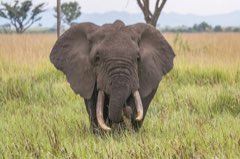 Comoé: elephants, hippos and the savanna-forest mosaicHippos bellowing on the Comoé at dusk, elephants at the river pools, lions are not to be expected but spotted hyena whoop; the ground hornbill's booming duet at dawn and the harmattan wind in the gallery forest.
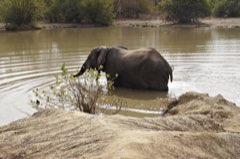 Elephants at the Mole waterholesElephants splashing, rumbling and trumpeting at the waterhole, baboon alarm barks off the escarpment, hyena whoops after dark, and a savanna dawn of helmeted guineafowl, hornbills and doves.
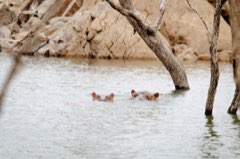 Wechiau: hippos on the Black Volta at duskThe Black Volta's hippo pools: the stacked laughing grunt of a bull answered down the river, blows and splashes as the pod surfaces, then at dusk the heavy walk of hippos leaving the water to graze a few hundred metres from the Talawona camp. Egyptian plovers piping on the sandbars, fish eagles, carmine bee-eaters in the dry-season colonies on the banks.
More: all spectacles in Morocco · mountain wildlife · Morocco in January · Morocco in February · Morocco in March · Morocco in November · Morocco in December