
Habituated chimpanzees and the Taï forest dawn
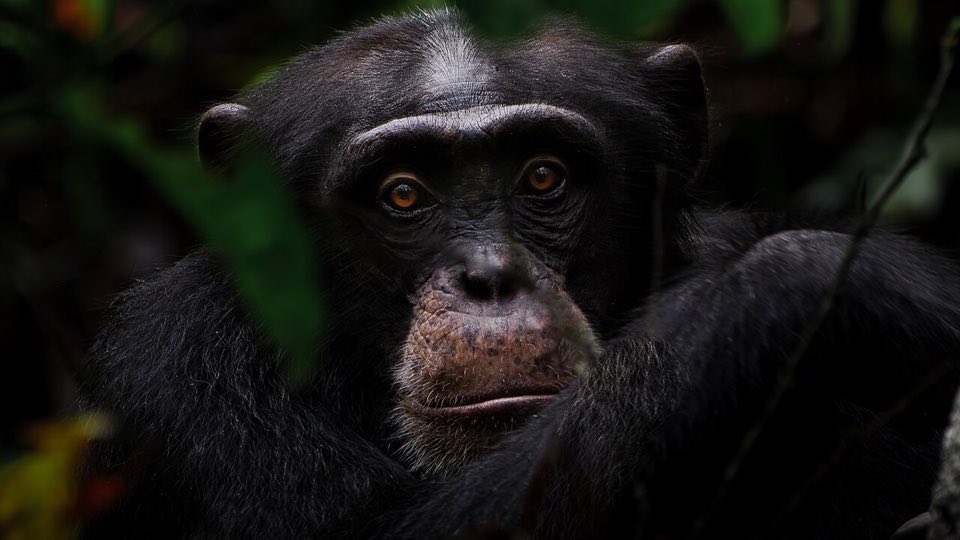
Western chimpanzee (Pan troglodytes verus), red and Diana colobus, sooty mangabey, pygmy hippo on the rivers, yellow-casqued hornbill, white-breasted guineafowl. Parc national de Taï, south-west, Côte d'Ivoire.
Best time: 1 Dec – 28 Feb (December to February). Where: Taï village ecotourism site (WCF), Djouroutou – southern entrance and ecolodge, Taï research station (CSRS / Max Planck) (Côte d'Ivoire). Time of day: Trackers leave camp about 30 minutes before sunrise to reach the chimpanzees' night nests.
- Guide, ranger or boat needed
- Paid trip only
- Binoculars helpful
- Sound 5/5
Open it in the interactive calendarSunrise and sunset listening times for the day you pick, and the map.
When is the best time?
Peak: 1 Dec – 28 Feb. December to February: the driest months, the easiest tracking and the season when pygmy hippos show on the Hana river banks at Djouroutou
Active from 15 Nov to 15 Apr (November to April) in a typical year.
Time of day
Trackers leave camp about 30 minutes before sunrise to reach the chimpanzees' night nests; pant-hoots and drumming carry from first light and again in the hour before dusk; the forest chorus is fullest from 30 minutes before sunrise
- Nest departure & dawn chorus: 30 min before sunrise → 150 min after sunrise
- Evening pant-hoots: 1 h before sunset → sunset
- Night forest: last light → 23:00
What will you hear?
Pant-hoot choruses and buttress drumming rolling through primary rainforest, the crashing and screaming of a Diana colobus troop, hornbills' wingbeats over the canopy, cicadas and, at night, tree hyrax and Demidoff's galago.
Binoculars?
Binoculars helpful. Habituated chimps at the 7 m minimum need nothing; binoculars for colobus and hornbills in the 40 m canopy.
Where to go
- Taï village ecotourism site (WCF) — Wild Chimpanzee Foundation-run visits to a habituated community near the Taï research station; small groups, walks of several hours through primary forest. Book through WCF/OIPR. Map
- Djouroutou – southern entrance and ecolodge — Southern entrance, about 215 km from San Pédro; guided forest walks, night walks and dugout trips on the Hana for pygmy hippo. Chimpanzee viewing here depends on the current habituation. Map
- Taï research station (CSRS / Max Planck) — Long-term chimpanzee research; access to research areas is by permit only, not for tourists. Map
How to go on your own, and what it costs
Chimpanzee visits are only with WCF/OIPR guides (park rule and great-ape health protocol); the park itself needs an OIPR entry permit and a guide. Cheapest legal way: bus to Taï town, book the community ecotourism visit at the Taï site (ecotourisme-tai.com) rather than through an Abidjan operator, and stay in the village.
Cost: OIPR entry fee plus guided-visit fee per day; check current prices with the Taï ecotourism site.
Free or no-guide alternative: The dawn chorus, hornbills and colobus are audible for free from the village tracks and forest edge around Taï town and Daobly outside the boundary; the chimpanzees are not — there is no legal way to them without the guides.
Who runs access
- Ecotourisme Taï (WCF community project) (community project) — Community-run visits to habituated primates near Taï; contact wcf@wildchimps.org
- Office Ivoirien des Parcs et Réserves – Djouroutou / Ecotel Touraco (park authority) — Southern entrance with lodge and guides
Field-recording notes
Chimpanzee visits follow great-ape health rules: face mask, 7 m minimum, no visits if you are ill, and a 1–2 hour cap on contact. Recording rigs are tolerated but the guides set the distance and will move you on. Filming and research recording need an OIPR authorisation on top of the entry fee, arranged in advance in Abidjan or at the Soubré/Taï offices; commercial audio counts as filming. Humidity is total: capsules fog at dawn and rain arrives most afternoons outside Dec–Feb. There is no traffic noise inside — the floor is insects, dripping and the rivers — but chainsaws and gunshots at the park edge are part of the record. The Liberian border is close; check current travel advice for the south-west.
Sources
- Wild Chimpanzee Foundation – Ecotourism Taï
- Office Ivoirien des Parcs et Réserves
- Tai National Park 2024 trip report (mammalwatching.com)
Similar spectacles
 Gashaka Gumti: chimpanzees and the Kwano forestPant-hoot choruses and drumming from the Kwano forest — the Nigeria-Cameroon chimpanzee's main study population — putty-nosed monkeys' pyow calls, hornbills over the Gamgam river and a night of tree hyrax and nightjars.
 Dindéfélo — savanna chimpanzees pant-hooting under the Fouta Djallon escarpmentThe northern-most chimpanzee chorus in Africa: pant-hoots climbing to screams from the gallery forest under the escarpment, buttress drumming echoing off the cliff, baboons barking in reply, then the waterfall and a hornbill dawn. The village wakes with cockerels, mortars and the mosque — walk 20 minutes out and it is gone.
 Hippos and the chimpanzee islands of the River Gambia National ParkHippo pods grunting and blowing on the river bends below Janjanbureh, chimpanzee pant-hoots carrying across the water from the Baboon Islands, baboon troops on the banks and fish eagles at every bend.
 Chimpanzee dawn chorus in the Cantanhez forestsChimpanzee pant-hoot choruses and drumming carrying through the northernmost primary forest in Africa, colobus roars, hornbills' wingbeats and grey parrots' screeching over the oil-palm villages of the Nalu people.
 Mount Nimba — chimpanzees of Bossou and the Nimba highlandsStone-on-stone nut cracking and pant-hoots from the Bossou hills — the most-studied wild chimpanzees in West Africa — and above them the grassland-and-cloud-forest soundscape of Nimba: montane birds, wind in the ridge grass, and the tiny viviparous toad's calls in the wet season.
 Loma Mountains: chimpanzees, rockfowl and the climb to BintumaniThe Upper Guinea forest below Bintumani at dawn: chimpanzee choruses carrying across the valleys, colobus roars, hornbills, greenbuls and the fluting of the forest robins; the streams at Camp 1; on the high ridge, wind, francolins and the calls of swifts around the summit rocks. Rockfowl are silent and found by their mud nests on the rock faces — a visual, not a sound.
More: all spectacles in Côte d'Ivoire · chimpanzees · mountain wildlife · Côte d'Ivoire in January · Côte d'Ivoire in February · Côte d'Ivoire in December