
Seabird and spoonbill colonies on the Banc d'Arguin islands
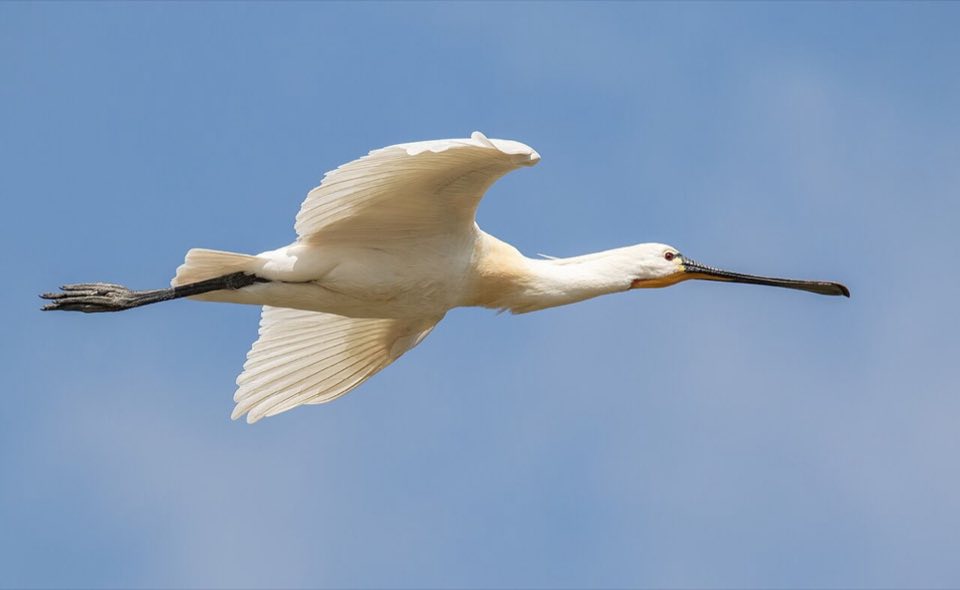
Eurasian spoonbill (endemic subspecies balsaci), great white pelican, royal, Caspian, gull-billed & common terns, slender-billed gull, grey heron (pale 'monicae' form), reed cormorant, greater flamingo. Tidra, Nair, Arel, Kiaone and Zira islets, PNBA, Mauritania.
Best time: 15 Apr – 30 Jun (April to June). Where: Nair & Arel islets (off Tidra), Kiaone islands, Iwik – park post and guides (Mauritania). Time of day: Late afternoon into dusk as adults return to feed chicks.
- Guide, ranger or boat needed
- Entry fee
- Telescope recommended
- Sound 4/5
Open it in the interactive calendarSunrise and sunset listening times for the day you pick, and the map.
When is the best time?
Peak: 15 Apr – 30 Jun. Mid April to end of June: tens of thousands of pairs of 15 or so species, the largest colonies in West Africa
Active from 1 Mar to 15 Aug (March to August) in a typical year.
Time of day
Late afternoon into dusk as adults return to feed chicks; mornings are windier
- Colony return: 3 h before sunset → last light
What will you hear?
Royal and Caspian tern colonies screaming, pelican colonies grunting, spoonbill bill-clacking at the nest, and slender-billed gull chatter across the water from a stationary boat.
Binoculars?
Telescope recommended. Colonies are watched from a lanche anchored 200 m+ downwind; a scope makes the pelicans and spoonbills, binoculars minimum.
Where to go
- Nair & Arel islets (off Tidra) — Main tern and spoonbill colonies; strictly no landing during breeding — watched and recorded from an anchored lanche. Map
- Kiaone islands — Pelican and cormorant colonies; the sandy islets north of Tidra. Map
- Iwik – park post and guides — Where to arrange the boat and check which islets are closed this season. Map
How to go on your own, and what it costs
The colonies are on islets closed to landing; the only legal way is an anchored lanche hired in Iwik with the park permit and, for anything beyond watching, a written research authorisation from the PNBA scientific station. Cheapest legal route: Chami permit + Iwik village lanche for a half day.
Cost: Park access fee 200 MRU per person per night (PNBA, 2026) plus lanche hire by negotiation in Iwik — check current prices.
Free or no-guide alternative: From the Iwik shore and Cap Tafarit with a scope you see the flight lines of terns and pelicans to and from the islets and hear the colony as a distant wash on still evenings; free of boat cost though the park permit still applies. No legal way onto the islets themselves.
Who runs access
- Iwik village lanches (PNBA post, Iwik) (community project) — Half-day sail to anchor off the colonies; no landing.
Field-recording notes
Colonies are closed to landing and drones; even an anchored boat at 200 m puts up a tern colony if the wind swings you closer, so brief the guide and stay downwind. Spring on the Banc is hot (35°C+ inland from May) and the dust-bearing harmattan can blow for days — capsules gunk up, so keep them capped between takes. Research recording needs a written PNBA authorisation on top of the entry permit; the park's scientific station at Iwik is the contact.
Sources
Similar spectacles
 Lac de Grand-Lieu: the great heronry and the spoonbill colonyHeron and egret traffic croaking and barking overhead at dawn and dusk, black terns and whiskered terns squabbling over the water lilies, Savi's warbler reeling and a booming bittern from the reedbeds at Pierre-Aiguë, cuckoos and water rails — the colony itself is heard only as a distant, constant squabble across the water.
 Hornøya and Gjesværstappan: Arctic seabird cliffsA guillemot wall at arm's length: massed growling and trumpeting, kittiwake screaming, puffin grunts, Brünnich's guillemots' lower calls; Arctic surf; at Gjesværstappan the gannet colony's grating and the constant wing-noise of puffins by the hundred thousand.
 Svalbard: Arctic summer cliffs, walrus and ternsLittle auk colonies — a shrill, laughing chorus from scree slopes by the hundred thousand; Brünnich's guillemot walls (Alkefjellet) with birds pouring off 100 m dolerite cliffs; arctic terns in a screaming defensive cloud in Adventdalen; walrus grunts and snorts on a haul-out; calving glaciers.
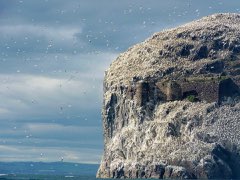 Seabird citiesA wall of seabird calls: gannet grating, kittiwakes calling their name, guillemot growls, puffin burrow moans, sea and wind below.
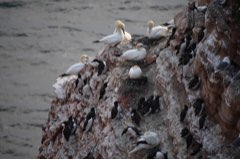 Helgoland Lummenfelsen: guillemots, gannets and the 'Lummensprung'Germany's only seabird cliff: guillemot growls, kittiwake screaming, gannet colony grating, fulmar cackles; at the jump, chicks peeping and adults calling them down to the sea 40 m below.
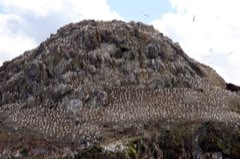 Sept-Îles: gannets on Rouzic, puffins and auksFrance's only gannet colony (about 14,000 pairs on Rouzic) as a wall of grating calls from the boat, puffins and kittiwakes on the sea, and the Atlantic swell against the granite.
More: all spectacles in Mauritania · spoonbills · seabird colonies · Mauritania in April · May · June