
'Sort sol' — starling murmurations over the Wadden Sea marshes
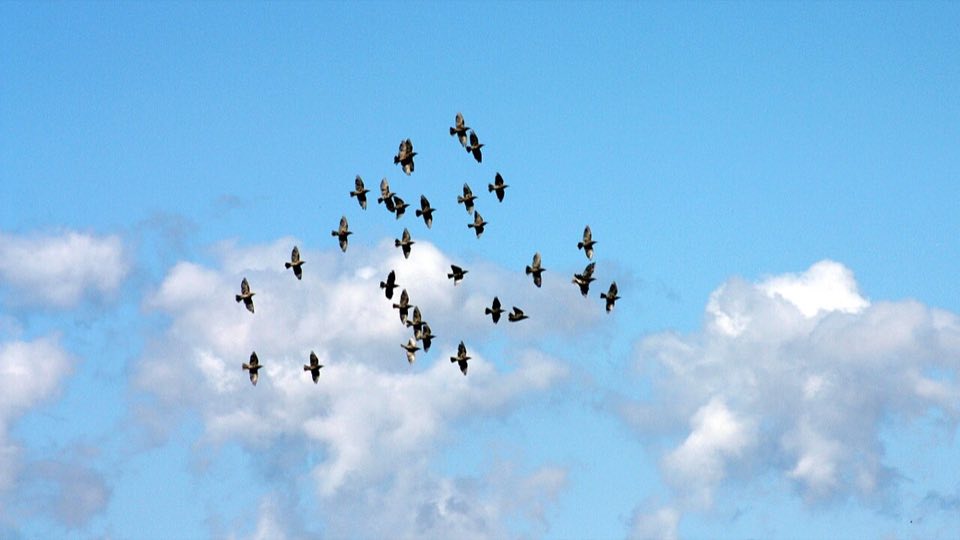
Common starling (Sturnus vulgaris) — up to a million birds at the Tønder marsh roosts; sparrowhawk, peregrine and marsh harrier attacking. Tøndermarsken and the Ribe marshes, Wadden Sea National Park (South Jutland), Denmark.
Best time: 1 Sep – 20 Oct and 1 Mar – 10 Apr (March to April, September to October). Where: Tøndermarsken – Rudbøl / Magisterkogen, Højer sluice and Margrethe Kog, Vadehavscentret, Vester Vedsted (Ribe) (Denmark). Time of day: Arrive an hour before sunset: flocks build from 30 min before sunset, the roost drop comes around sunset, and the reed chatter runs an hour into dark.
- You can go on your own
- Free
- No binoculars needed
- Sound 4/5
Open it in the interactive calendarSunrise and sunset listening times for the day you pick, and the map.
When is the best time?
- Peak 1: 1 Sep – 20 Oct — September to the October holiday: the big autumn roosts (best)
- Peak 2: 1 Mar – 10 Apr — March to early April: spring sort sol as the flocks move back north
Active from 1 Mar to 5 Nov (March to November) in a typical year.
Time of day
Arrive an hour before sunset: flocks build from 30 min before sunset, the roost drop comes around sunset, and the reed chatter runs an hour into dark; the morning departure explodes in the 20 min around sunrise.
- Sort sol and roost: 45 min before sunset → 30 min after last light
- Dawn departure: 30 min before sunrise → 20 min after sunrise
What will you hear?
The rush of a million wings folding in a single turn, the crackle of the flock settling into the reed, then a vast chattering roost; a raptor strike sends a rippling roar through the whole mass; morning departures leave in waves.
Binoculars?
No binoculars needed. The flock is overhead and the roost chatter beside you on the dyke; nothing needed.
Where to go
- Tøndermarsken – Rudbøl / Magisterkogen — Classic reed roosts along the Vidå; roost sites shift week to week — guides (Vadehavscentret, local Sort Sol tours) know the current one. Map
- Højer sluice and Margrethe Kog — Reed and salt marsh behind the dyke; car-based viewing from the dyke road. Map
- Vadehavscentret, Vester Vedsted (Ribe) — National park visitor centre running bus and own-car Sort Sol tours to the Ribe roosts. Map
How to go on your own, and what it costs
Phone the Vadehavscentret or check the Tøndermarsken site for the current roost, then park on the public dyke roads (Rudbøl, Højer sluice, the Vidå dykes) an hour before sunset — standing on the dykes is legal at any hour; do not enter the reeds. Guided bus and own-car tours from Ribe/Tønder are optional.
Cost: Free from the dykes; Vadehavscentret Sort Sol tours DKK 295 by bus, DKK 135 own car (2026).
Who runs access
- Vadehavscentret – Sort Sol tours (park authority) — Bus tours and own-car ('kør selv') tours to the current roost, late Aug–Oct; online tickets.
Field-recording notes
The roost moves — the only reliable way to be under it is a guided tour or a phone call to the Vadehavscentret the same day. Guided groups are 50–200 people talking; set your rig 200–300 m along the dyke from the crowd, under the flight line (starlings come in low over the reed), and stay until the group leaves — the reed chatter after dark is the prize and it is legal to stand on the public dykes all night. Wind off the North Sea is near-constant; the lee of the dyke helps. Hunting: the marsh polders have duck and goose shooting in autumn, and the Tønder–Højer road runs beside the best reeds. Do not enter the reedbeds (private and protected).
Sources
Similar spectacles
 Starling murmurationsThe whoosh of tens of thousands of wings turning together, then a huge chattering as they settle into the reeds or under a pier; the dawn explosion out of the roost is even louder.
 Starling murmurations in RomeMillions of starlings wheeling over the Tiber and EUR, then a massive chattering roar in the city trees against traffic and bells.
 Rook & jackdaw winter roostTens of thousands of corvids arriving in waves, calling in a rising roar, then a sudden collective drop into the wood.
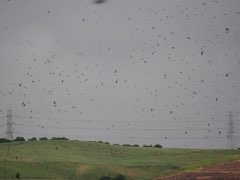 The Afi Mountain barn swallow roostA rising hiss of millions of wings and contact calls as the swallows swirl and drop into the grass on the mountain's western slopes, falcons stooping through the flock, and then the extraordinary, very quiet murmur of a settled roost after dark.
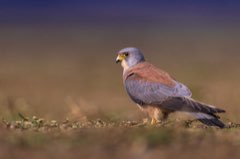 Kousmar — the world's largest lesser kestrel and scissor-tailed kite roostTens of thousands of small falcons and kites settling into a few hectares of acacias with a continuous chittering and the rush of wings, then a night of restless calling; the Saloum's mangroves and the town's calls to prayer behind.
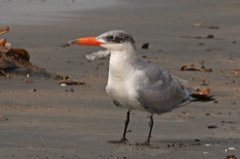 Saloum Delta — tern roosts, mangrove herons and wintering wadersThousands of terns and waders on the sandbars of the Saloum mouth, the click and hiss of mangrove at low tide (mudskippers, fiddler crabs, snapping shrimp with a hydrophone), goliath heron's bark, and pied kingfishers everywhere.
More: all spectacles in Denmark · starling murmurations · murmurations and roosts · March · Denmark in April · Denmark in September · Denmark in October