
Kousmar — the world's largest lesser kestrel and scissor-tailed kite roost
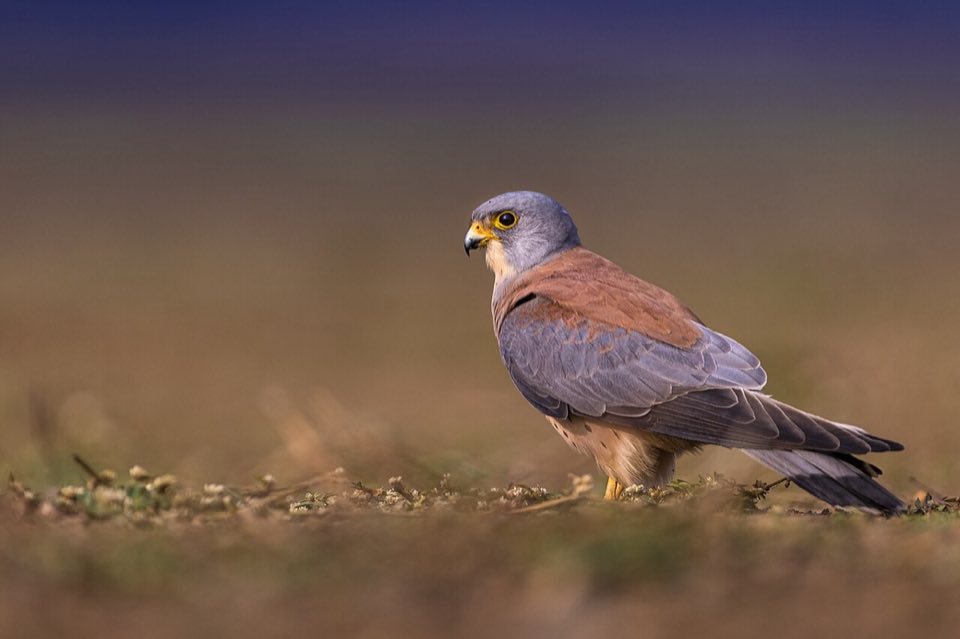
Lesser kestrel (Falco naumanni, 20–29,000), African swallow-tailed kite (Chelictinia riocourii, 20–36,000). Kousmar island, Saloum river near Kaolack, Senegal.
Best time: 1 Dec – 15 Feb (December to February). Where: Kousmar island (opposite Ndiaffate), Ndiaffate village landing, Kaolack riverfront (Senegal). Time of day: The last 90 minutes before sunset as kestrels stream in from the groundnut fields and the kites arrive in a single dense cloud.
- Partly on your own
- Free
- Binoculars helpful
- Sound 4/5
Open it in the interactive calendarSunrise and sunset listening times for the day you pick, and the map.
When is the best time?
Peak: 1 Dec – 15 Feb. December to mid February; the January counts are the reference (a third to a half of western Europe's lesser kestrels)
Active from 15 Oct to 31 Mar (October to March) in a typical year.
Time of day
The last 90 minutes before sunset as kestrels stream in from the groundnut fields and the kites arrive in a single dense cloud; dawn departure in the 30 minutes after sunrise
- Roost arrival: 90 min before sunset → last light
- Dawn departure: 15 min before sunrise → 45 min after sunrise
What will you hear?
Tens of thousands of small falcons and kites settling into a few hectares of acacias with a continuous chittering and the rush of wings, then a night of restless calling; the Saloum's mangroves and the town's calls to prayer behind.
Binoculars?
Binoculars helpful. Kestrels and kites stream in overhead at dusk; binoculars from the Ndiaffate bank across the channel to the roost trees.
Where to go
- Kousmar island (opposite Ndiaffate) — Classified forest since 1936; a pirogue from Ndiaffate village crosses the channel in ten minutes. Coordinates are for the roost area on the island — approximate. Map
- Ndiaffate village landing — Village on the Kaolack–Fatick road where local pirogues are hired; community guides. Map
- Kaolack riverfront — The arrival streams cross the town's western edge at dusk; visible (not audible) from the bridge. Map
How to go on your own, and what it costs
Kaolack is on the main bus and sept-place routes; taxi to Ndiaffate (10 km). The roost is watched free from the Ndiaffate riverbank; to sit on the island itself hire a village pirogue on the spot (agree a price) — no park, no official fee, but ask the village for permission.
Cost: Free from the bank; pirogue crossing a few thousand CFA negotiated in the village (check current prices).
Free or no-guide alternative: Watch and listen from the Ndiaffate riverbank at dusk as the birds stream in to the island. Free, no boat or guide needed; greet the village first.
Who runs access
- Ndiaffate village pirogues (community project) — Local, ad hoc; ask for the village chief.
Field-recording notes
Best mass-raptor sound event on the flyway and barely recorded. Ask permission from Ndiaffate's village chief and go with a local; the roost trees are on an island with no facilities, so a static rig left overnight (with a villager's blessing) catches the whole night. Kaolack is a big, loud town — salt works, mosques, traffic on the N1 — but the island itself is quiet apart from the Saloum's fishing pirogues. Dust from the harmattan in January; mosquitoes from the mangrove. No approach into the roost after birds settle; sit at the edge.
Sources
- ResearchGate – The huge roosting site of lesser kestrel and scissor-tailed kite on Kousmar island
- Journal of Raptor Research – African swallow-tailed kite breeding biology (Senegal & Cameroon)
Similar spectacles
 Rook & jackdaw winter roostTens of thousands of corvids arriving in waves, calling in a rising roar, then a sudden collective drop into the wood.
 The Afi Mountain barn swallow roostA rising hiss of millions of wings and contact calls as the swallows swirl and drop into the grass on the mountain's western slopes, falcons stooping through the flock, and then the extraordinary, very quiet murmur of a settled roost after dark.
 Starling murmurationsThe whoosh of tens of thousands of wings turning together, then a huge chattering as they settle into the reeds or under a pier; the dawn explosion out of the roost is even louder.
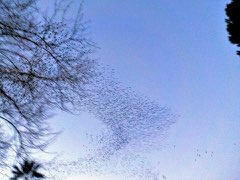 Starling murmurations in RomeMillions of starlings wheeling over the Tiber and EUR, then a massive chattering roar in the city trees against traffic and bells.
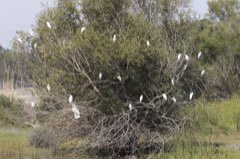 Marshall and Mesurado wetlands — Monrovia's mangrove roostsThousands of egrets and herons settling into mangrove roosts on the edge of the capital, waders on the Marshall bar, mangrove crackle, and from the Farmington river islands the pant-hoots of the rescued chimpanzee colonies at dusk.
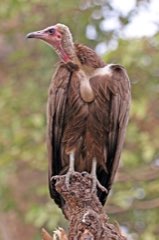 Hooded vultures of the Kombo coast — Africa's densest population at the fish beaches and abattoirsMostly silent birds in enormous numbers: the hiss and thin squealing at a carcass or fish-gut pile, the clatter of 200 pairs of wings lifting at once when a dog runs through, the thud of landings in the kapok roost at dusk. The real soundscape is the fish beach itself — pirogue crews, drying racks, gulls, kites and the vultures' shuffle. A phenomenon that no longer exists anywhere else in the species' range.
More: all spectacles in Senegal · murmurations and roosts · Senegal in January · Senegal in February · Senegal in December