
The Afi Mountain barn swallow roost
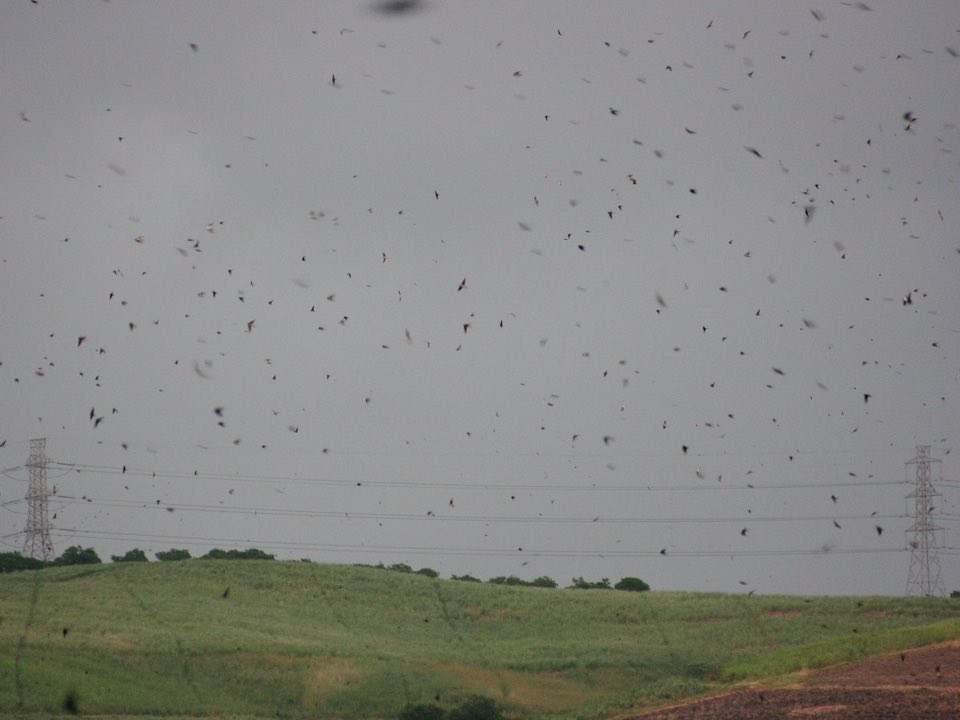
Barn swallow (Hirundo rustica) — millions of European breeders; African hobby (Falco cuvierii) and other falcons hunting the roost. Afi Mountain Wildlife Sanctuary, Boki, Cross River State, Nigeria.
Best time: 1 Dec – 28 Feb (December to February). Where: Boje – roost slopes on the west of Afi Mountain, Drill Ranch, Afi Mountain (Pandrillus) (Nigeria). Time of day: The flocks gather over the roost from about 45 minutes before sunset and pour into the elephant grass in the last 20 minutes of light.
- Guide, ranger or boat needed
- Entry fee
- No binoculars needed
- Sound 5/5
Open it in the interactive calendarSunrise and sunset listening times for the day you pick, and the map.
When is the best time?
Peak: 1 Dec – 28 Feb. December to February; numbers have been estimated in the millions, making it one of the largest swallow roosts known in Africa
Active from 1 Nov to 31 Mar (November to March) in a typical year.
Time of day
The flocks gather over the roost from about 45 minutes before sunset and pour into the elephant grass in the last 20 minutes of light; they leave in a burst in the 15 minutes around sunrise
- Roost departure: 15 min before sunrise → 15 min after sunrise
- Swallows dropping in: 45 min before sunset → last light
What will you hear?
A rising hiss of millions of wings and contact calls as the swallows swirl and drop into the grass on the mountain's western slopes, falcons stooping through the flock, and then the extraordinary, very quiet murmur of a settled roost after dark.
Binoculars?
No binoculars needed. Millions of swallows swirl overhead and drop into the grass around you; naked eye, falcons included.
Where to go
- Boje – roost slopes on the west of Afi Mountain — The roost is in tall grass on the western flank near the village of Boje; the Drill Ranch and Cross River State Forestry Commission guides know the current site (it moves within the area). Map
- Drill Ranch, Afi Mountain (Pandrillus) — The sanctuary's base camp with cabins and camping; drills and chimpanzees in large forest enclosures; guides for the mountain. Map
How to go on your own, and what it costs
A guide is required in the sanctuary (Cross River State Forestry Commission rule; the roost site moves). Cheapest legal way: bus to Ikom, shared taxi/motorbike to Boje or the Drill Ranch, then the ranch's own guide and the community development fund fee; camp rather than take a cabin.
Cost: Drill Ranch (tariff still dated Nov 2019 on the Pandrillus site): cabin ₦8,000 pp/night (₦5,000 child under 10), camping ₦2,500, ranch-hike guide ₦1,000 per group per day, community fund ₦250 pp/night, vehicle ₦1,000; Forestry Commission fees for the mountain are extra and unpublished — check current prices.
Free or no-guide alternative: The evening gathering is visible for free from Boje village and its farm tracks below the roost slopes — the swirl over the mountain and the sound of the drop carry well. Only entering the sanctuary needs the guide.
Who runs access
- Pandrillus – Drill Ranch Afi Mountain (NGO) — Sanctuary base with cabins, camping and guides
Field-recording notes
A guide from the Drill Ranch or the Forestry Commission is required on the mountain (sanctuary rule, and the roost site shifts between seasons). Local hunting of the roost has been documented; the community fund and guide fees are part of what protects it, and mist-netting or any capture needs written authorisation. The slopes are steep grass and burn in the dry season — ask where fires are planned. Dry-season nights are cool and still; harmattan haze at dawn. The last 6 km to the ranch can need 4x4. Cross River State has had security incidents; check current travel advice and phone the ranch before setting off.
Sources
- Pandrillus – Drill Ranch Afi Mountain visitor information (fees Nov 2019)
- Pandrillus – Afi Mountain Wildlife Sanctuary
- Roost of millions of migratory swallows threatened (ScienceDaily, 2008)
Similar spectacles
 Rook & jackdaw winter roostTens of thousands of corvids arriving in waves, calling in a rising roar, then a sudden collective drop into the wood.
 Starling murmurationsThe whoosh of tens of thousands of wings turning together, then a huge chattering as they settle into the reeds or under a pier; the dawn explosion out of the roost is even louder.
 Starling murmurations in RomeMillions of starlings wheeling over the Tiber and EUR, then a massive chattering roar in the city trees against traffic and bells.
 Kousmar — the world's largest lesser kestrel and scissor-tailed kite roostTens of thousands of small falcons and kites settling into a few hectares of acacias with a continuous chittering and the rush of wings, then a night of restless calling; the Saloum's mangroves and the town's calls to prayer behind.
 Saloum Delta — tern roosts, mangrove herons and wintering wadersThousands of terns and waders on the sandbars of the Saloum mouth, the click and hiss of mangrove at low tide (mudskippers, fiddler crabs, snapping shrimp with a hydrophone), goliath heron's bark, and pied kingfishers everywhere.
 Marshall and Mesurado wetlands — Monrovia's mangrove roostsThousands of egrets and herons settling into mangrove roosts on the edge of the capital, waders on the Marshall bar, mangrove crackle, and from the Farmington river islands the pant-hoots of the rescued chimpanzee colonies at dusk.
More: all spectacles in Nigeria · murmurations and roosts · Nigeria in January · Nigeria in February · Nigeria in December