
Starling murmurations in Rome
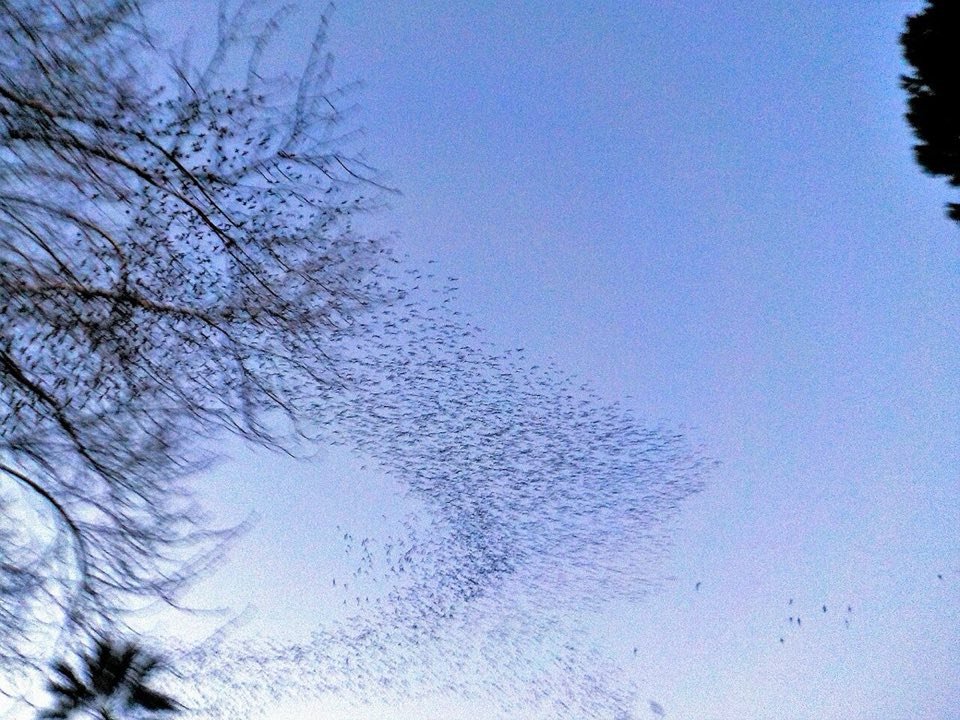
Common starling (Sturnus vulgaris). Rome (also Bologna, Florence), Italy.
Best time: 1 Dec – 31 Jan (December to January). Where: Lungotevere, Rome, EUR district, Rome, Oasi LIPU Castel di Guido (Italy). Time of day: Flocks gather from about 45 min before sunset, the display peaks in the 20 min either side of sunset, then a roaring chatter in the roost trees for an hour after dark.
- You can go on your own
- Free
- No binoculars needed
- Sound 4/5
Open it in the interactive calendarSunrise and sunset listening times for the day you pick, and the map.
When is the best time?
Peak: 1 Dec – 31 Jan. December–January
Active from 1 Nov to 28 Feb (November to February) in a typical year.
Time of day
Flocks gather from about 45 min before sunset, the display peaks in the 20 min either side of sunset, then a roaring chatter in the roost trees for an hour after dark; dawn departure at first light.
- Murmuration and roost: 45 min before sunset → 45 min after last light
- Dawn departure: 30 min before sunrise → 15 min after sunrise
What will you hear?
Millions of starlings wheeling over the Tiber and EUR, then a massive chattering roar in the city trees against traffic and bells.
Binoculars?
No binoculars needed. Overhead along the Lungotevere; naked eye.
Where to go
- Lungotevere, Rome — Roosting plane trees along the river. Map
- EUR district, Rome — The city uses bird-scaring distress calls in some years. Map
- Oasi LIPU Castel di Guido — Peri-urban alternative with a cleaner background. Map
How to go on your own, and what it costs
Walk the Lungotevere pavements between Ponte Sisto and Ponte Garibaldi at dusk, or the EUR lake promenade — free, any hour. Oasi LIPU Castel di Guido: free access on set opening days (check LIPU).
Cost: Free.
Field-recording notes
A unique nature-meets-city soundscape — traffic is part of the piece. Watch for the municipal distress-call loudspeakers, which will ruin a take. For clean sound go to peri-urban roosts or reedbeds.
Sources
Similar spectacles
 Starling murmurationsThe whoosh of tens of thousands of wings turning together, then a huge chattering as they settle into the reeds or under a pier; the dawn explosion out of the roost is even louder.
 'Sort sol' — starling murmurations over the Wadden Sea marshesThe rush of a million wings folding in a single turn, the crackle of the flock settling into the reed, then a vast chattering roost; a raptor strike sends a rippling roar through the whole mass; morning departures leave in waves.
 Rook & jackdaw winter roostTens of thousands of corvids arriving in waves, calling in a rising roar, then a sudden collective drop into the wood.
 The Afi Mountain barn swallow roostA rising hiss of millions of wings and contact calls as the swallows swirl and drop into the grass on the mountain's western slopes, falcons stooping through the flock, and then the extraordinary, very quiet murmur of a settled roost after dark.
 Kousmar — the world's largest lesser kestrel and scissor-tailed kite roostTens of thousands of small falcons and kites settling into a few hectares of acacias with a continuous chittering and the rush of wings, then a night of restless calling; the Saloum's mangroves and the town's calls to prayer behind.
 Saloum Delta — tern roosts, mangrove herons and wintering wadersThousands of terns and waders on the sandbars of the Saloum mouth, the click and hiss of mangrove at low tide (mudskippers, fiddler crabs, snapping shrimp with a hydrophone), goliath heron's bark, and pied kingfishers everywhere.
More: all spectacles in Italy · starling murmurations · murmurations and roosts · Italy in January · Italy in December