
Rook & jackdaw winter roost
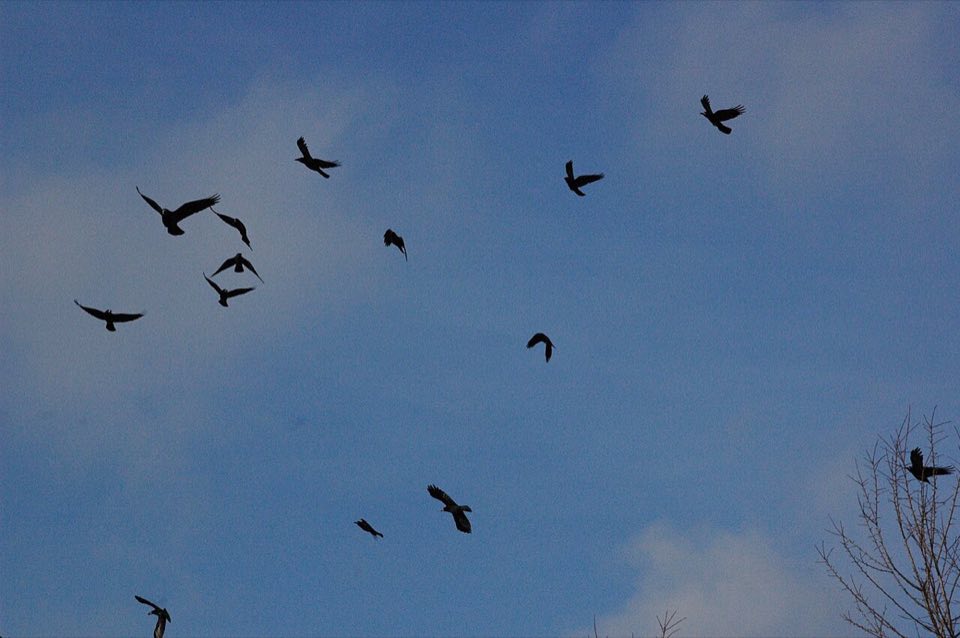
Rook, jackdaw (Corvus frugilegus, Coloeus monedula). Yare valley, Norfolk, United Kingdom.
Best time: 1 Dec – 31 Jan (December to January). Where: Buckenham Carrs, Yare valley, RSPB Strumpshaw Fen (United Kingdom). Time of day: Arrival waves build from about 40 min before sunset and the final drop into the carr comes right at dusk.
- You can go on your own
- Free
- No binoculars needed
- Sound 5/5
Open it in the interactive calendarSunrise and sunset listening times for the day you pick, and the map.
When is the best time?
Peak: 1 Dec – 31 Jan. December–January
Active from 1 Nov to 28 Feb (November to February) in a typical year.
Time of day
Arrival waves build from about 40 min before sunset and the final drop into the carr comes right at dusk; departure starts in the dark, 30–40 min before sunrise.
- Roost arrival: 45 min before sunset → 15 min after last light
- Dawn departure: 45 min before sunrise → sunrise
What will you hear?
Tens of thousands of corvids arriving in waves, calling in a rising roar, then a sudden collective drop into the wood.
Binoculars?
No binoculars needed. The waves arrive overhead and drop into the carr 200 m away; the sound is the show.
Where to go
- Buckenham Carrs, Yare valley — One of the UK's largest roosts (Mark Cocker's 'Crow Country'). Watch from RSPB Buckenham Marshes; the Norwich–Lowestoft railway runs along the reserve edge. Map
- RSPB Strumpshaw Fen — Next door; pre-roost gatherings on the marshes and a base for dawn departures. Map
How to go on your own, and what it costs
RSPB Buckenham Marshes is free and open at all hours: park in the small reserve car park off Station Road (or take the train to Buckenham station, a request stop right by the reserve) and walk the track to the river wall to face Buckenham Carrs. Strumpshaw Fen (next door) charges non-members and is dawn-to-dusk.
Cost: Free (Buckenham Marshes); RSPB Strumpshaw Fen £5.50 adult / £2.50 child non-members (2026), members free.
Field-recording notes
Arrival waves build for 30–40 minutes; a wide ambience from the marsh edge captures the layering, the final drop is short and dramatic. Trains pass roughly hourly — note times. The carr itself is private; record from the reserve tracks. Most counties have a big corvid roost — county bird clubs know where.
Sources
Similar spectacles
 The Afi Mountain barn swallow roostA rising hiss of millions of wings and contact calls as the swallows swirl and drop into the grass on the mountain's western slopes, falcons stooping through the flock, and then the extraordinary, very quiet murmur of a settled roost after dark.
 Starling murmurations in RomeMillions of starlings wheeling over the Tiber and EUR, then a massive chattering roar in the city trees against traffic and bells.
 Kousmar — the world's largest lesser kestrel and scissor-tailed kite roostTens of thousands of small falcons and kites settling into a few hectares of acacias with a continuous chittering and the rush of wings, then a night of restless calling; the Saloum's mangroves and the town's calls to prayer behind.
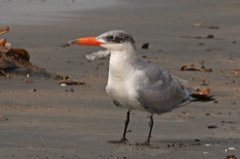 Saloum Delta — tern roosts, mangrove herons and wintering wadersThousands of terns and waders on the sandbars of the Saloum mouth, the click and hiss of mangrove at low tide (mudskippers, fiddler crabs, snapping shrimp with a hydrophone), goliath heron's bark, and pied kingfishers everywhere.
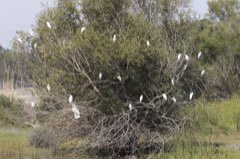 Marshall and Mesurado wetlands — Monrovia's mangrove roostsThousands of egrets and herons settling into mangrove roosts on the edge of the capital, waders on the Marshall bar, mangrove crackle, and from the Farmington river islands the pant-hoots of the rescued chimpanzee colonies at dusk.
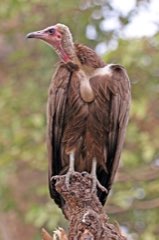 Hooded vultures of the Kombo coast — Africa's densest population at the fish beaches and abattoirsMostly silent birds in enormous numbers: the hiss and thin squealing at a carcass or fish-gut pile, the clatter of 200 pairs of wings lifting at once when a dog runs through, the thud of landings in the kapok roost at dusk. The real soundscape is the fish beach itself — pirogue crews, drying racks, gulls, kites and the vultures' shuffle. A phenomenon that no longer exists anywhere else in the species' range.
More: all spectacles in the United Kingdom · murmurations and roosts · the United Kingdom in January · the United Kingdom in December