
Wildlife to see in Denmark in September
5 spectacles at their peak in Denmark in September, and 3 more still going on. Wild animals only: no zoos, no wildlife parks, no hunting. Open Denmark in September in the interactive calendar for listening times on the day you pick.
At their peak in September
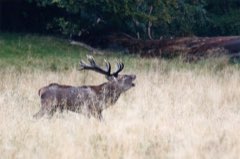 Red deer rut: Dyrehaven, Thy, Lille Vildmose, OksbølStags roaring across parkland (Dyrehaven's ~2,000 deer make it Europe's easiest big rut) or across dune heath in Thy with the North Sea behind; antler clashes, hinds, tawny owls; in Dyrehaven, also the Klampenborg trains.
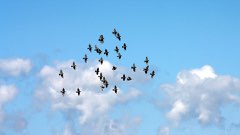 'Sort sol' — starling murmurations over the Wadden Sea marshesThe rush of a million wings folding in a single turn, the crackle of the flock settling into the reed, then a vast chattering roost; a raptor strike sends a rippling roar through the whole mass; morning departures leave in waves.
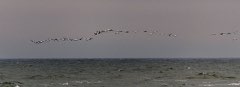 Gedser Odde: autumn migration off Denmark's southern tipRivers of chaffinch and brambling calls over the car park on a big October morning, wood pigeons' wing-clatter, eider flocks crooning as they round the point, little gulls' chatter, the Fehmarn Belt surf; the station's own sound recorder (PUC) logs the night migration overhead.
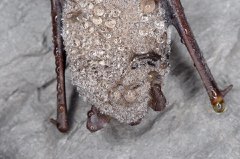 Bat hibernacula in the Mønsted and Daugbjerg limestone minesAudible squeaks and wing-flutter of hundreds of Myotis swarming at the entrances; on a detector, dense FM sweeps and social calls; tawny owls in the beech above; otherwise rural silence.
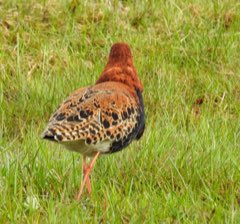 Tipperne: wader passage on Ringkøbing FjordWader flocks calling over the wet meadows, godwit and lapwing display in spring, avocets, geese lifting in autumn, the fjord's chop on the western dyke; almost no traffic.
Also going on in September
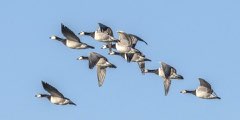 Wadden Sea autumn: geese, waders and whooper swans in the marshBarnacle goose yapping in flocks of tens of thousands over the Ballum marsh, brent geese growling on the flats, golden plover flocks whistling, whooper swan families bugling on the polders at night, curlew; the tide.
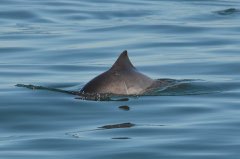 Harbour porpoises in the Little BeltPorpoises are silent to the ear (their clicks are at 130 kHz) — a hydrophone with a wideband recorder gets the click trains; audibly, the sharp puff of a surfacing blow a few metres off the rocks at Røjle Klint, and the Old Little Belt Bridge traffic.
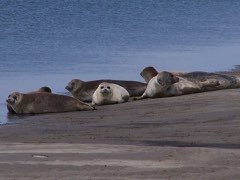 Seals at Hvide Sande and on the Wadden Sea sandbanksHarbour seals are quiet — snorts, splashes, pups bleating on a haul-out; grey seal bulls moaning and roaring in winter; with a hydrophone, seal vocalisations and the tide; oystercatchers and the surf.