
Ngaga: habituated western lowland gorillas in the marantaceae forest
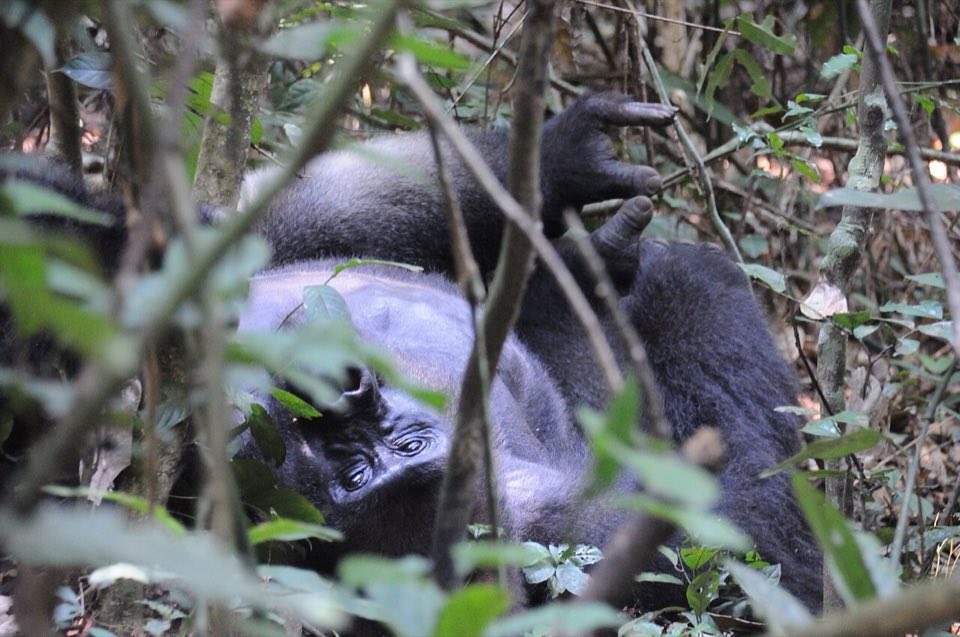
Western lowland gorilla (Gorilla gorilla gorilla) — habituated groups studied since 2005; putty-nosed and moustached monkeys, grey-cheeked mangabey. Ngaga, Odzala-Kokoua National Park periphery, Republic of the Congo.
Best time: 15 Jun – 15 Sep (June to September). Where: Ngaga camp (Republic of the Congo). Time of day: Trackers leave camp at first light to find the group at its night nests.
- Guide, ranger or boat needed
- Paid trip only
- No binoculars needed
- Sound 4/5
Open it in the interactive calendarSunrise and sunset listening times for the day you pick, and the map.
When is the best time?
Peak: 15 Jun – 15 Sep. Mid June to mid September, the dry season with the easiest tracking; the gorillas are followed year-round
Active from 1 Jun to 28 Feb (June to February) in a typical year.
Time of day
Trackers leave camp at first light to find the group at its night nests; contact is one hour, usually between sunrise and 10:00; chest-beats and the silverback's displays carry to camp at dawn and dusk
- Gorilla contact: sunrise → 10:00
- Evening displays from camp: 1 h before sunset → last light
What will you hear?
Chest-beats, hoots and the crashing of a silverback's display in dense marantaceae, the soft grunting and belching of a feeding family a few metres away, monkeys overhead and a night of tree hyrax and frogs from the camp's raised rooms.
Binoculars?
No binoculars needed. Gorillas at the 7 m minimum in dense marantaceae; binoculars are useless in the thicket, ears do the work.
Where to go
- Ngaga camp — Research-and-tourism camp of the park's tourism concession, outside the park boundary; the Neptuno and Jupiter groups are tracked from here. Map
How to go on your own, and what it costs
Gorilla tracking is only with the research trackers from Ngaga camp (habituation programme rules). There is no cheaper legal route than a stay at the concession camp, which includes the permits.
Cost: All-inclusive concession-camp stay, several hundred USD per person per night; check current prices.
Free or no-guide alternative: No legal way without the trackers; approaching unhabituated gorillas is dangerous for them and for you. Lésio-Louna, three hours from Brazzaville, is the low-cost gorilla alternative (see that entry).
Field-recording notes
Great-ape rules: mask on, 7 m minimum, one hour, no visits if unwell, maximum group size set by the researchers — the guides enforce all of it and will move you if the silverback objects. Marantaceae forest is so dense that the recording is mostly of sound, not sight, which suits the purpose. Dawn contact means condensation on everything; the forest is cool at 500 m.
Sources
Similar spectacles
 Langoué Bai: elephants, gorillas and red river hogs at the Ivindo clearingA bai at night is the best elephant listening in Central Africa: rumbles, trumpets, splashing and the squabbling of family groups at the mineral pools, with tree hyrax, frogs and owls in the forest ring. By day, red river hog groups of fifty, gorilla chest-beats and 'hoo' series from the edge, and the whistles of grey parrots in hundreds.
 Lobéké bais: elephants, gorillas and grey parrots at the clearingsGrey parrot flocks whistling and screeching over Djangui, elephants splashing, rumbling and trumpeting in the mud of Petite Savane, gorilla chest-beats from the edge, forest hogs grunting, and the rainforest dawn behind it all.
 Lésio-Louna: rewilded gorillas and the Batéké plateauGorillas calling and feeding on the river islands seen from a pirogue, the wide, wind-swept quiet of the Batéké plateau at dawn with larks and cisticolas, and at night frogs and nightjars along the gallery forests.
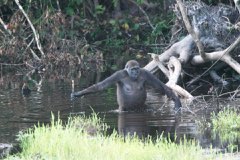 Monte Alén: the Río Muni rainforest dawn, elephants and the goliath frog riversA Central African lowland chorus: hornbills whooshing overhead, the bubbling of greenbuls and the far pant-hoots of chimpanzees, mandrill grunts, elephant rumbles at the swamp edge. The goliath frog itself is nearly silent (no vocal sac) — its rivers are a night of other frogs and the roar of water over rock.
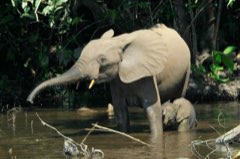 Nouabalé-Ndoki: gorillas and elephants at Mbeli BaiA silverback's chest-beats and a family's contented feeding grunts in the open, from a platform 20 m above one of the Congo Basin's most-watched clearings; elephants splashing at night, sitatunga barking, parrots at dawn, and a rainforest with no engine within a day's walk.
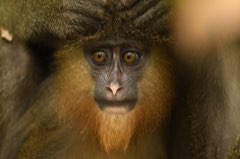 Lopé: the mandrill super-groups of the dry seasonA horde of several hundred mandrills on the move is one of the loudest things in an African forest: a rolling wave of grunts, two-phase 'crowing' from the males, screams, branches breaking and the drumming of hundreds of feet in the leaf litter, approaching for minutes before anything is seen and fading for minutes after. Around it, the savanna–forest dawn: hornbills, greenbuls, elephants rumbling at the forest edge.
More: all spectacles in the Republic of the Congo · gorillas · mountain wildlife · June · the Republic of the Congo in July · the Republic of the Congo in August · the Republic of the Congo in September