
Lésio-Louna: rewilded gorillas and the Batéké plateau
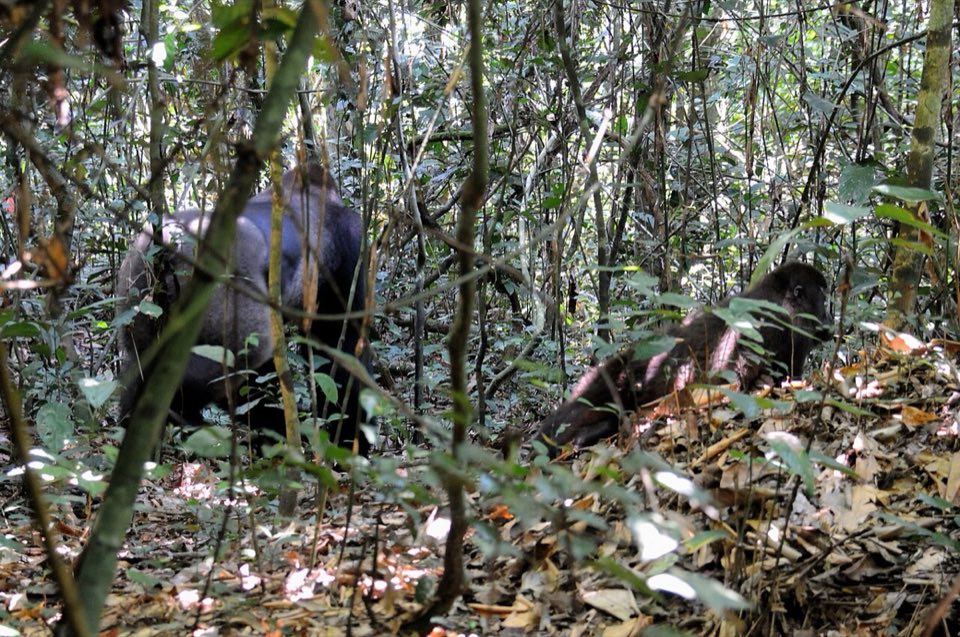
Western lowland gorilla (reintroduced population, The Aspinall Foundation), forest buffalo, sitatunga; Batéké plateau grassland birds, Congo moor chat, black-collared bulbul; frogs and insects on the Léfini. Lésio-Louna Natural Reserve, Pool, 150 km north of Brazzaville, Republic of the Congo.
Best time: 1 Jun – 30 Sep (June to September). Where: Iboubikro – reserve camp and gorilla viewing, Abio / Léfini river (Republic of the Congo). Time of day: Gorilla viewing by boat on the Léfini/Louna in the morning.
- Guide, ranger or boat needed
- Entry fee
- Binoculars essential
- Sound 3/5
Open it in the interactive calendarSunrise and sunset listening times for the day you pick, and the map.
When is the best time?
Peak: 1 Jun – 30 Sep. June to September, the cool dry season when the sand tracks are passable and gorillas are viewed from the river
Active from 15 May to 31 Oct (May to October) in a typical year.
Time of day
Gorilla viewing by boat on the Léfini/Louna in the morning; the plateau grassland dawn from first light; frogs and nightjars from dusk
- Plateau dawn: first light → 09:00
- Gorillas by boat: 1 h after sunrise → 12:00
- River frogs: last light → 23:00
What will you hear?
Gorillas calling and feeding on the river islands seen from a pirogue, the wide, wind-swept quiet of the Batéké plateau at dawn with larks and cisticolas, and at night frogs and nightjars along the gallery forests.
Binoculars?
Binoculars essential. Gorillas are on river islands watched from the boat at the guides' distance; binoculars needed.
Where to go
- Iboubikro – reserve camp and gorilla viewing — Aspinall Foundation base with simple accommodation; gorillas on the islands and the reintroduction sites are viewed from boats. Map
- Abio / Léfini river — River and gallery forest on the southern edge of the reserve. Map
How to go on your own, and what it costs
Visits are booked at the reserve office in Brazzaville and guided (reserve rule; the gorillas are on protected islands). Cheapest legal way: book directly with the office rather than through an agency, share a 4x4 from Brazzaville and stay in the reserve's own accommodation at Iboubikro.
Cost: Reserve entry, guide and boat, plus accommodation; check current prices at the Brazzaville office.
Free or no-guide alternative: The Batéké plateau along the public N2 north of Brazzaville (around Mbé and the Léfini bridge) is open grassland: the plateau dawn, the river and its gallery-forest frogs are free from the roadside. The gorillas are only from the reserve's boats.
Who runs access
- The Aspinall Foundation – Lésio-Louna Reserve (NGO) — Reserve manager; visits via the Brazzaville office
Field-recording notes
Visits are arranged through the reserve office in Brazzaville and guided by the foundation's staff (reserve rule); a 4x4 for the sand tracks from the N2. The gorillas are rewilded animals on protected islands — viewing is from the boat, at the distance the guides set, no landing. Dry-season nights on the plateau are cool and remarkably quiet; grass fires are the main dry-season sound.
Sources
Similar spectacles
 Langoué Bai: elephants, gorillas and red river hogs at the Ivindo clearingA bai at night is the best elephant listening in Central Africa: rumbles, trumpets, splashing and the squabbling of family groups at the mineral pools, with tree hyrax, frogs and owls in the forest ring. By day, red river hog groups of fifty, gorilla chest-beats and 'hoo' series from the edge, and the whistles of grey parrots in hundreds.
 Lobéké bais: elephants, gorillas and grey parrots at the clearingsGrey parrot flocks whistling and screeching over Djangui, elephants splashing, rumbling and trumpeting in the mud of Petite Savane, gorilla chest-beats from the edge, forest hogs grunting, and the rainforest dawn behind it all.
 Ngaga: habituated western lowland gorillas in the marantaceae forestChest-beats, hoots and the crashing of a silverback's display in dense marantaceae, the soft grunting and belching of a feeding family a few metres away, monkeys overhead and a night of tree hyrax and frogs from the camp's raised rooms.
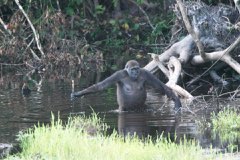 Monte Alén: the Río Muni rainforest dawn, elephants and the goliath frog riversA Central African lowland chorus: hornbills whooshing overhead, the bubbling of greenbuls and the far pant-hoots of chimpanzees, mandrill grunts, elephant rumbles at the swamp edge. The goliath frog itself is nearly silent (no vocal sac) — its rivers are a night of other frogs and the roar of water over rock.
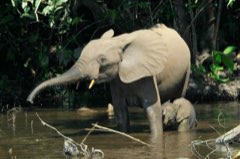 Nouabalé-Ndoki: gorillas and elephants at Mbeli BaiA silverback's chest-beats and a family's contented feeding grunts in the open, from a platform 20 m above one of the Congo Basin's most-watched clearings; elephants splashing at night, sitatunga barking, parrots at dawn, and a rainforest with no engine within a day's walk.
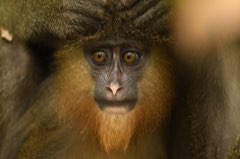 Lopé: the mandrill super-groups of the dry seasonA horde of several hundred mandrills on the move is one of the loudest things in an African forest: a rolling wave of grunts, two-phase 'crowing' from the males, screams, branches breaking and the drumming of hundreds of feet in the leaf litter, approaching for minutes before anything is seen and fading for minutes after. Around it, the savanna–forest dawn: hornbills, greenbuls, elephants rumbling at the forest edge.
More: all spectacles in the Republic of the Congo · gorillas · mountain wildlife · June · the Republic of the Congo in July · the Republic of the Congo in August · the Republic of the Congo in September