
Gedser Odde: autumn migration off Denmark's southern tip
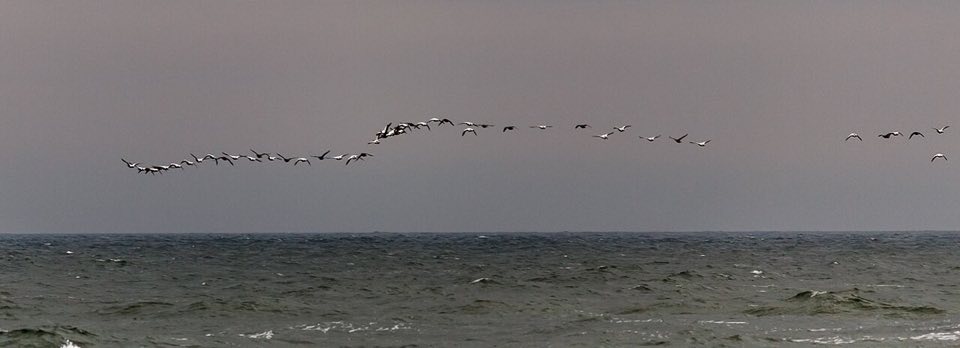
Eider (c. 135,000 per autumn counted westbound), common scoter (5,000+ on big days), long-tailed duck, red-throated diver (1,000+ days), little gull (c. 10,000 per autumn), finch flocks of 30,000–50,000 a day, wood pigeons 30,000+, rough-legged buzzard, red kite, sparrowhawk, skuas; honey buzzards at Hyllekrog around 1 September. Gedser Odde (Falster) and Hyllekrog (Lolland), Denmark.
Best time: 20 Sep – 31 Oct (September to October). Where: Gedser Odde – the southern point and car park, Gedser Fuglestation (Gedser Fyrvej 4, by the lighthouse), Kroghage and Gedser marina (Denmark). Time of day: The bird observatory's standard count runs from 30 minutes before sunrise for five hours — that is when the sea ducks stream past the point and the finches pour over the car park.
- You can go on your own
- Free
- Telescope recommended
- Sound 4/5
Open it in the interactive calendarSunrise and sunset listening times for the day you pick, and the map.
When is the best time?
Peak: 20 Sep – 31 Oct. Late September to end of October (eider peak late Sept–late Oct, finch and pigeon days in October); honey buzzards late Aug–early Sept at Hyllekrog
Active from 11 Aug to 30 Nov (August to November) in a typical year.
Time of day
The bird observatory's standard count runs from 30 minutes before sunrise for five hours — that is when the sea ducks stream past the point and the finches pour over the car park. Raptors from mid-morning, best with south to south-east winds or a sudden shift to north-west.
- Standard count window (sea ducks, passerines): 30 min before sunrise → 5 h after sunrise
- Raptors on southerly winds: 10:00 → 14:00
What will you hear?
Rivers of chaffinch and brambling calls over the car park on a big October morning, wood pigeons' wing-clatter, eider flocks crooning as they round the point, little gulls' chatter, the Fehmarn Belt surf; the station's own sound recorder (PUC) logs the night migration overhead.
Binoculars?
Telescope recommended. Sea ducks and divers pass close for a Baltic headland but still need a scope; finch flocks go over the car park at head height and are heard first.
Where to go
- Gedser Odde – the southern point and car park — Southernmost point of Denmark; counts from the tip; passerines best from the car park; parking at the end of Sdr. Boulevard. Map
- Gedser Fuglestation (Gedser Fyrvej 4, by the lighthouse) — DOF bird observatory in the former lighthouse-keeper's house; ringing, migration counts, occasional open-house days; large garden full of migrants. Map
- Kroghage and Gedser marina — Best for wood pigeon days; west of the town. Map
- Hyllekrog–Saksfjed, Lolland — 5 km spit, closed in the breeding season; hundreds of honey buzzards on a good day around the turn of Aug/Sept, plus ospreys and harriers; dikes and woods accessible all year. Map
How to go on your own, and what it costs
Drive or train to Gedser (end of the line from Nykøbing F), follow Sdr. Boulevard to the car park at the point and walk to the tip; free, open at all hours. Hyllekrog: park at the Saksfjed reserve car parks and walk the dikes; the spit only outside the breeding closure.
Cost: Free.
Field-recording notes
Falster works as a funnel and Gedser is the neck of it: a dawn rig at the car park on an October east-wind morning gets tens of thousands of finch calls. The Rostock ferry terminal is right next door — ferries and the E55 road are the noise, worst mid-morning; the tip itself faces open sea. Wind is constant; the point is exposed in every direction. The observatory rings and counts daily: stay out of the ringing garden unless invited and no playback near the nets. Hyllekrog spit is closed in the breeding season (open from late summer); check DOF's site page.
Sources
- DOF BirdLife – Gedser Odde (what to see and when, access)
- DOFT 116 (2022) – Autumn migration of sea-ducks at Gedser Odde 2009–20
- Gedser Fuglestation
- DOF BirdLife – Hyllekrog-Saksfjed
Similar spectacles
 Crane autumn staging: Rügen-Bock, Linum, Diepholz, MüritzWaves of trumpeting families flying in at dusk, the roost's night-long murmur over shallow water, dawn's mass departure with tens of thousands calling at once; greylag and white-fronted geese in the same flights.
 Wadden Sea autumn: millions of waders and geeseKnot and dunlin flocks in the tens of thousands wheeling with a rushing wing-roar, curlew and godwit calls at the roost, brent geese growling, barnacle geese yapping; wind, surf and the tide-edge trickle.
 Cranes at Lac du DerTens of thousands of cranes bugling as they leave the lake at first light in wave after wave, then the evening return with the sky full of trumpeting skeins.
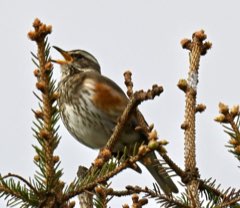 Autumn migration at Lista, Jomfruland and UtsiraDawn flight calls of thousands of thrushes, pipits and finches leaving the coast, waders on the Lista beaches, skuas and gannets passing the lighthouse in a westerly gale; at night, redwing and song thrush calls overhead.
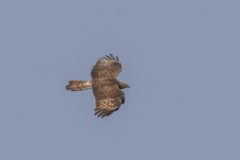 Falsterbo: Scandinavia's autumn migration funnelA continuous stream of flight calls at dawn — chaffinch, brambling, meadow pipit, yellow wagtail, siskin — thousands of birds an hour on a big day; cranes bugling high overhead in late Sept–Oct; the sea on both sides of the point.
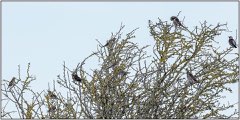 Autumn visible & nocturnal migrationThin 'tseep' of redwings passing overhead all night, then a stream of finch, pipit and lark flight calls at dawn.
More: all spectacles in Denmark · bird migration hotspots · Denmark in September · Denmark in October