
Wildlife to see in Denmark in May
6 spectacles at their peak in Denmark in May, and 5 more still going on. Wild animals only: no zoos, no wildlife parks, no hunting. Open Denmark in May in the interactive calendar for listening times on the day you pick.
At their peak in May
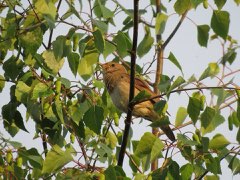 Thrush nightingale nights in eastern DenmarkThe thrush nightingale's slower, more percussive song than its southern cousin — loud whistles, clacking and rattles — from damp scrub, often several males in earshot; marsh warblers mimicking, woodcock roding overhead, cuckoo, grasshopper warbler.
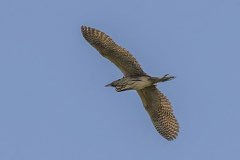 Vejlerne: bitterns, cranes and Northern Europe's largest reedbedsBittern booming from several directions at once, spotted crake whiplashes, water rail squeals, cranes trumpeting at dawn, bearded reedlings pinging, greylag families, black terns over the lagoons; wind in 8 km of reed.
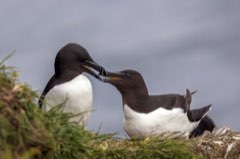 Ertholmene: Denmark's only guillemot and razorbill colonyGuillemots' growling and razorbills' rattle from Græsholm's rocks 100 m across the sound, eider crooning, gull colonies, the Baltic; at night on Christiansø, migrants and the fortress silence.
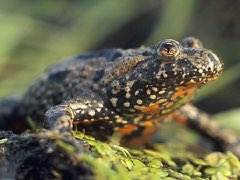 Fire-bellied toads and green toads on the islandsFire-bellied toads' soft, bell-like 'oop... oop' in chorus from cattle ponds — from a distance like distant church bells; green toads' long trills; natterjacks ratcheting on the beach meadows; tree frog volleys on Lolland.
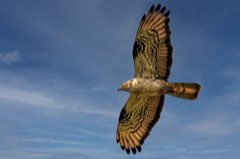 Skagen: Europe's biggest spring raptor passageRaptors are quiet: the recording is the Grenen dawn — the two seas meeting, diver and scoter flocks calling offshore, tree pipits and yellow wagtails overhead by the thousand, nightjar and cuckoo in the plantations; kites mewing over Flagbakken.
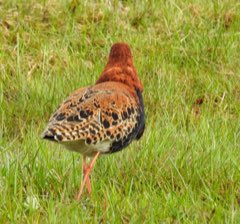 Tipperne: wader passage on Ringkøbing FjordWader flocks calling over the wet meadows, godwit and lapwing display in spring, avocets, geese lifting in autumn, the fjord's chop on the western dyke; almost no traffic.
Also going on in May
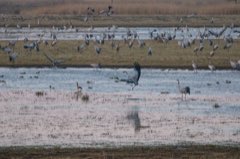 Cranes dancing on the dune heaths and bogsCrane pairs duetting and bugling across the wet dune slacks at first light, the dance's wing-flaps, curlew, golden plover and snipe drumming around them; ravens; the North Sea in Thy.
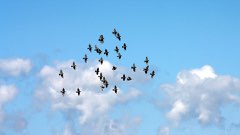 'Sort sol' — starling murmurations over the Wadden Sea marshesThe rush of a million wings folding in a single turn, the crackle of the flock settling into the reed, then a vast chattering roost; a raptor strike sends a rippling roar through the whole mass; morning departures leave in waves.
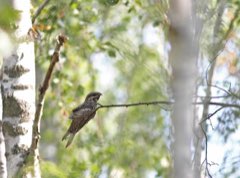 Nightjars and woodlarks in the dune plantationsNightjar churring from clear-fell edges, wing-claps and 'coo-ick' flight calls, woodlark's cascading song at dusk, long-eared owl chicks squeaking, roe deer barking; the North Sea surf behind the Thy dunes.
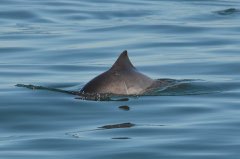 Harbour porpoises in the Little BeltPorpoises are silent to the ear (their clicks are at 130 kHz) — a hydrophone with a wideband recorder gets the click trains; audibly, the sharp puff of a surfacing blow a few metres off the rocks at Røjle Klint, and the Old Little Belt Bridge traffic.
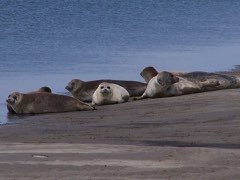 Seals at Hvide Sande and on the Wadden Sea sandbanksHarbour seals are quiet — snorts, splashes, pups bleating on a haul-out; grey seal bulls moaning and roaring in winter; with a hydrophone, seal vocalisations and the tide; oystercatchers and the surf.