
Wadden Sea autumn: geese, waders and whooper swans in the marsh
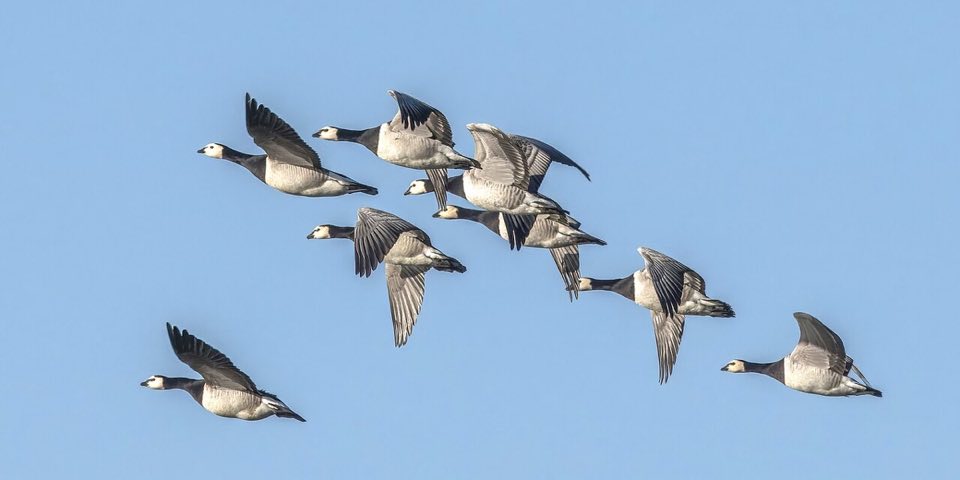
Barnacle and brent geese, pink-footed and greylag geese, golden plover, knot, dunlin, avocet, spoonbill, whooper swans (winter), hen harrier; starlings (see Sort sol). Mandø, Ballum, Rømø, Tøndermarsken — Nationalpark Vadehavet, Denmark.
Best time: 10 Oct – 10 Dec (October to December). Where: Mandø (tidal causeway from Vester Vedsted), Ballum Enge / Ballum sluice, Rømø – Juvre Dyb / Lakolk (Denmark). Time of day: Wader roosts pack in from 2 h before high water to 2 h after.
- You can go on your own
- Free
- Telescope recommended
- Sound 5/5
Open it in the interactive calendarSunrise and sunset listening times for the day you pick, and the map.
When is the best time?
Peak: 10 Oct – 10 Dec. 10 October to 10 December (geese), whooper swans peak Dec–Feb on the Tønder marsh fields
Active from 15 Sep to 15 Mar (September to March) in a typical year.
Time of day
Wader roosts pack in from 2 h before high water to 2 h after; goose flights in the hour around sunrise and the hour before sunset regardless of tide; whooper swans on the polders at night.
- Dawn goose flights (waders tide-timed): 45 min before sunrise → 1 h after sunrise
- Evening flights: 1 h before sunset → last light
Depends on the tide: best around high tide. Check local tide tables.
What will you hear?
Barnacle goose yapping in flocks of tens of thousands over the Ballum marsh, brent geese growling on the flats, golden plover flocks whistling, whooper swan families bugling on the polders at night, curlew; the tide.
Binoculars?
Telescope recommended. Goose flocks and wader roosts are 200 m to 1 km from the dykes; scope recommended, binoculars for the flights overhead.
Where to go
- Mandø (tidal causeway from Vester Vedsted) — Island reached by the Låningsvej tidal road; geese and waders around the sea dyke; overnight on the island gives the roost at night. Map
- Ballum Enge / Ballum sluice — Marsh meadows south of Rømø's causeway; the biggest goose flocks in Danish Wadden. Map
- Rømø – Juvre Dyb / Lakolk — Wader roosts on the northern flats; the Rømø causeway is a wind tunnel. Map
- Tøndermarsken – Margrethe Kog — Whooper swans and geese on the polders in winter; dyke road viewing. Map
How to go on your own, and what it costs
The sea dykes are public and open at all hours: Ballum sluice and the Ballum Enge dyke road, Rømø's Juvre dyke, the Margrethe Kog dyke road at Højer. Mandø: drive the Låningsvej tidal causeway at low water in your own car (check tide tables) or take the tractor bus from Vester Vedsted; stay overnight for the roost.
Cost: Free; Mandø tractor bus optional (check current prices).
Field-recording notes
Danish Wadden dykes are public and open all hours; the marsh polders behind them are farmed and hunted (goose and duck hunting is legal in autumn on many fields — barnacle geese excepted), so shots on weekend mornings are part of the season. The national park's core mudflats are closed to motor traffic and, in places, to walking during the migration season. Wind: the only shelter is the dyke's landward face; cold north-westerlies in November mean full winter wind protection. Mandø overnight is the quiet option — the causeway floods twice a day and cuts the island off completely.
Sources
Similar spectacles
 Pink-footed goose dawn flightsTens of thousands of geese lifting off the mudflats at first light in a wall of 'wink-wink' calls, wave after wave overhead.
 Whooper swans & barnacle geeseBugling whoopers and yapping barnacle flocks like a huge crowd; the whole Svalbard barnacle population is on one estuary.
 Arctic geese on the Lower RhineWhite-fronted geese's high yelping in skeins of thousands, bean geese's deeper 'kayak', the roar of a roost lifting off the Rhine at first light, whooper swans on the Bislicher Altrhein; barges and the A57 underneath.
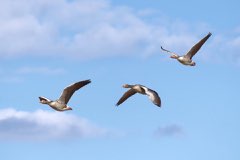 Goose autumn at the Lange Lacke, SeewinkelGeese in skeins of thousands crossing the pastures at dusk, greylag chatter on the soda lake roost through the night, cranes trumpeting overhead in late October, eagle calls; the salt-steppe silence in between.
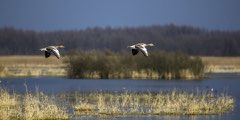 Doñana in winter: geese and the marismasTens of thousands of greylags calling at first light, wigeon whistling in rafts, flamingos honking, glossy ibis colonies grunting, and the near-total absence of roads in the marsh core.
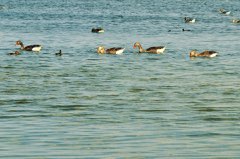 Wintering greylags at VillafáfilaWaves of greylags leaving the saline lagoons at first light in a continuous honking chorus, with great bustards grunting on the stubble and cranes overhead.
More: all spectacles in Denmark · wild geese · winter geese, swans and ducks · Denmark in October · Denmark in November · December