
Bitterns booming
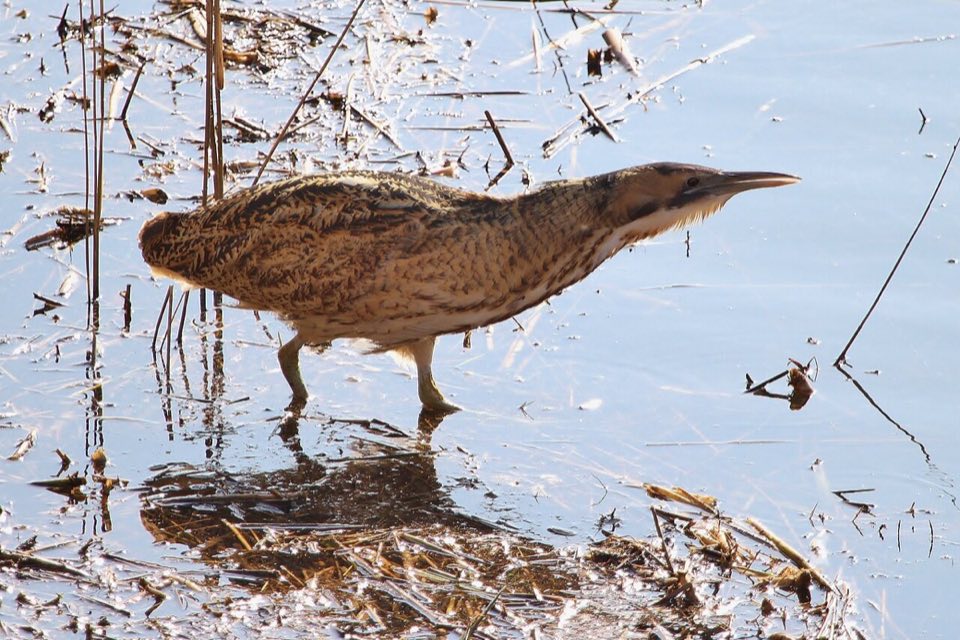
Eurasian bittern (Botaurus stellaris). Somerset, Suffolk, Lancashire, Norfolk, United Kingdom.
Best time: 10 Mar – 15 May (March to May). Where: RSPB Ham Wall, Somerset, RSPB Minsmere, Suffolk, RSPB Leighton Moss, Lancashire (United Kingdom). Time of day: Booming peaks in the hour before and after sunrise, with a second window from an hour before sunset into full dark.
- You can go on your own
- Low cost
- Binoculars helpful
- Sound 5/5
Open it in the interactive calendarSunrise and sunset listening times for the day you pick, and the map.
When is the best time?
Peak: 10 Mar – 15 May. March to mid May
Active from 1 Feb to 15 Jun (February to June) in a typical year.
Time of day
Booming peaks in the hour before and after sunrise, with a second window from an hour before sunset into full dark; sporadic booms all night in April.
- Dawn booming: 75 min before sunrise → 1 h after sunrise
- Dusk booming: 1 h before sunset → 1 h after last light
What will you hear?
The deep boom (fundamental around 150 Hz, carrying over 3 km), plus water rail squeals, reed and sedge warblers, and marsh harriers.
Binoculars?
Binoculars helpful. Booms carry 3 km; binoculars from the hides for marsh harriers and a bittern in flight.
Where to go
- RSPB Ham Wall, Somerset — The UK's highest density of booming males; tracks are open at all hours. Map
- RSPB Minsmere, Suffolk — Classic reedbed; Sizewell hum in easterly conditions. Map
- RSPB Leighton Moss, Lancashire — The Furness railway line runs along the reserve edge. Map
- RSPB Lakenheath Fen, Suffolk — Also hobbies and cranes; RAF Lakenheath jets on weekdays. Map
How to go on your own, and what it costs
Ham Wall: the tracks are free and open at all hours; the car park gate opens 05:00, so you are in place for dawn booming. Minsmere: non-member entry fee, dawn to dusk, hides on the main trail. Leighton Moss: RSPB fee for non-members, causeway public footpath free; Lakenheath Fen: RSPB, dawn to dusk. RSPB members are free everywhere.
Cost: Ham Wall free, car park £5 non-members (2026); Minsmere £10 adult non-members (2026); Leighton Moss £10 adult / £5 child non-members and Lakenheath Fen £5 adult / £2 child non-members (2026); members free.
Field-recording notes
Schedule 1 species — no disturbance at nests, so stick to paths and hides, which are fine for booms. The boom is mostly low-frequency energy: a rig with good LF extension and a high-pass set low; wind protection matters more than usual because it masks the same band.
Sources
Similar spectacles
 Tåkern: booming bitterns in Europe's biggest reedbedsThe deep, bottle-blown 'whump' of bitterns booming across the reeds, several males answering; reed, sedge and Savi's warblers, water rail squeals, cranes and geese; at Väversunda in late May the strange clicking display of great snipe towards nightfall.
 Cranes dancing on the dune heaths and bogsCrane pairs duetting and bugling across the wet dune slacks at first light, the dance's wing-flaps, curlew, golden plover and snipe drumming around them; ravens; the North Sea in Thy.
 Thrush nightingale nights in eastern DenmarkThe thrush nightingale's slower, more percussive song than its southern cousin — loud whistles, clacking and rattles — from damp scrub, often several males in earshot; marsh warblers mimicking, woodcock roding overhead, cuckoo, grasshopper warbler.
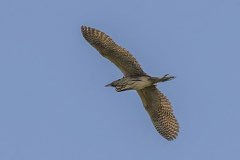 Vejlerne: bitterns, cranes and Northern Europe's largest reedbedsBittern booming from several directions at once, spotted crake whiplashes, water rail squeals, cranes trumpeting at dawn, bearded reedlings pinging, greylag families, black terns over the lagoons; wind in 8 km of reed.
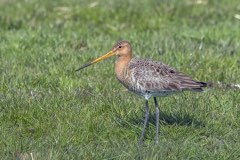 Meadow-bird chorus: godwits, redshanks and lapwings over the Frisian poldersThe 'grutto-grutto' yodel of godwits in tumbling display flight, redshanks' ringing calls, lapwings' wheezing aerobatics and wing-thrum, skylarks, snipe drumming and the bleating of hundreds of birds at once — the sound of the Dutch spring polder.
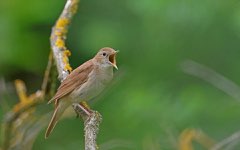 Berlin: the nightingale capitalDense nightingale song with several males counter-singing within 100 m, over a city bed — trains, sirens, the airport approach; in the Grunewald and on the Havel shores, a cleaner mix with tawny owl and reed warblers.
More: all spectacles in the United Kingdom · dawn choruses · the United Kingdom in March · the United Kingdom in April · the United Kingdom in May