
Meadow-bird chorus: godwits, redshanks and lapwings over the Frisian polders
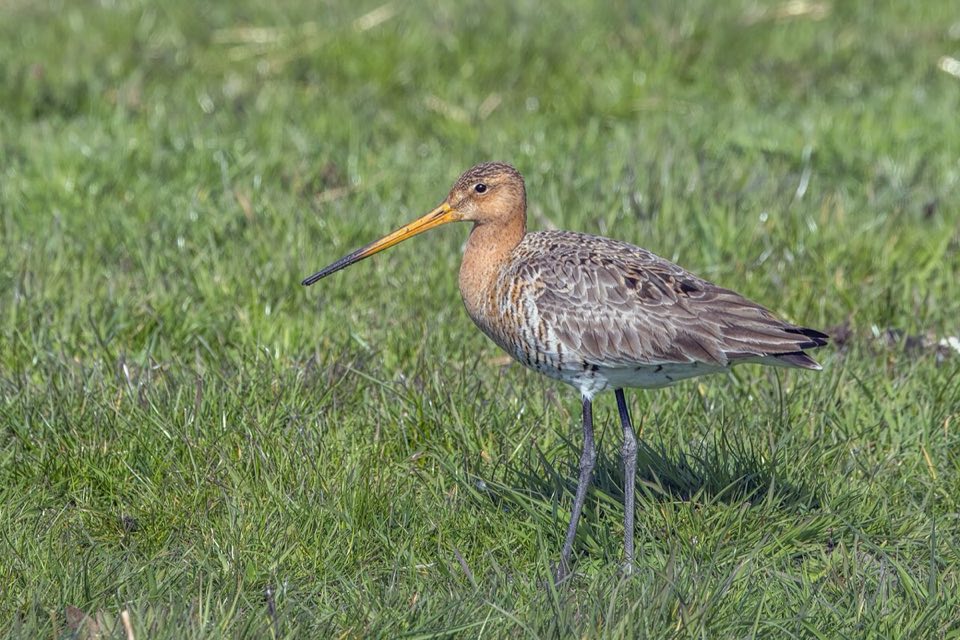
Black-tailed godwit (Limosa limosa; 25,000–29,000 pairs, ~90% of NW Europe's breeders), redshank, lapwing, oystercatcher, ruff, skylark, meadow pipit, snipe drumming. Zuidwest-Friesland (Workumerwaard), Eemland/Arkemheen, Waterland, Lauwersmeer polders, Netherlands.
Best time: 1 Apr – 10 May (April to May). Where: Workumerwaard – Uitkijkpunt Hokje Bakker (end of Slinkeweg), Arkemheen polder (Nijkerk), with the Eemland polders beyond the Eem, Bantpolder / Ezumakeeg, Lauwersmeer (Netherlands). Time of day: Display flights and the full chorus run from the half hour before sunrise to about 09:00.
- You can go on your own
- Free
- Binoculars helpful
- Sound 5/5
Open it in the interactive calendarSunrise and sunset listening times for the day you pick, and the map.
When is the best time?
Peak: 1 Apr – 10 May. April to the first week of May — display flights peak while the grass is still short; godwits return from February
Active from 1 Mar to 15 Jun (March to June) in a typical year.
Time of day
Display flights and the full chorus run from the half hour before sunrise to about 09:00; a second wave from an hour before sunset; snipe drum and godwits call through still, mild nights in late April.
- Dawn display and chorus: 30 min before sunrise → 3 h after sunrise
- Evening flights and snipe: 1 h before sunset → 30 min after last light
What will you hear?
The 'grutto-grutto' yodel of godwits in tumbling display flight, redshanks' ringing calls, lapwings' wheezing aerobatics and wing-thrum, skylarks, snipe drumming and the bleating of hundreds of birds at once — the sound of the Dutch spring polder.
Binoculars?
Binoculars helpful. Birds display 50–300 m out over the meadows; binoculars for ruff leks and godwit chicks; the Workumerwaard viewpoints have a hide/platform.
Where to go
- Workumerwaard – Uitkijkpunt Hokje Bakker (end of Slinkeweg) — It Fryske Gea reserve on the IJsselmeer coast; three viewpoints (It Soal, Hokje Bakker, Bijenkamp); dogs on leads, stay on paths; study area of the University of Groningen since 2004. Map
- Arkemheen polder (Nijkerk), with the Eemland polders beyond the Eem — Open meadow-bird polder reached by public roads and cycle paths; Eemland is named by Vogelbescherming as a godwit stronghold. Map
- Bantpolder / Ezumakeeg, Lauwersmeer — Godwits March–August per the national park; viewable from the parallel road and the Ezumakeeg mound. Map
How to go on your own, and what it costs
Workumerwaard: from Workum follow the road to It Soal beach and the dead-end Slinkeweg to the Hokje Bakker viewpoint; free, paths and viewpoints open (dogs on leads). Arkemheen: cycle or drive the polder roads from Nijkerk; Eemland from Eemnes/Eemdijk. Lauwersmeer: parallel road at the Bantpolder. All free, public roads and paths; keep off the meadows.
Cost: Free.
Field-recording notes
Meadow-bird reserves are flat and exposed: wind and distant tractors are the issue, not people. Many reserves ask visitors to stay on the roads/dikes in the breeding season and farmers' grassland is private — the public road verge is your spot. Dawn in late April with no wind is extraordinary; a stereo pair on the dike at Workumerwaard faces into dozens of displaying pairs. Early mowing from mid May silences fields fast — go before 10 May. Lauwersmeer polders have the added geese chorus.
Sources
- Vogelbescherming Nederland – Grutto (population, timing, strongholds)
- Birdingplaces – Workumerwaard uitkijkpunt Hokje Bakker
- It Fryske Gea – vogelkijkplekken (Workumerwaard viewpoints)
- Nationaal Park Lauwersmeer – Beleef de trekvogels (grutto March–August)
Similar spectacles
 Tåkern: booming bitterns in Europe's biggest reedbedsThe deep, bottle-blown 'whump' of bitterns booming across the reeds, several males answering; reed, sedge and Savi's warblers, water rail squeals, cranes and geese; at Väversunda in late May the strange clicking display of great snipe towards nightfall.
 Cranes dancing on the dune heaths and bogsCrane pairs duetting and bugling across the wet dune slacks at first light, the dance's wing-flaps, curlew, golden plover and snipe drumming around them; ravens; the North Sea in Thy.
 Thrush nightingale nights in eastern DenmarkThe thrush nightingale's slower, more percussive song than its southern cousin — loud whistles, clacking and rattles — from damp scrub, often several males in earshot; marsh warblers mimicking, woodcock roding overhead, cuckoo, grasshopper warbler.
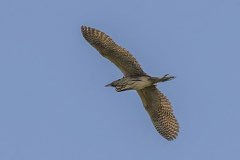 Vejlerne: bitterns, cranes and Northern Europe's largest reedbedsBittern booming from several directions at once, spotted crake whiplashes, water rail squeals, cranes trumpeting at dawn, bearded reedlings pinging, greylag families, black terns over the lagoons; wind in 8 km of reed.
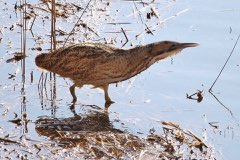 Bitterns boomingThe deep boom (fundamental around 150 Hz, carrying over 3 km), plus water rail squeals, reed and sedge warblers, and marsh harriers.
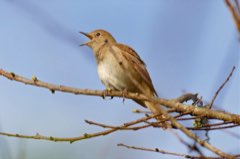 Nightingales singingFull nocturnal nightingale song, often with several males counter-singing; tawny owls and the first dawn birds behind.
More: all spectacles in the Netherlands · dawn choruses · April · the Netherlands in May