
Somone lagoon — pelicans, flamingos and the sandbank roost on the Petite Côte
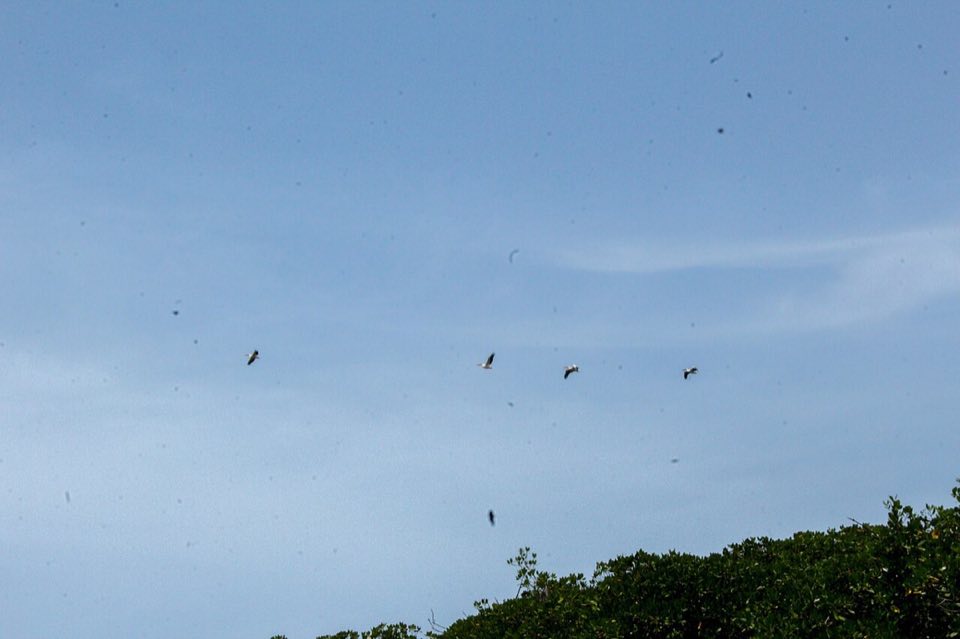
Great white and pink-backed pelican, greater flamingo, spoonbill, grey and purple heron, egrets, cormorants, osprey, terns and gulls, curlew, lapwings and thick-knees (172 species recorded). Réserve naturelle communautaire de la Somone, Petite Côte (Saly / Ngaparou), Senegal.
Best time: 15 Nov – 28 Feb (November to February). Where: Sentier écologique and mirador (north shore, by the oyster parks), Somone village and lagoon mouth, Lagoon sandbar (pirogue crossing) (Senegal). Time of day: High tide in the first two hours after sunrise, when the roost packs onto the sandbank below the mirador.
- You can go on your own
- Low cost
- Binoculars helpful
- Sound 3/5
Open it in the interactive calendarSunrise and sunset listening times for the day you pick, and the map.
When is the best time?
Peak: 15 Nov – 28 Feb. Mid November to end of February — Palearctic waders, ospreys and terns join the resident pelicans and herons on the lagoon sandbanks
Active from 1 Oct to 30 Apr (October to April) in a typical year.
Time of day
High tide in the first two hours after sunrise, when the roost packs onto the sandbank below the mirador; the pelicans fish the mouth on the ebb and come back to roost an hour before sunset
- Morning roost: sunrise → 2 h after sunrise
- Evening return: 1 h before sunset → sunset
Depends on the tide: best around high tide. Check local tide tables.
What will you hear?
Pelican wings and bill-clapping as the flock lands, tern and gull roost clamour, flamingo honks, spoonbills and herons in the mangrove, osprey whistles — small-scale next to the Saloum but the closest proper lagoon roost to the Saly resorts, and quiet at dawn before the jet-skis.
Binoculars?
Binoculars helpful. The sandbank roost is 100–200 m from the mirador at the end of the trail; binoculars make it; pelicans fly past at eye level.
Where to go
- Sentier écologique and mirador (north shore, by the oyster parks) — 1.2 km trail through the mangrove to a viewing tower over the lagoon; entry 1,500 CFA, open daily. Reserve office in Ngaparou (Eaux et Forêts). Map
- Somone village and lagoon mouth — Public beach where the lagoon meets the sea; pelicans fish the channel, pirogues cross to the sandbar restaurants. Map
- Lagoon sandbar (pirogue crossing) — Pirogues from the village beach drop you on the bar between lagoon and ocean; terns and waders roost on its tip at high water. Map
How to go on your own, and what it costs
Taxi or clando from Saly / Mbour to Somone (15 km); walk the beach to the lagoon mouth for free, or pay 1,500 CFA at the trail entrance by the oyster parks on the north shore for the mangrove path and mirador. Pirogues to the sandbar from the village beach, price on the spot.
Cost: Trail and mirador 1,500 CFA per person (au-senegal.com; check current prices); beach and lagoon mouth free; pirogue crossing a few hundred to a few thousand CFA negotiated.
Field-recording notes
A resort lagoon: Saly and Somone hotels, quad bikes on the beach and pirogue outboards from mid-morning. The mangrove trail at opening time is the quiet window; the mirador is a good fixed position for a dawn rig. Community reserve (1999) with Eaux et Forêts wardens — no night access on the trail, no drones without authorisation, no approaching the roost by pirogue at high water. Mosquitoes in the mangrove.
Sources
- Au-Sénégal – Le sentier écologique de la réserve naturelle de la Somone (trail, 1,500 CFA, species)
- Au-Sénégal – Lagune de la Somone (700 ha reserve, pelicans, flamingos)
Similar spectacles
 Diawling floodplain — pelicans, flamingos and Palearctic ducksPelican flotillas grunting, garganey and pintail flocks whirring off the flooded basins, flamingo chorus, and the low background of the Diama dam and the Senegal river.
 Flamingo colonies & courtshipGoose-like gabbling of big flocks, and the synchronised 'marching' displays with a constant honking.
 Tagus estuary in winter: flamingos, avocets and 100,000 waterbirdsFlamingo flocks honking as they move between the estuary and the Lezíria rice fields, avocet and godwit roosts chattering on the salinas at high tide, teal whistling on the lagoons and the great winter silence of the open marsh broken by hunters' shots outside the reserve.
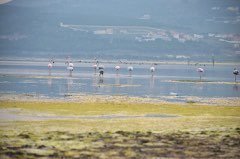 Marchica lagoon, the Moulouya mouth and the Mohammed V reservoir — the Mediterranean east in winterFlamingo honking across a lagoon the size of a city, wigeon whistling, shelduck, the bugling of common cranes at the Mohammed V shore at dusk, and in spring a booming bittern and avocet colony clamour at the Moulouya mouth. Nador's traffic and the fishermen's outboards are the backdrop; the Moulouya is quieter.
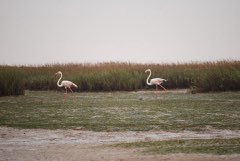 Saharan lagoons — Khnifiss and Dakhla Bay in winterFlamingo honking in the hundreds across a lagoon with no other sound at all, wader flocks lifting, the rattle of royal and Caspian terns, and on Dakhla Bay the blow of a humpback dolphin close to shore.
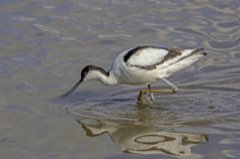 Sidi Moussa–Oualidia lagoons — 10,000 waders, flamingos and the salt-pan roostsAvocet and stilt yelping over the salt pans, godwit and dunlin flocks whirring up at each marsh harrier, flamingo honking from the lagoon, slender-billed gulls — against surf on the dune bar and the oyster farms' outboards.
More: all spectacles in Senegal · flamingos · pelicans · winter geese, swans and ducks · Senegal in January · Senegal in February · Senegal in November · Senegal in December