
Tiwai Island — eleven primates and the Moa river dawn
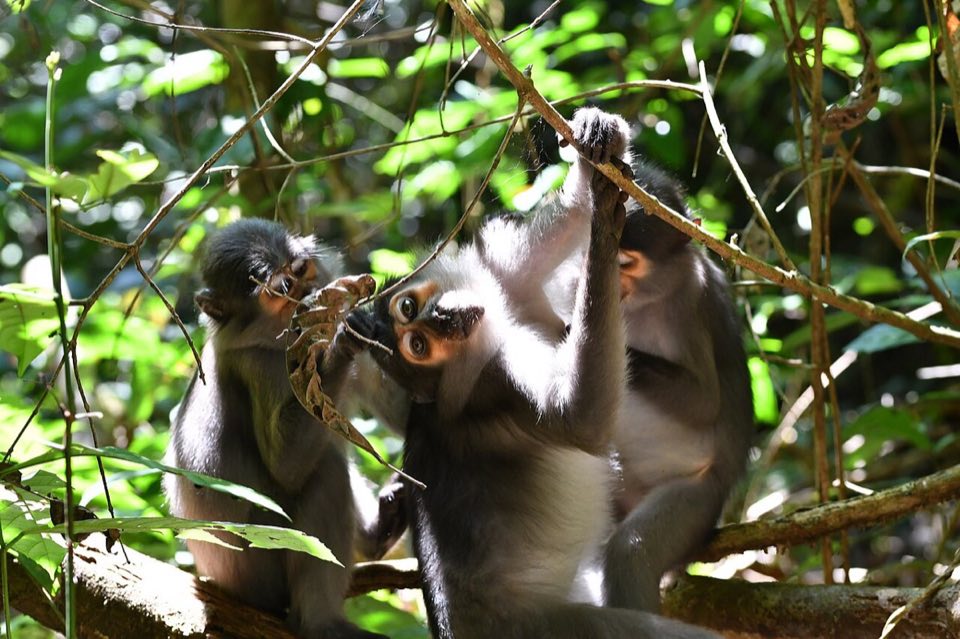
Diana monkey, western red colobus, king colobus, sooty mangabey, Campbell's & lesser spot-nosed monkeys, western chimpanzee; pygmy hippo (nocturnal); white-breasted guineafowl, hornbills, 135+ bird species. Tiwai Island Wildlife Sanctuary, Moa river (Bo/Kenema), Sierra Leone.
Best time: 1 Dec – 31 Mar (December to March). Where: Tiwai Island research/visitor camp, Kambama village landing, Moa river rapids trail (Sierra Leone). Time of day: From the first grey light to about 09:00 — Diana monkeys and colobus call before sunrise.
- Partly on your own
- Entry fee
- Binoculars helpful
- Sound 5/5
Open it in the interactive calendarSunrise and sunset listening times for the day you pick, and the map.
When is the best time?
Peak: 1 Dec – 31 Mar. December to March — dry tracks, low river, the densest primate encounters; chorus year-round
Active from 1 Nov to 15 May (November to May) in a typical year.
Time of day
From the first grey light to about 09:00 — Diana monkeys and colobus call before sunrise; a second chorus in the last hour before dark; pygmy hippo walks after 22:00 with a guide
- Dawn chorus: 30 min before sunrise → 150 min after sunrise
- Evening: 1 h before sunset → last light
- Pygmy hippo walk: 22:00 → 02:00
What will you hear?
One of the densest primate soundscapes in Africa: Diana monkeys' explosive alarm calls, red colobus chatter, the roar of king colobus, chimps' pant-hoots across the river, hornbills whooshing overhead, and the Moa river's rapids underneath.
Binoculars?
Binoculars helpful. Primates call from a dense canopy 20–40 m up; binoculars help find Diana monkeys and colobus, the sound needs nothing.
Where to go
- Tiwai Island research/visitor camp — 12 km² island reached by dugout from Kambama village; tented camp, trails, guides — run by the Environmental Foundation for Africa. Map
- Kambama village landing — Road end (from Potoru); the community you pay and the boats. Map
- Moa river rapids trail — Island trail along the rapids; the loudest natural sound on the island. Map
How to go on your own, and what it costs
Public transport to Potoru (via Bo), then a moto or walk to Kambama and the sanctuary boat; pay entry, boat and camp at the island office. Trails are guided (rule), but you can sit anywhere around the camp and at the landing on your own; no tour company needed — book direct with EFA.
Cost: Day visit incl. boat from Kambama US$10 nationals / US$20 non-nationals; overnight incl. breakfast and boat: visitor-centre dorm US$15 / US$27, single US$25 / US$37, double US$35 / US$47, research lodge dorm US$30; guided forest walk Le 50 (1–2 people), night walk Le 100, chimp walk Le 150, canoe river tour Le 200 pp, meals Le 70–90 (Tiwai price list 2024, payable in leones).
Free or no-guide alternative: From the Kambama village riverbank on the mainland, free, you hear the island's dawn chorus across the Moa — colobus, Diana monkeys and hornbills carry over the water.
Who runs access
- Tiwai Island Wildlife Sanctuary (EFA) – direct booking (NGO) — The sanctuary's own camp and guides.
Field-recording notes
Guides are compulsory on the trails (sanctuary rule) but the camp itself sits in the forest and a rig by your tent runs all night: pygmy hippo, tree hyrax screams, owls, fruit bats. Humidity and dew are the technical problem even in the dry season — desiccant and a dry-box. The camp has a small generator for a few hours in the evening; otherwise no engines. Chimps are wild, not habituated. Fees go to the eight surrounding villages.
Sources
- Tiwai Island Wildlife Sanctuary (official)
- Environmental Foundation for Africa
- Wikipedia – Tiwai Island
Similar spectacles
 Cranes dancing on the dune heaths and bogsCrane pairs duetting and bugling across the wet dune slacks at first light, the dance's wing-flaps, curlew, golden plover and snipe drumming around them; ravens; the North Sea in Thy.
 Bitterns boomingThe deep boom (fundamental around 150 Hz, carrying over 3 km), plus water rail squeals, reed and sedge warblers, and marsh harriers.
 Steppe dawn: Dupont's lark and the Belchite larksDupont's lark's strange nasal, ventriloquial phrases from the dark steppe, then a wall of calandra lark song at sunrise, sandgrouse and stone-curlews — one of Europe's rarest dawn choruses.
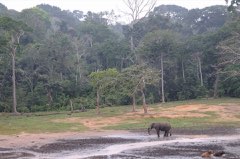 Sapo National Park — pygmy hippo, elephants and the deepest forest in West AfricaPrimary Upper Guinea rainforest with nothing man-made within a day's walk: casqued hornbills, chimps, Diana monkeys, the whistles of duikers, elephants rumbling at night, tree hyrax, and the full insect and frog layer of a forest that has never been logged.
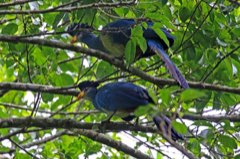 Upper Guinea rainforest dawn chorus — Kakum & AnkasaGreat blue turacos bubbling from the emergents, the far-carrying wailing of white-crested hornbills, yellow-casqued hornbills' whooshing wingbeats, chattering monkeys, cicadas switching on with the light and the screaming of tree hyrax at night.
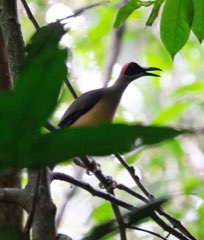 Korup: drills, red colobus and the oldest rainforest dawn in AfricaDrill and mangabey troops crashing and grunting through the understorey, red colobus shrieks, chimpanzee pant-hoots at a distance, hornbills, the buzz of cicadas at first light and, from the Rengo camp, a night of tree hyrax and frogs over the Mana river.
More: all spectacles in Sierra Leone · dawn choruses · Sierra Leone in January · Sierra Leone in February · Sierra Leone in March · Sierra Leone in December