
Steppe dawn: Dupont's lark and the Belchite larks
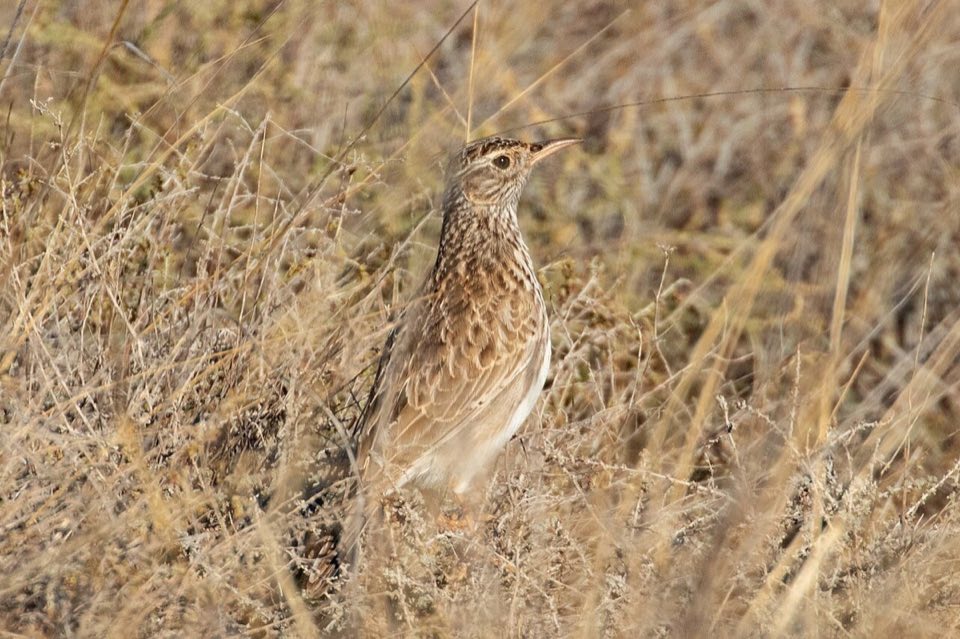
Dupont's lark (Chersophilus duponti), calandra, short-toed, lesser short-toed and thekla larks, black-bellied sandgrouse, stone-curlew. El Planerón (Belchite), Aragón; Layna & Páramos de Soria, Spain.
Best time: 20 Mar – 15 May (March to May). Where: Reserva Ornitológica El Planerón (SEO/BirdLife), Belchite, Páramo de Layna (Soria), Saladas de Chiprana / Monegros (Spain). Time of day: Dupont's lark sings in the dark from about 90 min before sunrise and stops soon after first light.
- You can go on your own
- Free
- Binoculars helpful
- Sound 5/5
Open it in the interactive calendarSunrise and sunset listening times for the day you pick, and the map.
When is the best time?
Peak: 20 Mar – 15 May. Late March to mid May; Dupont's lark sings mostly in the last hour of darkness
Active from 1 Mar to 15 Jun (March to June) in a typical year.
Time of day
Dupont's lark sings in the dark from about 90 min before sunrise and stops soon after first light; calandra larks take over at sunrise for 2 h. Be in place 2 h before sunrise.
- Dupont's lark (dark): 100 min before sunrise → sunrise
- Steppe dawn chorus: sunrise → 2 h after sunrise
What will you hear?
Dupont's lark's strange nasal, ventriloquial phrases from the dark steppe, then a wall of calandra lark song at sunrise, sandgrouse and stone-curlews — one of Europe's rarest dawn choruses.
Binoculars?
Binoculars helpful. Dupont's lark sings unseen in the dark; binoculars at sunrise for calandra larks and sandgrouse over the steppe.
Where to go
- Reserva Ornitológica El Planerón (SEO/BirdLife), Belchite — SEO's steppe reserve with a signed trail and hide; free access, stay on the trail. Map
- Páramo de Layna (Soria) — Densest Dupont's lark population in Spain on high limestone steppe at 1,100 m. Map
- Saladas de Chiprana / Monegros — Salt-lake steppe with larks and sandgrouse. Map
How to go on your own, and what it costs
El Planerón: from Belchite take the A-222 then the signed track to the SEO reserve — free, signed trail and hide, be there 2 h before sunrise and stay on the trail. Layna: the páramo tracks off the A-2 (exit Layna); Chiprana: the saladas track from the village. No playback.
Cost: Free.
Field-recording notes
Dupont's lark is endangered and notoriously hard to see; it sings in the dark and drops silent at dawn, so you record it, you don't watch it. No playback — this is one species where tape-luring has measurably harmed local populations. Wind on the Monegros is relentless; the calm pre-dawn hour is short. Military exercises from the San Gregorio base can be audible near Belchite.
Sources
Similar spectacles
 Tåkern: booming bitterns in Europe's biggest reedbedsThe deep, bottle-blown 'whump' of bitterns booming across the reeds, several males answering; reed, sedge and Savi's warblers, water rail squeals, cranes and geese; at Väversunda in late May the strange clicking display of great snipe towards nightfall.
 Cranes dancing on the dune heaths and bogsCrane pairs duetting and bugling across the wet dune slacks at first light, the dance's wing-flaps, curlew, golden plover and snipe drumming around them; ravens; the North Sea in Thy.
 Thrush nightingale nights in eastern DenmarkThe thrush nightingale's slower, more percussive song than its southern cousin — loud whistles, clacking and rattles — from damp scrub, often several males in earshot; marsh warblers mimicking, woodcock roding overhead, cuckoo, grasshopper warbler.
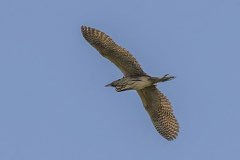 Vejlerne: bitterns, cranes and Northern Europe's largest reedbedsBittern booming from several directions at once, spotted crake whiplashes, water rail squeals, cranes trumpeting at dawn, bearded reedlings pinging, greylag families, black terns over the lagoons; wind in 8 km of reed.
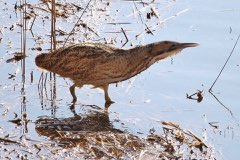 Bitterns boomingThe deep boom (fundamental around 150 Hz, carrying over 3 km), plus water rail squeals, reed and sedge warblers, and marsh harriers.
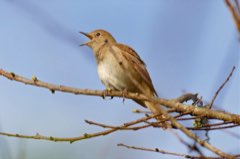 Nightingales singingFull nocturnal nightingale song, often with several males counter-singing; tawny owls and the first dawn birds behind.
More: all spectacles in Spain · dawn choruses · Spain in March · Spain in April · Spain in May