
Korup: drills, red colobus and the oldest rainforest dawn in Africa
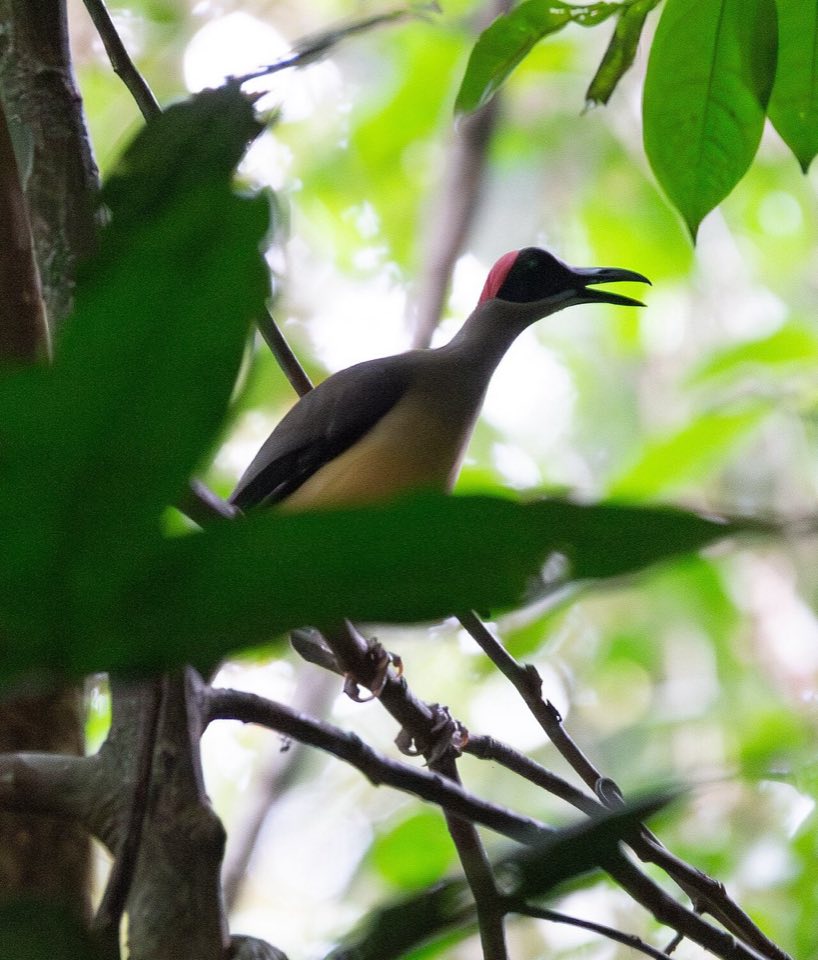
Drill (Mandrillus leucophaeus), Preuss's red colobus, red-capped mangabey, Nigeria-Cameroon chimpanzee, forest elephant; grey-necked rockfowl, hornbills, over 400 bird species. Korup National Park, South-West Region, Cameroon.
Best time: 1 Jan – 31 Mar (January to March). Where: Mana bridge – park entrance, Rengo camp, Mundemba – park visitor office (Cameroon). Time of day: From 40 minutes before sunrise to about 09:30.
- Guide, ranger or boat needed
- Entry fee
- Binoculars helpful
- Sound 5/5
Open it in the interactive calendarSunrise and sunset listening times for the day you pick, and the map.
When is the best time?
Peak: 1 Jan – 31 Mar. January to March: the driest months in one of the wettest forests on earth; trails and the Mana bridge are passable and the chorus is at full strength
Active from 1 Dec to 30 Apr (December to April) in a typical year.
Time of day
From 40 minutes before sunrise to about 09:30; primate groups call again in the last hour before dusk; tree hyrax, owls and frogs through the night from camp
- Dawn chorus: 40 min before sunrise → 09:30
- Evening primates: 1 h before sunset → last light
- Night at Rengo: last light → 00:00
What will you hear?
Drill and mangabey troops crashing and grunting through the understorey, red colobus shrieks, chimpanzee pant-hoots at a distance, hornbills, the buzz of cicadas at first light and, from the Rengo camp, a night of tree hyrax and frogs over the Mana river.
Binoculars?
Binoculars helpful. Drills and mangabeys crash through the understorey nearby; binoculars for colobus and hornbills 30 m up.
Where to go
- Mana bridge – park entrance — Suspension footbridge over the Mana river from the Mundemba side; the trail network starts here. Map
- Rengo camp — Basic forest camp about 10 km in; the base for primate walks and the rockfowl rocks. Map
- Mundemba – park visitor office — Permits, guides and porters are arranged here; guesthouses in town. Map
How to go on your own, and what it costs
A registered guide is compulsory (park rule). Cheapest legal way: bus/shared taxi Kumba–Mundemba, permit, guide and porter at the Mundemba visitor office (+237 677 07 49 09, support@korupnationalpark.org), camp at Rengo with your own tent and food.
Cost: Park permit plus guide and porter per day; amounts not published online — check current prices with the Mundemba office.
Free or no-guide alternative: The forest edge along the Mundemba–Mana road and the Mana river bank at the bridge approach are outside the permit line; the dawn chorus and hornbills are free from there, though the primates are usually deeper in.
Who runs access
- Korup National Park – Mundemba visitor office (park guides) (park authority) — Park-run; the only legal guides
Field-recording notes
All visitors must be accompanied by a registered guide (park rule), arranged with permits and porters at the Mundemba visitor office. Camps are bring-your-own; there is no generator, so nights are clean apart from the river. Rain can fall in any month and the humidity is total: dry bags, silica and a way to dry gear are essential, and capsules will fog every dawn. Rockfowl nesting sites are not to be approached in the breeding season; ask the guide. The South-West Region has been affected by the Anglophone conflict since 2017 — check current travel advice and contact the park office before travelling.
Sources
Similar spectacles
 Cranes dancing on the dune heaths and bogsCrane pairs duetting and bugling across the wet dune slacks at first light, the dance's wing-flaps, curlew, golden plover and snipe drumming around them; ravens; the North Sea in Thy.
 Bitterns boomingThe deep boom (fundamental around 150 Hz, carrying over 3 km), plus water rail squeals, reed and sedge warblers, and marsh harriers.
 Steppe dawn: Dupont's lark and the Belchite larksDupont's lark's strange nasal, ventriloquial phrases from the dark steppe, then a wall of calandra lark song at sunrise, sandgrouse and stone-curlews — one of Europe's rarest dawn choruses.
 Tiwai Island — eleven primates and the Moa river dawnOne of the densest primate soundscapes in Africa: Diana monkeys' explosive alarm calls, red colobus chatter, the roar of king colobus, chimps' pant-hoots across the river, hornbills whooshing overhead, and the Moa river's rapids underneath.
 Sapo National Park — pygmy hippo, elephants and the deepest forest in West AfricaPrimary Upper Guinea rainforest with nothing man-made within a day's walk: casqued hornbills, chimps, Diana monkeys, the whistles of duikers, elephants rumbling at night, tree hyrax, and the full insect and frog layer of a forest that has never been logged.
 Upper Guinea rainforest dawn chorus — Kakum & AnkasaGreat blue turacos bubbling from the emergents, the far-carrying wailing of white-crested hornbills, yellow-casqued hornbills' whooshing wingbeats, chattering monkeys, cicadas switching on with the light and the screaming of tree hyrax at night.
More: all spectacles in Cameroon · dawn choruses · Cameroon in January · Cameroon in February · Cameroon in March