
Upper Guinea rainforest dawn chorus — Kakum & Ankasa
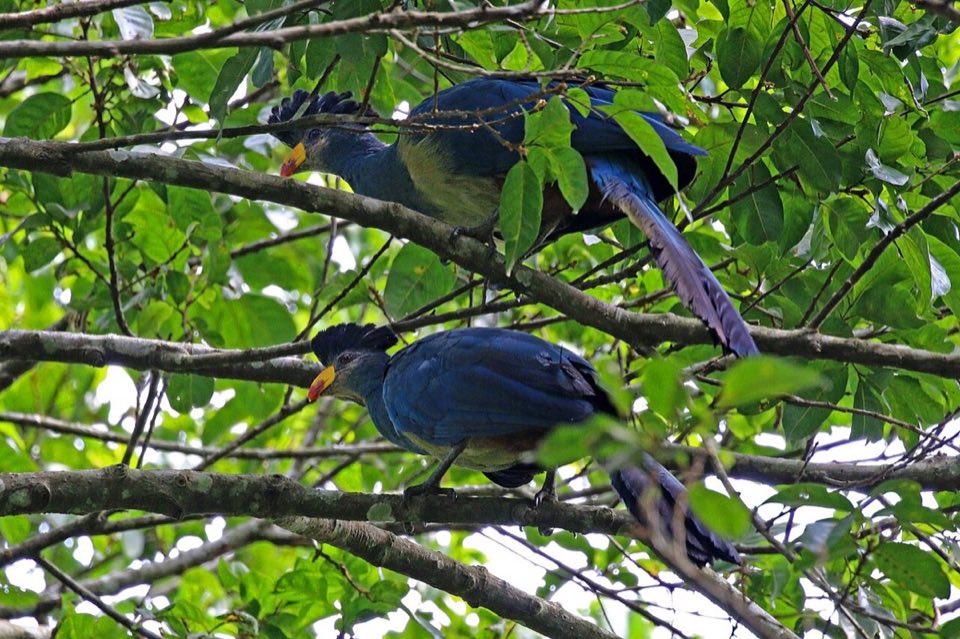
Yellow-casqued and black-casqued hornbills, great blue turaco, white-crested hornbill, forest robins and greenbuls, mona and spot-nosed monkeys, tree hyrax at night. Central & Western regions, Ghana.
Best time: 15 Nov – 31 Mar (November to March). Where: Kakum National Park – canopy walkway, Kakum – Abrafo entrance forest trails and tree platforms, Ankasa Conservation Area – Nkwanta camp (Ghana). Time of day: From about 40 minutes before sunrise to two hours after.
- Guide, ranger or boat needed
- Entry fee
- Binoculars helpful
- Sound 5/5
Open it in the interactive calendarSunrise and sunset listening times for the day you pick, and the map.
When is the best time?
Peak: 15 Nov – 31 Mar. Mid November to March: dry-season mornings with the least rain and the most song; hornbill and turaco calling is strongest at the end of the dry season (Feb–Mar)
Active from 1 Jan to 31 Dec (all year) in a typical year.
Time of day
From about 40 minutes before sunrise to two hours after; canopy species call again from about an hour before sunset, and tree hyrax and nightjars run from full dark to about 23:00
- Dawn chorus: 40 min before sunrise → 2 h after sunrise
- Evening hornbills: 1 h before sunset → sunset
- Tree hyrax & nightjars: last light → 23:00
What will you hear?
Great blue turacos bubbling from the emergents, the far-carrying wailing of white-crested hornbills, yellow-casqued hornbills' whooshing wingbeats, chattering monkeys, cicadas switching on with the light and the screaming of tree hyrax at night.
Binoculars?
Binoculars helpful. From the walkway you are at canopy height; binoculars bring hornbills and turacos in the emergents closer.
Where to go
- Kakum National Park – canopy walkway — Park opens 06:00; the walkway is 30 m up in the canopy and the only place in West Africa to record the dawn chorus from hornbill height. Ask the Wildlife Division office at the park for an early-birding entry before the tour groups arrive around 08:00. Map
- Kakum – Abrafo entrance forest trails and tree platforms — Guided walks at ground level; overnight stays on the platform have been offered in the past, ask at the visitor centre. Map
- Ankasa Conservation Area – Nkwanta camp — Wet evergreen forest near the Ivorian border with forest elephants, chimpanzees and the fullest chorus in Ghana; basic camping and a long dirt road in. Map
How to go on your own, and what it costs
A park guide is compulsory on the trails and the canopy walkway (park rule). Cheapest legal way: tro-tro from Cape Coast (Kotokuraba station) to the park gate at Abrafo, pay the entry and canopy-walk fee at the visitor centre at 06:00 and ask for the first walk of the day. Ankasa: entry and a ranger guide at the Ankasa gate, camping at Nkwanta.
Cost: Entry GHS 40 Ghanaian / GHS 130 non-Ghanaian adult (GHS 60 non-Ghanaian student), canopy walk GHS 40 local / GHS 130 foreign, guided nature walk GHS 25 / GHS 60 per hour, plus GHS 35 vehicle gate fee (2026; confirm at the park office 033-2130265). Ankasa: entry and guide fee, check current prices.
Free or no-guide alternative: Stand on the public Abrafo–Jukwa road at the forest edge outside the gate from first light: hornbills, turacos and monkeys carry over the boundary and cost nothing. The canopy-height chorus is only from the walkway.
Who runs access
- Kakum National Park (Wildlife Division) – guided walks and canopy walkway (park authority) — Park-run; ask for an early-birding entry
Field-recording notes
A guide is compulsory on all trails; entry fees are paid at the gate and a filming/recording fee may be requested for professional gear, so ask at the Wildlife Division office and get it on paper. The walkway itself creaks, sways and carries footfall along its cables, so let a rig hang from the netting away from the platforms and wait for the group to move on. Humidity is near saturation at dawn: condensation on capsules is routine, so bring silica and keep mics warm overnight. Between the two rainy seasons (Apr–Jul, Sep–Oct) heavy showers arrive most afternoons, but pre-dawn is usually dry. Ankasa has no phone signal and the camp generator runs in the evening.
Sources
Similar spectacles
 Cranes dancing on the dune heaths and bogsCrane pairs duetting and bugling across the wet dune slacks at first light, the dance's wing-flaps, curlew, golden plover and snipe drumming around them; ravens; the North Sea in Thy.
 Bitterns boomingThe deep boom (fundamental around 150 Hz, carrying over 3 km), plus water rail squeals, reed and sedge warblers, and marsh harriers.
 Steppe dawn: Dupont's lark and the Belchite larksDupont's lark's strange nasal, ventriloquial phrases from the dark steppe, then a wall of calandra lark song at sunrise, sandgrouse and stone-curlews — one of Europe's rarest dawn choruses.
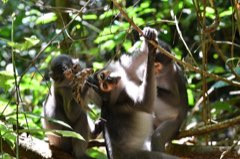 Tiwai Island — eleven primates and the Moa river dawnOne of the densest primate soundscapes in Africa: Diana monkeys' explosive alarm calls, red colobus chatter, the roar of king colobus, chimps' pant-hoots across the river, hornbills whooshing overhead, and the Moa river's rapids underneath.
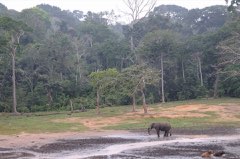 Sapo National Park — pygmy hippo, elephants and the deepest forest in West AfricaPrimary Upper Guinea rainforest with nothing man-made within a day's walk: casqued hornbills, chimps, Diana monkeys, the whistles of duikers, elephants rumbling at night, tree hyrax, and the full insect and frog layer of a forest that has never been logged.
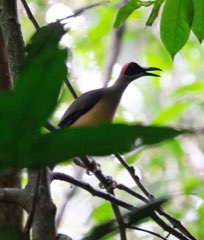 Korup: drills, red colobus and the oldest rainforest dawn in AfricaDrill and mangabey troops crashing and grunting through the understorey, red colobus shrieks, chimpanzee pant-hoots at a distance, hornbills, the buzz of cicadas at first light and, from the Rengo camp, a night of tree hyrax and frogs over the Mana river.
More: all spectacles in Ghana · dawn choruses · Ghana in January · Ghana in February · Ghana in March · November · Ghana in December