
Gola Rainforest — picathartes, hornbills and the forest chorus
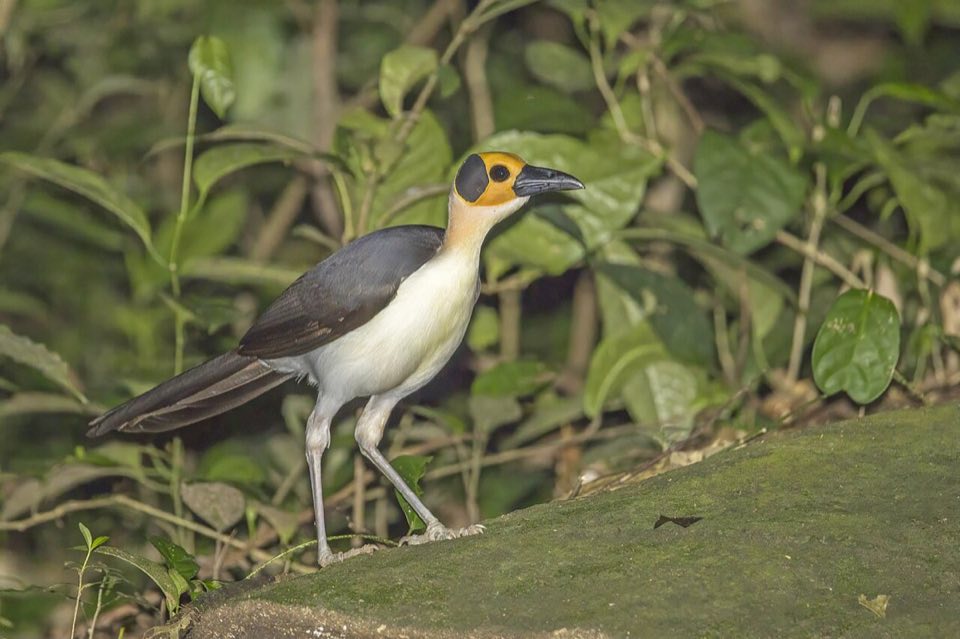
White-necked picathartes (Picathartes gymnocephalus), Gola malimbe, yellow-casqued & brown-cheeked hornbills, white-breasted guineafowl, western chimpanzee, forest elephant, pygmy hippo, Diana monkey. Gola Rainforest National Park, Kenema / Kailahun / Pujehun, Sierra Leone.
Best time: 15 Dec – 15 Mar (December to March). Where: Lalehun camp (Gola North), Belebu / Sileti (Gola Central), Gola Rainforest Conservation office, Kenema (Sierra Leone). Time of day: Forest dawn from first light to 09:00.
- Guide, ranger or boat needed
- Entry fee
- Binoculars essential
- Sound 4/5
Open it in the interactive calendarSunrise and sunset listening times for the day you pick, and the map.
When is the best time?
Peak: 15 Dec – 15 Mar. Mid December to mid March for access; picathartes nest colonies are active in the rains (roughly August–November) and are visited as roosts in the dry season at dusk
Active from 15 Nov to 30 Apr (November to April) in a typical year.
Time of day
Forest dawn from first light to 09:00; picathartes come to the rock shelters in the last hour before dark
- Forest dawn: 30 min before sunrise → 3 h after sunrise
- Picathartes roost: 75 min before sunset → last light
What will you hear?
The Upper Guinea forest at full volume — hornbills, chimps, the bubbling of yellow-bearded greenbul, guineafowl clucking on the trail — and the near-silent arrival of picathartes to their mud nests under a boulder, with only wing-noise and soft croaks.
Binoculars?
Binoculars essential. Picathartes are watched from a blind 30 m+ off in the last light, hornbills are high in the canopy; binoculars needed.
Where to go
- Lalehun camp (Gola North) — Community camp on the northern edge with the classic picathartes colony; coordinates approximate — the Gola Rainforest office in Kenema gives directions. Map
- Belebu / Sileti (Gola Central) — Southern camps for the deeper forest; long 4x4 approach. Map
- Gola Rainforest Conservation office, Kenema — Where visits, guides, fees and research permits are arranged (RSPB / CSSL / Government partnership). Map
How to go on your own, and what it costs
Park rule: guides from the community camps and a fee paid at the Gola office in Kenema. Cheapest legal route: public transport to Kenema, arrange at the office, moto to the camp village, camp guide by the day.
Cost: Park entry, guide and camp fees — check current prices at the Kenema office.
Free or no-guide alternative: The forest edge along the public Kenema–Joru road and the community forests around Lalehun give the hornbill and primate dawn chorus free from the roadside; the picathartes colonies inside the park are guide-only, with no legal alternative.
Who runs access
- Gola Rainforest Conservation LG (RSPB / CSSL / Government of Sierra Leone) – Kenema office (park authority) — The park's own visitor programme; community guides.
Field-recording notes
Picathartes are the disturbance-sensitive species here: guides take you to a fixed blind 30 m+ from the boulder, no flash, no talking, arrive an hour before the birds. The park has no internal roads — noise is chainsaws and mining on the edges, none inside. Humidity; leeches; the harmattan brings haze not dust. Research permits (recording for release counts) via the Gola office and the NPAA in Freetown — allow weeks.
Sources
Similar spectacles
 Cranes dancing on the dune heaths and bogsCrane pairs duetting and bugling across the wet dune slacks at first light, the dance's wing-flaps, curlew, golden plover and snipe drumming around them; ravens; the North Sea in Thy.
 Bitterns boomingThe deep boom (fundamental around 150 Hz, carrying over 3 km), plus water rail squeals, reed and sedge warblers, and marsh harriers.
 Steppe dawn: Dupont's lark and the Belchite larksDupont's lark's strange nasal, ventriloquial phrases from the dark steppe, then a wall of calandra lark song at sunrise, sandgrouse and stone-curlews — one of Europe's rarest dawn choruses.
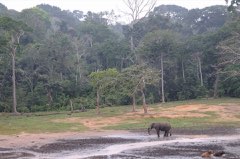 Sapo National Park — pygmy hippo, elephants and the deepest forest in West AfricaPrimary Upper Guinea rainforest with nothing man-made within a day's walk: casqued hornbills, chimps, Diana monkeys, the whistles of duikers, elephants rumbling at night, tree hyrax, and the full insect and frog layer of a forest that has never been logged.
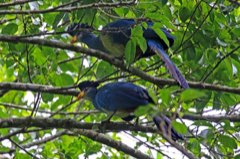 Upper Guinea rainforest dawn chorus — Kakum & AnkasaGreat blue turacos bubbling from the emergents, the far-carrying wailing of white-crested hornbills, yellow-casqued hornbills' whooshing wingbeats, chattering monkeys, cicadas switching on with the light and the screaming of tree hyrax at night.
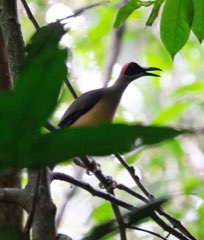 Korup: drills, red colobus and the oldest rainforest dawn in AfricaDrill and mangabey troops crashing and grunting through the understorey, red colobus shrieks, chimpanzee pant-hoots at a distance, hornbills, the buzz of cicadas at first light and, from the Rengo camp, a night of tree hyrax and frogs over the Mana river.
More: all spectacles in Sierra Leone · dawn choruses · Sierra Leone in January · Sierra Leone in February · Sierra Leone in March · Sierra Leone in December