
Musk ox on Dovrefjell
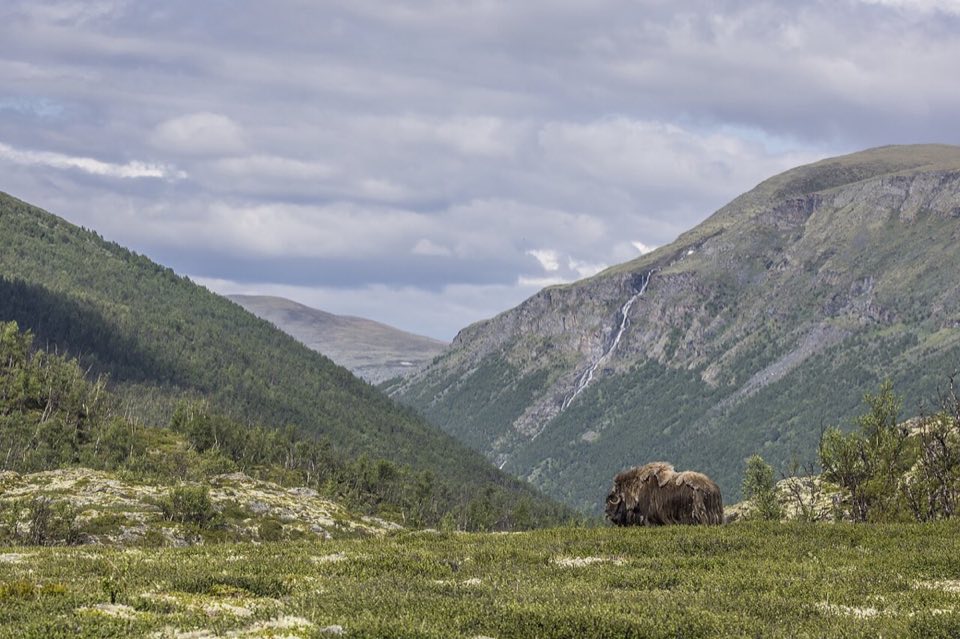
Musk ox (Ovibos moschatus) — c. 200–300 introduced animals; wild reindeer, arctic fox (reintroduced), golden plover, dotterel, snow bunting. Dovrefjell–Sunndalsfjella National Park (Hjerkinn – Kongsvold), Norway.
Best time: 1 Aug – 10 Sep (August to September). Where: Kongsvold Fjellstue / Musk Ox Trail (Moskusstien), Hjerkinn – Viewpoint Snøhetta (Tverrfjellhytta), Grønbakken / Stroplsjødalen (Norway). Time of day: Herds are visible all day.
- You can go on your own
- Free
- Binoculars essential
- Sound 3/5
Open it in the interactive calendarSunrise and sunset listening times for the day you pick, and the map.
When is the best time?
Peak: 1 Aug – 10 Sep. August to 10 September for the rut (bulls roaring and head-butting); calves from May, safaris June–September
Active from 1 Jun to 30 Sep (June to September) in a typical year.
Time of day
Herds are visible all day; rut clashes and roaring are most frequent from about 06:00 to 10:00 and from 17:00 to sunset, when the wind is also lowest. Guided safaris meet at Kongsvold at 10:15.
- Morning rut: 06:00 → 10:00
- Evening rut: 17:00 → sunset
What will you hear?
In the rut, bulls' guttural roars and the crack of two 400 kg skulls colliding at 50 km/h, which carries across the plateau; otherwise snorts and grazing, golden plover and dotterel whistles, wind on the tundra.
Binoculars?
Binoculars essential. Musk ox are watched from the legal 200 m minimum on the open plateau; binoculars needed, a scope for the rut clashes.
Where to go
- Kongsvold Fjellstue / Musk Ox Trail (Moskusstien) — Marked trail from the E6 up onto the plateau; 200 m minimum distance is the rule; safaris meet here at 10:15. Map
- Hjerkinn – Viewpoint Snøhetta (Tverrfjellhytta) — Wild-reindeer pavilion 1.5 km from the car park; musk ox often visible; free. Map
- Grønbakken / Stroplsjødalen — Valley east of the E6 where herds summer; day-hike terrain. Map
How to go on your own, and what it costs
Musk Ox Trail: park at Kongsvold Fjellstue (train stops at Kongsvoll station on the Dovrebanen) and follow the marked trail onto the plateau — free, keep 200 m from the animals. Viewpoint Snøhetta: free car park at Hjerkinn, 1.5 km walk to the pavilion. Grønbakken: day-hike terrain east of the E6. Safaris are optional.
Cost: Free; musk ox safaris with licensed operators (check current prices).
Who runs access
- Dovrefjell–Sunndalsfjella National Park – list of approved safari operators (park authority) — Seven park-approved operators (Kongsvold, Hjerkinn, Oppdal); about 6 h, 7–15 km.
Field-recording notes
200 m is the legal minimum (the park board approves operators and enforces distance); a charging musk ox is the main hazard in Norwegian wildlife, and the rut is when it happens. A parabolic or long shotgun from 200 m gets the head-butting cracks; the roars are low and need a still day. The E6 and the Dovrebanen railway cross the plateau — noise fades within 3–4 km east. Wind is near-constant; work the lee of moraines. Wild reindeer calving zones and the Snøhetta area have seasonal access advice — follow villrein.no.
Sources
- Dovrefjell–Sunndalsfjella nasjonalpark – musk ox safari
- Dovrefjell–Sunndalsfjella nasjonalpark – Musk Ox Trail
Similar spectacles
 Langoué Bai: elephants, gorillas and red river hogs at the Ivindo clearingA bai at night is the best elephant listening in Central Africa: rumbles, trumpets, splashing and the squabbling of family groups at the mineral pools, with tree hyrax, frogs and owls in the forest ring. By day, red river hog groups of fifty, gorilla chest-beats and 'hoo' series from the edge, and the whistles of grey parrots in hundreds.
 Lopé: the mandrill super-groups of the dry seasonA horde of several hundred mandrills on the move is one of the loudest things in an African forest: a rolling wave of grunts, two-phase 'crowing' from the males, screams, branches breaking and the drumming of hundreds of feet in the leaf litter, approaching for minutes before anything is seen and fading for minutes after. Around it, the savanna–forest dawn: hornbills, greenbuls, elephants rumbling at the forest edge.
 Odzala-Kokoua: forest elephants and grey parrots at Lango baiElephants blowing, splashing and rumbling in the bai's mineral pools a few metres below the deck, families greeting with trumpets and roars, grey parrot flocks whistling in to drink, forest buffalo grunting in the sedge, and a night of frogs, hyrax and distant hyena.
 Ngaga: habituated western lowland gorillas in the marantaceae forestChest-beats, hoots and the crashing of a silverback's display in dense marantaceae, the soft grunting and belching of a feeding family a few metres away, monkeys overhead and a night of tree hyrax and frogs from the camp's raised rooms.
 Marmots, ibex and chamois in the Berchtesgaden AlpsMarmot whistles echoing off the Watzmann east face, chough flocks, chamois sneezes, ptarmigan on the Steinernes Meer plateau, golden eagle; cowbells on the alpine pastures; in autumn, roaring stags in the Klausbachtal.
 Mercantour summer: marmots, ibex and wolf countryMarmot alarm whistles across high cirques, ibex hooves on rock, alpine choughs and lammergeier wingbeats; wolf howls are possible but rare and never guaranteed.
More: all spectacles in Norway · mountain wildlife · Norway in August · Norway in September