
Wadden Sea high-tide wader roosts: Westhoek and the Frisian coast
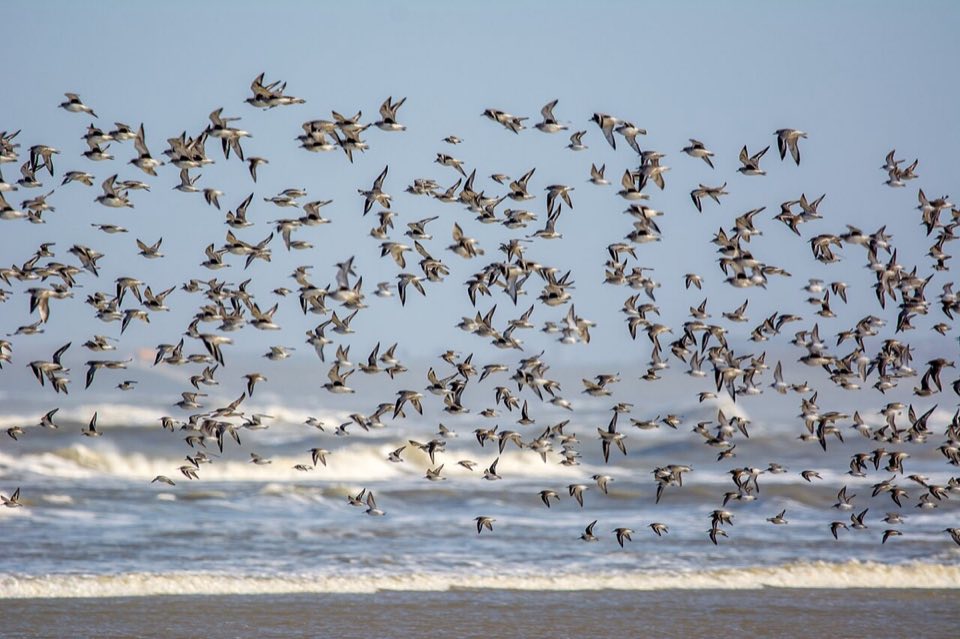
Dunlin, curlew sandpiper (up to 9,000 at Westhoek), grey plover, bar-tailed godwit, knot, sanderling, little stint, avocet, curlew, oystercatcher; brent geese and spoonbills. Frisian Wadden coast: Westhoek, Peazemerlannen, Lauwersmeer edge, Netherlands.
Best time: 20 Jul – 10 Sep and 1 May – 25 May (May, July to September). Where: Westhoek (Het Bildt), sea dike, Peazemerlannen, Paesens-Moddergat, Ezumakeeg, Lauwersmeer (freshwater roost) (Netherlands). Time of day: Arrive 1.5–2 h before high tide: the flocks start a kilometre out on the flats and are pushed up to the dike foot as the water rises, then lift and swirl at the top of the tide.
- You can go on your own
- Free
- Telescope recommended
- Sound 4/5
Open it in the interactive calendarSunrise and sunset listening times for the day you pick, and the map.
When is the best time?
- Peak 1: 20 Jul – 10 Sep — Autumn roost spectacle
- Peak 2: 1 May – 25 May — Spring passage in breeding plumage
Active from 10 Jul to 15 Oct (July to October) in a typical year.
Time of day
Arrive 1.5–2 h before high tide: the flocks start a kilometre out on the flats and are pushed up to the dike foot as the water rises, then lift and swirl at the top of the tide. Dawn or dusk high tides are quietest and best for sound. Check the Harlingen tide table.
- Morning high tide (check tide tables): 30 min before sunrise → 3 h after sunrise
- Evening high tide (check tide tables): 3 h before sunset → 20 min after sunset
Depends on the tide: best around high tide. Check local tide tables.
What will you hear?
The rising murmur of tens of thousands of dunlin and curlew sandpipers packed on the roost, then the rush of wings as the flock lifts and turns; curlew and grey plover calls; brent geese in autumn; wind over the flats.
Binoculars?
Telescope recommended. 100,000+ waders start far out; a scope for the first hour, then the flock comes to within 50–100 m of the dike and the sound takes over.
Where to go
- Westhoek (Het Bildt), sea dike — Small car park by the dike just outside the village, walk onto the dike; no hide, open at all hours; one of the largest roosts on the Dutch coast. Map
- Peazemerlannen, Paesens-Moddergat — Salt marsh outside the dike; park in Paesens or at the fishing-disaster monument and walk the sea wall; purple sandpiper and brent geese in winter; keep your distance, birds flush easily. Map
- Ezumakeeg, Lauwersmeer (freshwater roost) — Viewing mound with benches; rare waders in passage, white-tailed eagles; viewable from the road. Map
How to go on your own, and what it costs
Westhoek: from Sint Jacobiparochie follow the road to Westhoek, park at the small lot by the dike and walk up; free, no hours. Peazemerlannen: park in Paesens, walk the sea wall path (paved). Ezumakeeg: road-side parking south of Ezumazijl. All free; stay on dikes and paths.
Cost: Free.
Field-recording notes
Open dike, no shelter: wind is the constant and the dike crest is the worst place for it — sit on the landward slope with the mic just over the top. Farm traffic on the dike road at Westhoek; otherwise very quiet, the nearest town is small. The roost itself is the sound: get there before the birds are pushed up, so your presence is part of the landscape when they arrive. Never walk out onto the marsh at high tide — the roost is the whole point and disturbance scatters it. Spring tides plus wind give the closest approach.
Sources
- Birdingplaces – Mesmerizing wader migration at Westhoek
- Birdingplaces – Peazemerlannen
- Nationaal Park Lauwersmeer – birds by area (Ezumakeeg)
Similar spectacles
 Wadden Sea autumn: millions of waders and geeseKnot and dunlin flocks in the tens of thousands wheeling with a rushing wing-roar, curlew and godwit calls at the roost, brent geese growling, barnacle geese yapping; wind, surf and the tide-edge trickle.
 Autumn migration at Lista, Jomfruland and UtsiraDawn flight calls of thousands of thrushes, pipits and finches leaving the coast, waders on the Lista beaches, skuas and gannets passing the lighthouse in a westerly gale; at night, redwing and song thrush calls overhead.
 Falsterbo: Scandinavia's autumn migration funnelA continuous stream of flight calls at dawn — chaffinch, brambling, meadow pipit, yellow wagtail, siskin — thousands of birds an hour on a big day; cranes bugling high overhead in late Sept–Oct; the sea on both sides of the point.
 Gedser Odde: autumn migration off Denmark's southern tipRivers of chaffinch and brambling calls over the car park on a big October morning, wood pigeons' wing-clatter, eider flocks crooning as they round the point, little gulls' chatter, the Fehmarn Belt surf; the station's own sound recorder (PUC) logs the night migration overhead.
 Snettisham wader spectacularTens of thousands of knot flying in smoky clouds with a roaring wing-rush, then a low twittering murmur as they pack onto the roost banks.
 Spring migration counts: Col de l'Escrinet, Pointe de Grave and Le HucelA river of chaffinch flight calls over the col at dawn, meadow pipits, serins and linnets in the flocks, woodpigeon wing-clatter, cranes bugling northwards in March, and at Pointe de Grave the May sound of swifts screaming low over the dunes and bee-eaters calling in off the Gironde — one of the few places in France where spring migration is a sound you can stand under.
More: all spectacles in the Netherlands · bird migration hotspots · the Netherlands in May · July · August · September