
Wadden Sea autumn: millions of waders and geese
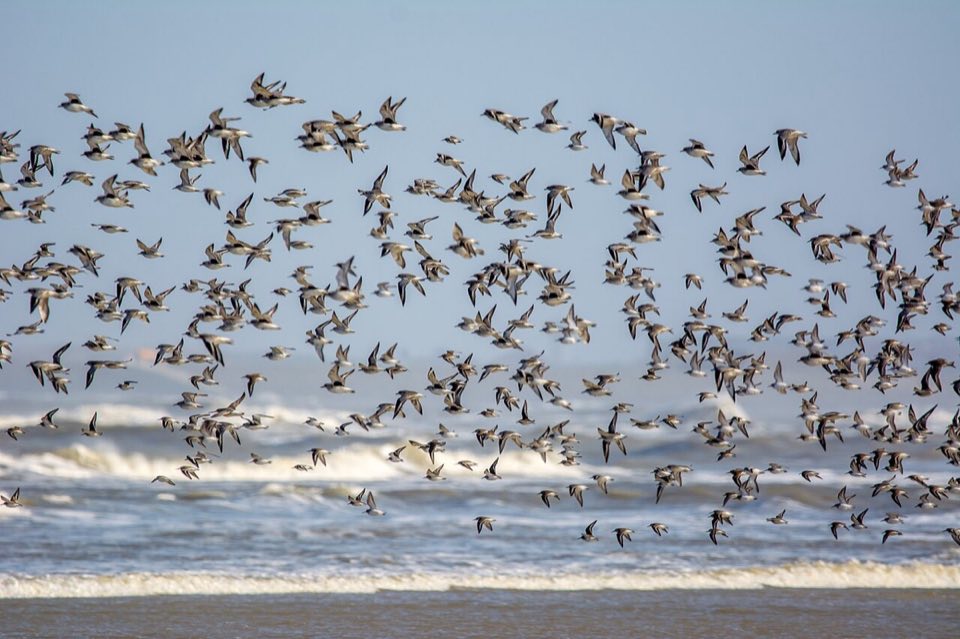
Knot, dunlin, bar-tailed godwit, curlew, oystercatcher, avocet, golden plover; brent and barnacle geese; spoonbill; starling roosts. Schleswig-Holstein and Lower Saxony Wadden Sea national parks, Germany.
Best time: 15 Sep – 20 Oct (September to October). Where: Westerhever / Eiderstedt (SH), Hallig Hooge, Katinger Watt / Eidersperrwerk (NABU) (Germany). Time of day: The wader roosts pack in from 2 h before high water and break up 2 h after — best when high tide falls near sunrise or sunset.
- You can go on your own
- Free
- Telescope recommended
- Sound 5/5
Open it in the interactive calendarSunrise and sunset listening times for the day you pick, and the map.
When is the best time?
Peak: 15 Sep – 20 Oct. Mid September to 20 October (Zugvogeltage Lower Saxony: 2nd October weekend; Westküsten-Vogelkiek late Sept/early Oct)
Active from 15 Jul to 15 Nov (July to November) in a typical year.
Time of day
The wader roosts pack in from 2 h before high water and break up 2 h after — best when high tide falls near sunrise or sunset; goose flights in the hour around sunrise and the hour before sunset regardless of tide.
- Dawn goose flights (waders tide-timed): 45 min before sunrise → 1 h after sunrise
- Evening flights: 1 h before sunset → last light
Depends on the tide: best around high tide. Check local tide tables.
What will you hear?
Knot and dunlin flocks in the tens of thousands wheeling with a rushing wing-roar, curlew and godwit calls at the roost, brent geese growling, barnacle geese yapping; wind, surf and the tide-edge trickle.
Binoculars?
Telescope recommended. Roosts and goose flocks are 200 m to 1 km out on the salt marsh; scope from the dyke, binoculars minimum.
Where to go
- Westerhever / Eiderstedt (SH) — Lighthouse salt marsh; big roosts, spoonbills; 3 km walk from the car park keeps crowds down. Map
- Hallig Hooge — Hallig biosphere; geese in spring (Ringelganstage late April–mid May), waders in autumn; no cars, extremely quiet at night. Map
- Katinger Watt / Eidersperrwerk (NABU) — Freshwater polder behind the Eider barrage; hides; roosts at high tide. Map
- Leybucht / Dollart, Rheiderland (NDS) — Largest goose concentrations on the Lower Saxony coast; arctic geese Oct–March; dykes are public. Map
How to go on your own, and what it costs
Westerhever: park at the Stuhrmann car park and walk the 3 km to the lighthouse salt marsh (public paths, open at all hours). Hallig Hooge: ferry from Schlüttsiel, everything on foot. Katinger Watt: NABU hides free from the car park at the Eidersperrwerk. Leybucht/Dollart: the sea dykes are public. Stay on marked paths in the breeding season, Zone 1 closed.
Cost: Free; Hallig Hooge ferry (W.D.R. Schlüttsiel–Halligen) €18.20 adult return (2027 fare list).
Field-recording notes
Wind is the constant: Beaufort 4+ most days, so wind protection at the fur level and a low-profile rig on the dyke lee side. Salt-marsh core zones (Zone 1) are closed — the Halligen and dyke paths are legal and give roost proximity at high tide. Shipping lanes, offshore wind farm service helicopters, and Tönning/Husum traffic are the noise sources; the Halligen at night are among the quietest places in Germany. Spring brent geese (April–May) and the autumn starling roosts near the Eider are worth separate trips. Nationalpark rules: dogs on leads, no drones, stay on marked paths in the breeding season.
Sources
- Nationalpark Wattenmeer – Vogelbeobachtung (SH)
- Nationalpark Wattenmeer – Vogelzug Herbst Westküste
- Zugvogeltage Niedersächsisches Wattenmeer
Similar spectacles
 Wadden Sea autumn: geese, waders and whooper swans in the marshBarnacle goose yapping in flocks of tens of thousands over the Ballum marsh, brent geese growling on the flats, golden plover flocks whistling, whooper swan families bugling on the polders at night, curlew; the tide.
 Pink-footed goose dawn flightsTens of thousands of geese lifting off the mudflats at first light in a wall of 'wink-wink' calls, wave after wave overhead.
 Goose autumn at the Lange Lacke, SeewinkelGeese in skeins of thousands crossing the pastures at dusk, greylag chatter on the soda lake roost through the night, cranes trumpeting overhead in late October, eagle calls; the salt-steppe silence in between.
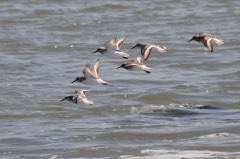 Baie de l'Aiguillon: wader roosts and winter geeseThe roar of 20,000 dunlin and plover lifting off the mud as the tide covers it, godwit and curlew flocks calling as they cross the dyke, wigeon whistling by the thousand on winter mornings, greylags at dawn and, in December, cranes bugling in to roost over the marsh.
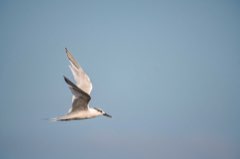 Banc d'Arguin terns & Arcachon brent geeseA grating Sandwich tern colony of thousands of pairs on a sandbank in the Atlantic swell; in winter, the rolling 'rronk' of brent flocks on the eelgrass beds.
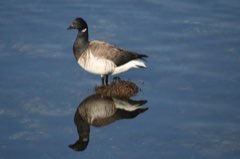 Light-bellied brent geese arriving in Dublin BayThe soft, rolling 'rrronk' chorus of brent flocks on the lagoon and the salt marsh, godwits and knot calling at the roost, curlews over the mudflats — all against the hum of Dublin port, the DART and the city.
More: all spectacles in Germany · wild geese · bird migration hotspots · Germany in September · Germany in October