
Omo Forest: forest elephants and a lowland-forest dawn
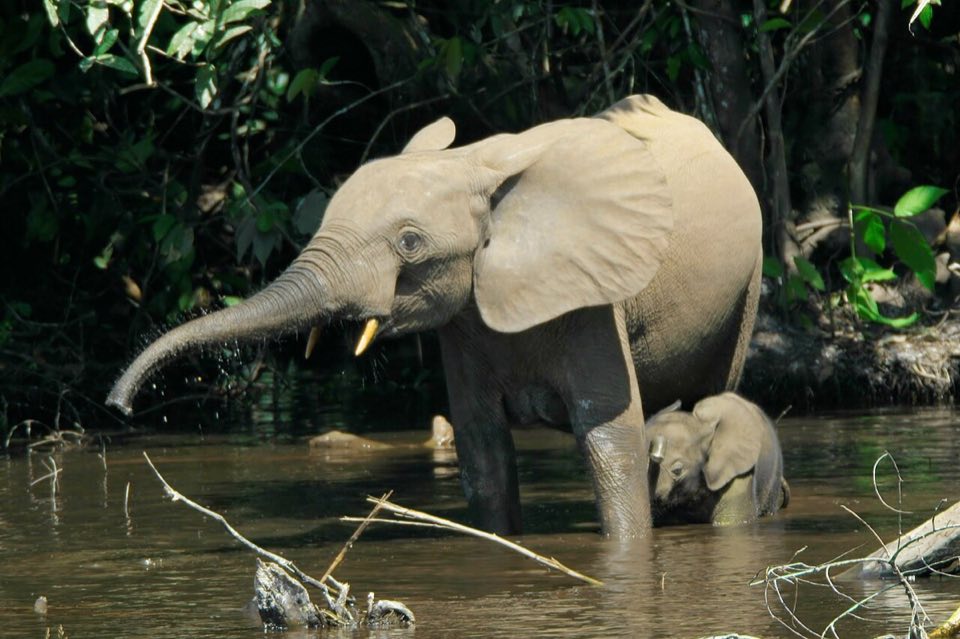
Forest elephant (small population), Nigeria-Cameroon chimpanzee, white-throated guenon, red-capped mangabey; hornbills, great blue turaco, forest robins. Omo Forest Reserve, Ogun State, Nigeria.
Best time: 1 Dec – 28 Feb (December to February). Where: Omo Forest – Elephant Camp (NCF), Beetle Hill (Nigeria). Time of day: From 40 minutes before sunrise to about 09:00.
- Guide, ranger or boat needed
- Entry fee
- Binoculars helpful
- Sound 4/5
Open it in the interactive calendarSunrise and sunset listening times for the day you pick, and the map.
When is the best time?
Peak: 1 Dec – 28 Feb. December to February: dry mornings and passable tracks; elephants are heard rather than seen and mostly at night
Active from 1 Nov to 15 Apr (November to April) in a typical year.
Time of day
From 40 minutes before sunrise to about 09:00; elephants at the camp's stream and salt-licks after dark, tree hyrax and owls through the night
- Dawn chorus: 40 min before sunrise → 09:00
- Elephants & night forest: last light → 00:00
What will you hear?
A lowland rainforest dawn an hour and a half from Lagos — hornbills, turacos, chattering mangabeys — and at night the breaking branches, rumbles and occasional trumpet of elephants moving past the camp.
Binoculars?
Binoculars helpful. Hornbills and mangabeys in the high canopy; binoculars help by day, elephants at night are ears only.
Where to go
- Omo Forest – Elephant Camp (NCF) — Basic cabins and tents run with the Nigerian Conservation Foundation; the base for walks and Beetle Hill. Map
- Beetle Hill — Viewpoint over the forest canopy; 45 minutes' drive plus a 25-minute climb from camp. Map
How to go on your own, and what it costs
Walks are with reserve rangers (reserve rule; elephants). Cheapest legal way: arrange the Elephant Camp stay and ranger through NCF (Lagos) or the camp directly and take public transport to Ijebu-Ode and a motorbike/4x4 to the camp; camping is cheaper than a cabin.
Cost: Camp fee per night plus ranger fee; check current prices with NCF.
Free or no-guide alternative: The public reserve roads and the villages at the edge (e.g. around J4 and Aberu) are outside the strict core: the forest dawn is free from the roadside, though elephants are unlikely there.
Who runs access
- Nigerian Conservation Foundation – Omo Forest Elephant Camp (NGO) — NGO co-managing the reserve core; books the camp and rangers
Field-recording notes
A forest reserve (state land with logging concessions), not a park: the strict nature reserve core and the elephant camp are managed with NCF, and rangers accompany walks (rule, and elephants at night are a real hazard). Logging trucks and chainsaws are audible on weekdays on the reserve roads; the camp is far enough in for clean nights. Rains from April make the tracks impassable. Book through NCF in Lagos.
Sources
Similar spectacles
 Sapo National Park — pygmy hippo, elephants and the deepest forest in West AfricaPrimary Upper Guinea rainforest with nothing man-made within a day's walk: casqued hornbills, chimps, Diana monkeys, the whistles of duikers, elephants rumbling at night, tree hyrax, and the full insect and frog layer of a forest that has never been logged.
 Monte Alén: the Río Muni rainforest dawn, elephants and the goliath frog riversA Central African lowland chorus: hornbills whooshing overhead, the bubbling of greenbuls and the far pant-hoots of chimpanzees, mandrill grunts, elephant rumbles at the swamp edge. The goliath frog itself is nearly silent (no vocal sac) — its rivers are a night of other frogs and the roar of water over rock.
 Ziama massif — forest elephants and the Guinean rainforest dawnA full Upper Guinea rainforest dawn — casqued hornbills' wingbeats and whooping, Diana monkeys, chimps, the great blue turaco — and at night the crash and rumble of forest elephants in one of their last Guinean refuges.
 Pendjari: lions, elephants and hippos at the dry-season poolsLions roaring across the Pendjari plain in the small hours — one of the few places in West Africa where this is still likely — hippos bellowing at Mare Bali, elephants at the pools, hyena whoops and a savanna dawn of francolins, ground hornbills and doves.
 Lobéké bais: elephants, gorillas and grey parrots at the clearingsGrey parrot flocks whistling and screeching over Djangui, elephants splashing, rumbling and trumpeting in the mud of Petite Savane, gorilla chest-beats from the edge, forest hogs grunting, and the rainforest dawn behind it all.
 Odzala-Kokoua: forest elephants and grey parrots at Lango baiElephants blowing, splashing and rumbling in the bai's mineral pools a few metres below the deck, families greeting with trumpets and roars, grey parrot flocks whistling in to drink, forest buffalo grunting in the sedge, and a night of frogs, hyrax and distant hyena.
More: all spectacles in Nigeria · elephants · dawn choruses · Nigeria in January · Nigeria in February · Nigeria in December