
Autumn seabird passage off Ras Nouadhibou
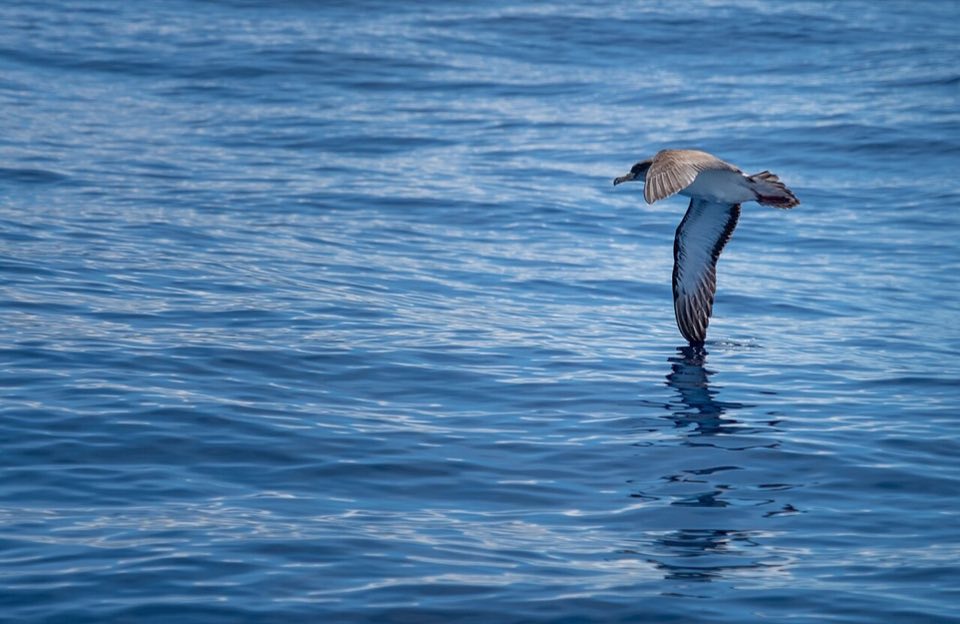
Cory's, Cape Verde & sooty shearwaters, gannet, Sabine's gull, skuas (Arctic, pomarine, long-tailed), grey phalarope, Audouin's gull, terns. Cap Blanc peninsula, Nouadhibou, Mauritania.
Best time: 10 Sep – 20 Oct (September to October). Where: Baie de l'Étoile, Ras Nouadhibou lighthouse / Cap Blanc reserve, Nouadhibou – Baie du Lévrier shore (Mauritania). Time of day: First 3 hours after sunrise, best in onshore (north-westerly) winds.
- You can go on your own
- Low cost
- Telescope recommended
- Sound 1/5
Open it in the interactive calendarSunrise and sunset listening times for the day you pick, and the map.
When is the best time?
Peak: 10 Sep – 20 Oct. Mid September to mid October
Active from 15 Aug to 15 Nov (August to November) in a typical year.
Time of day
First 3 hours after sunrise, best in onshore (north-westerly) winds
- Morning seawatch: sunrise → 3 h after sunrise
What will you hear?
A visual seawatch over the Cap Blanc upwelling — the same seabird river that Ngor (Dakar) and the Banc d'Arguin islands see; gannets and skuas within the surf line on windy mornings. Sound value is low unless you deploy a hydrophone for the fish-and-dolphin activity of the upwelling.
Binoculars?
Telescope recommended. Seabirds pass 200 m to 2 km off the cape in an onshore wind; a scope is the whole point, binoculars catch only the nearest.
Where to go
- Baie de l'Étoile — Sheltered bay 12 km north of Nouadhibou inside the peninsula: Atlantic humpback dolphin records and tern/flamingo roosts; a calm-water alternative when the Cap Blanc seawatch is blown out. Map
- Ras Nouadhibou lighthouse / Cap Blanc reserve — Watch from the cape; the reserve track is the access. Map
- Nouadhibou – Baie du Lévrier shore — Terns and gulls roosting; the ship graveyard is a noisy backdrop. Map
How to go on your own, and what it costs
Taxi from Nouadhibou to the Cap Blanc track; the lighthouse point is inside the small reserve (day fee) but the Baie du Lévrier shore is public and free.
Cost: Reserve entry small fee — check current prices; shore free.
Field-recording notes
Included for completeness on the flyway: a place to hear almost nothing but a 20-knot wind and surf. Little coverage — your counts are worth submitting to Trektellen/eBird.
Sources
Similar spectacles
 Crane autumn staging: Rügen-Bock, Linum, Diepholz, MüritzWaves of trumpeting families flying in at dusk, the roost's night-long murmur over shallow water, dawn's mass departure with tens of thousands calling at once; greylag and white-fronted geese in the same flights.
 Wadden Sea autumn: millions of waders and geeseKnot and dunlin flocks in the tens of thousands wheeling with a rushing wing-roar, curlew and godwit calls at the roost, brent geese growling, barnacle geese yapping; wind, surf and the tide-edge trickle.
 Cranes at Lac du DerTens of thousands of cranes bugling as they leave the lake at first light in wave after wave, then the evening return with the sky full of trumpeting skeins.
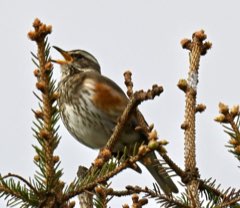 Autumn migration at Lista, Jomfruland and UtsiraDawn flight calls of thousands of thrushes, pipits and finches leaving the coast, waders on the Lista beaches, skuas and gannets passing the lighthouse in a westerly gale; at night, redwing and song thrush calls overhead.
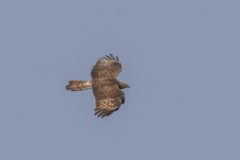 Falsterbo: Scandinavia's autumn migration funnelA continuous stream of flight calls at dawn — chaffinch, brambling, meadow pipit, yellow wagtail, siskin — thousands of birds an hour on a big day; cranes bugling high overhead in late Sept–Oct; the sea on both sides of the point.
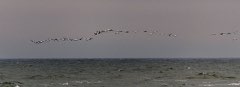 Gedser Odde: autumn migration off Denmark's southern tipRivers of chaffinch and brambling calls over the car park on a big October morning, wood pigeons' wing-clatter, eider flocks crooning as they round the point, little gulls' chatter, the Fehmarn Belt surf; the station's own sound recorder (PUC) logs the night migration overhead.
More: all spectacles in Mauritania · bird migration hotspots · September · October