
Île Alcatraz — the only brown booby colony between Cabo Verde and São Tomé
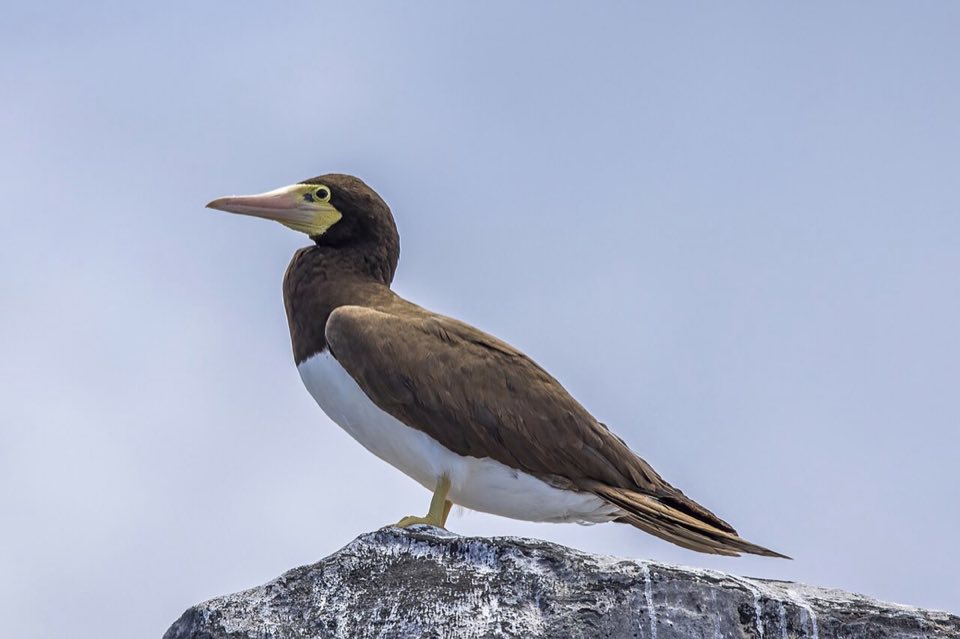
Brown booby (Sula leucogaster, about 3,000 pairs at the last full estimate), royal tern colony; thousands of royal, common, Sandwich and little terns and black terns roosting on the Île du Naufrage sandbank; Atlantic humpback dolphin and manatee in the surrounding shallows. Offshore Boké — 40 km south-west of the Tristão islands, on the continental shelf, Guinea.
Best time: 1 Dec – 31 Mar (December to March). Where: Île Alcatraz, Île du Naufrage (tern sandbank), Kamsar (Guinea). Time of day: Arrive in the morning on the dry-season calm.
- Guide, ranger or boat needed
- Paid trip only
- Binoculars helpful
- Sound 4/5
Open it in the interactive calendarSunrise and sunset listening times for the day you pick, and the map.
When is the best time?
Peak: 1 Dec – 31 Mar. Boobies breed year-round; December to March is the dry-season window when the sea allows the crossing and the tern roost on the Naufrage sandbank is at its biggest with Palearctic birds
Active from 1 Nov to 31 May (November to May) in a typical year.
Time of day
Arrive in the morning on the dry-season calm; boobies come and go all day, the tern roost packs the sandbank at high water and the colony's noise peaks in the last two hours of light
- Morning arrival by boat: 2 h after sunrise → 5 h after sunrise
- Evening colony: 2 h before sunset → sunset
Depends on the tide: best around high tide. Check local tide tables.
What will you hear?
A tropical booby rock: the braying and whistling of thousands of brown boobies, the grating roar of a royal tern colony, wings everywhere, guano and fish — a sound that exists nowhere else on the West African mainland coast. Only the sea and your own outboard compete.
Binoculars?
Binoculars helpful. The islet is 1 ha of rock and guano — the boat lies off 50–100 m and the boobies are on top of you; binoculars for the tern roost on the sandbank.
Where to go
- Île Alcatraz — Lateritic islet (c. 0.75 ha) under 3 m of guano, 12 m high; Ramsar site since 1992. No landing — the colony covers the whole rock; anchor off. Map
- Île du Naufrage (tern sandbank) — Unvegetated sandbank 2 km south-west of Alcatraz where the terns roost in thousands; shifting, awash at spring tides. Coordinates approximate. Map
- Kamsar — Bauxite port on the Rio Nunez and the only realistic departure point: hire a large motor pirogue and a captain who knows 'Alcatraz'. About 90 km each way by sea. Map
- Tristão main island (Katfoura / Kanof) — Ramsar island group 40 km north-east of the rock; a staging point if you combine with the Tristão wader entry. Coordinates approximate. Map
How to go on your own, and what it costs
Fly to Conakry, road to Boké then Kamsar (6–8 h). In Kamsar, through the fishermen's port or the Tristão-bound pirogue owners, charter a sea-going motor pirogue for the day (leave at first light, 3–4 h each way). There are no scheduled trips and no operator — this is a private charter. Dry season only.
Cost: Pirogue charter for the day several million GNF (fuel is the cost: budget the equivalent of €200–400; negotiate in Kamsar; check current prices). No park fee.
Free or no-guide alternative: No cheap way: the rock is 90 km offshore. The Kamsar waterfront and the Rio Nunez mouth hold the same royal and Sandwich terns roosting on sandbars, free from the shore, and brown boobies occasionally fish the estuary mouth.
Who runs access
- Guinée Écologie — BirdLife partner (seabird colony surveys, local contacts) (NGO) — The NGO that surveyed the colony; ask them for a reliable captain and the permit route.
Field-recording notes
An expedition, not a day out: 90 km of open shelf sea each way from Kamsar in a pirogue, no shelter, no rescue — go only with a proven captain, two engines, life-jackets, GPS and a VHF, in the dry season, and tell the Kamsar port authorities. No landing on the colony (nesting birds everywhere, guano 3 m deep, and the Ramsar status); record from an anchored boat with the engine off — the colony is deafening at 50 m. The Kamsar shipping lane passes a few dozen km south; the islet itself has no human noise. Research needs an authorisation from the Guinean Ministry of Environment (Direction Nationale des Eaux et Forêts) and Guinée Écologie is the partner to ask.
Sources
- KBA factsheet – Ile Alcatraz et Ile du Naufrage (only brown booby colony between Cabo Verde and São Tomé; terns in thousands; Ramsar 1992)
- BirdLife International – Guinée Écologie partner page
Similar spectacles
 The Tinhosas: the only great seabird colony of the eastern tropical AtlanticA sooty tern colony of this size is a wall of sound audible from a kilometre downwind: the 'wide-awake' calls of over a quarter of a million birds, noddies' rattles, booby honks, surf on bare rock. From a drifting boat with the engine off it is one of the great seabird sound events of the Atlantic.
 Banc d'Arguin terns & Arcachon brent geeseA grating Sandwich tern colony of thousands of pairs on a sandbank in the Atlantic swell; in winter, the rolling 'rronk' of brent flocks on the eelgrass beds.
 Balearic shearwater & storm petrel islandsHoarse, cackling Balearic shearwaters arriving to cliff burrows after dark, storm petrels purring in cave crevices, Audouin's gull colonies and Eleonora's falcons screaming over the sea in late summer.
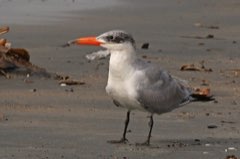 Tanji beach and the Bijol Islands — terns, gulls and the fish-landing roostA gull-and-tern roost of thousands screaming over the fish-landing beach as pirogues come in, the market crowd, the smokehouses, and across the water the Bijol colonies — The Gambia's only breeding seabirds.
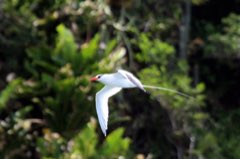 Red-billed tropicbird colony, Îles de la MadeleineTropicbirds' rasping, ratcheting display screams as pairs circle the basalt cliffs of Sarpan island a few metres overhead, surf in the sea caves, and Dakar's hum across 4 km of water.
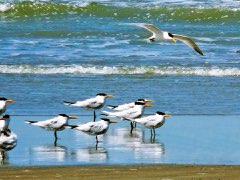 Sherbro and the Turtle Islands — terns, waders and turtle beachesTern and wader roosts on white sandbanks between eight Sherbro-speaking fishing islands, surf, and the villages' evening singing; dolphins in the channels.
More: all spectacles in Guinea · seabird colonies · Guinea in January · Guinea in February · Guinea in March · Guinea in December