
The Tinhosas: the only great seabird colony of the eastern tropical Atlantic
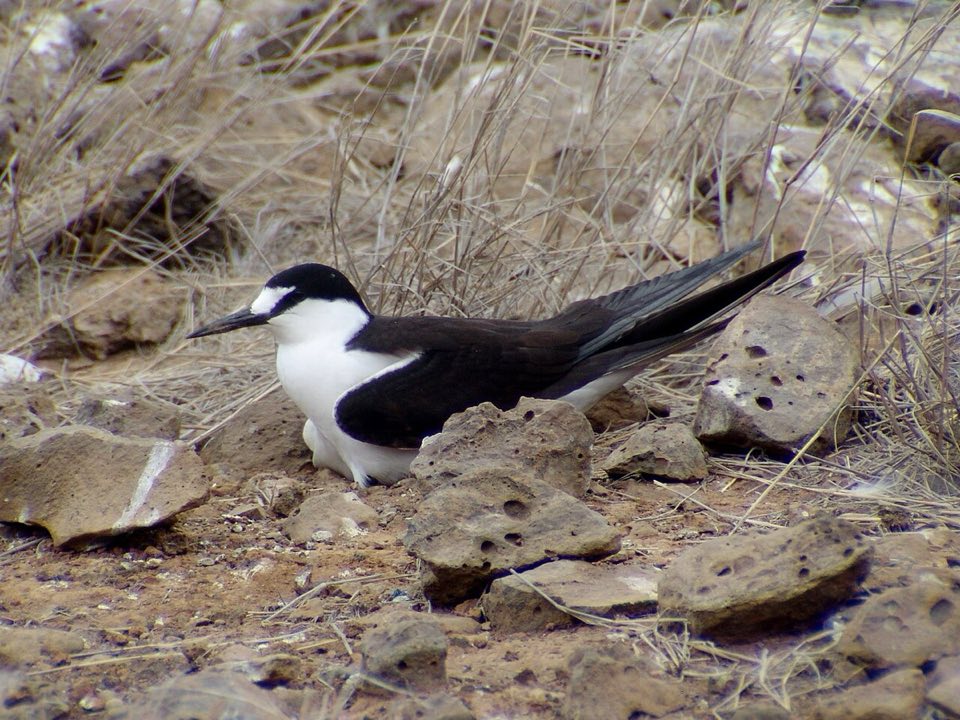
Sooty tern (about 140,000 pairs), black noddy (about 3,500 pairs), brown noddy (up to 10,000 birds), brown booby (about 300 pairs), white-tailed tropicbird; Ascension frigatebird visiting. Ilhéus Tinhosas, 22 km south-west of Príncipe (Ramsar site, Príncipe Biosphere Reserve), São Tomé and Príncipe.
Best time: 1 Jun – 31 Aug and 1 Dec – 31 Jan (December to January, June to August). Where: Tinhosa Grande – main colony (no landing), Santo António, Príncipe – fishing harbour and boat hire, Bom Bom – northern point and islet (São Tomé and Príncipe). Time of day: Boats leave Príncipe at first light for the calmest sea and are off the islets from about 08:00 to midday.
- Guide, ranger or boat needed
- Paid trip only
- Binoculars helpful
- Sound 5/5
Open it in the interactive calendarSunrise and sunset listening times for the day you pick, and the map.
When is the best time?
- Peak 1: 1 Jun – 31 Aug — Gravana breeding season
- Peak 2: 1 Dec – 31 Jan — Short dry season breeding
Active from 1 Jun to 31 Aug (June to August) in a typical year.
Time of day
Boats leave Príncipe at first light for the calmest sea and are off the islets from about 08:00 to midday; the colony is active and loud all day, with the terns' evening return before dusk
- Boat window: sunrise → 12:00
What will you hear?
A sooty tern colony of this size is a wall of sound audible from a kilometre downwind: the 'wide-awake' calls of over a quarter of a million birds, noddies' rattles, booby honks, surf on bare rock. From a drifting boat with the engine off it is one of the great seabird sound events of the Atlantic.
Binoculars?
Binoculars helpful. From a boat 100–200 m off the islet the colony is a mass; binoculars pick out boobies, tropicbirds and noddies.
Where to go
- Tinhosa Grande – main colony (no landing) — Bare rock islet 22 km south-west of Príncipe; the terns and noddies cover it in season. Watch from the boat — landing disturbs the colony and the crabs take any exposed chick. Map
- Santo António, Príncipe – fishing harbour and boat hire — The island's town; fishing pirogues and chartered boats are the only way out to the Tinhosas, 1.5–2 hours each way in a fast boat. Map
- Bom Bom – northern point and islet — Boats from the northern coast run marine trips (whales, dolphins, Tinhosas on request). Map
How to go on your own, and what it costs
Only by boat from Príncipe: a fishing pirogue chartered in Santo António (negotiate a full day, fuel included, calm weather only) or a chartered boat from the north coast. No permit for the sea, no landing on the islets.
Cost: Pirogue charter from Santo António for a day roughly €150–300 depending on fuel and boat; chartered boats more — check current prices.
Free or no-guide alternative: There is no land-based view of the colony — the islets are 22 km offshore. The cheapest version is a shared fishing pirogue from Santo António on a flat-calm day in July.
Field-recording notes
Boat only, and only in calm weather — the swell around bare rock is dangerous, and the trip is often cancelled. Ask the skipper for a 20-minute drift downwind of the islet with the engine off; a long shotgun or a parabola from the bow works, a hydrophone over the side gives the surf-and-colony mix. Do not land: the islets are unprotected in law but fishermen landing is the documented disturbance, and the survey teams ask visitors to stay off. Fishermen occasionally take boobies and eggs — no sides to be taken, but do report what you see to the Biosphere Reserve office in Santo António.
Sources
- Status and trends of the seabirds breeding at Tinhosa Grande (Valle, Barros & Wanless 2014, Bangor University)
- Tinhosas islands Key Biodiversity Area factsheet — two breeding seasons, December–January and June–August
- Tinhosa Grande (Wikipedia) — Ramsar site, Príncipe Biosphere Reserve
Similar spectacles
 Hornøya and Gjesværstappan: Arctic seabird cliffsA guillemot wall at arm's length: massed growling and trumpeting, kittiwake screaming, puffin grunts, Brünnich's guillemots' lower calls; Arctic surf; at Gjesværstappan the gannet colony's grating and the constant wing-noise of puffins by the hundred thousand.
 Svalbard: Arctic summer cliffs, walrus and ternsLittle auk colonies — a shrill, laughing chorus from scree slopes by the hundred thousand; Brünnich's guillemot walls (Alkefjellet) with birds pouring off 100 m dolerite cliffs; arctic terns in a screaming defensive cloud in Adventdalen; walrus grunts and snorts on a haul-out; calving glaciers.
 Seabird citiesA wall of seabird calls: gannet grating, kittiwakes calling their name, guillemot growls, puffin burrow moans, sea and wind below.
 Helgoland Lummenfelsen: guillemots, gannets and the 'Lummensprung'Germany's only seabird cliff: guillemot growls, kittiwake screaming, gannet colony grating, fulmar cackles; at the jump, chicks peeping and adults calling them down to the sea 40 m below.
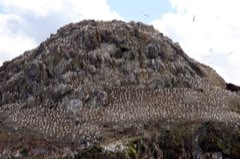 Sept-Îles: gannets on Rouzic, puffins and auksFrance's only gannet colony (about 14,000 pairs on Rouzic) as a wall of grating calls from the boat, puffins and kittiwakes on the sea, and the Atlantic swell against the granite.
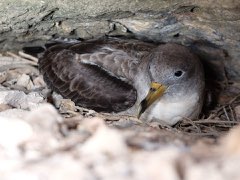 Shearwater colonies at night, Lastovo archipelagoScopoli's shearwaters wailing and cackling overhead and from burrows — the 'crying baby' chorus of Mediterranean islets; Yelkouan's higher nasal calls; waves on rock, cicadas fading at dusk.
More: all spectacles in São Tomé and Príncipe · seabird colonies · São Tomé and Príncipe in January · São Tomé and Príncipe in June · São Tomé and Príncipe in July · São Tomé and Príncipe in August · São Tomé and Príncipe in December