
Baboons, bat caves and savanna dawn at Shai Hills
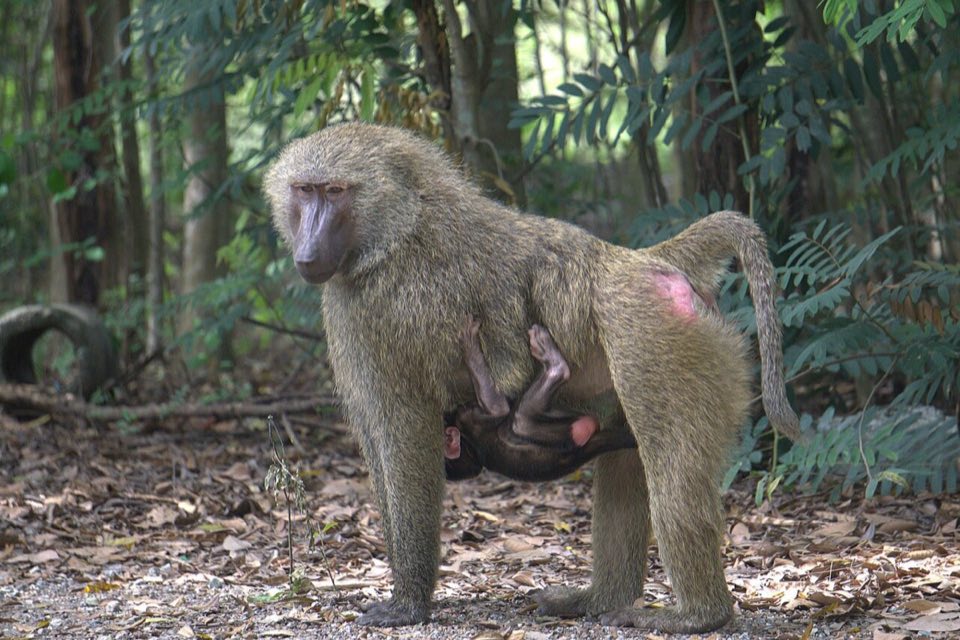
Olive baboon, kob, bushbuck, green monkey; insectivorous bats in the Sayu caves; stone partridge, hornbills and doves. Shai Hills Resource Reserve, 50 km from Accra, Ghana.
Best time: 1 Dec – 15 Mar (December to March). Where: Shai Hills – main gate and Hioweyo inselberg, Sayu caves (Ghana). Time of day: Reserve opens at 06:00.
- Guide, ranger or boat needed
- Entry fee
- Binoculars helpful
- Sound 3/5
Open it in the interactive calendarSunrise and sunset listening times for the day you pick, and the map.
When is the best time?
Peak: 1 Dec – 15 Mar. December to mid March: dry, clear mornings with the grass burnt low and animals at the waterholes
Active from 1 Nov to 30 Apr (November to April) in a typical year.
Time of day
Reserve opens at 06:00; the baboon troop is around the gate and the inselbergs in the first two hours of light; bats leave the caves at dusk
- Dawn on the inselbergs: 06:00 → 08:30
- Bat emergence: sunset → 45 min after sunset
What will you hear?
Baboon barks echoing off the inselbergs, stone partridge and helmeted guineafowl at first light, and the squeaks and wing-flutter of bats streaming from the Sayu caves at dusk.
Binoculars?
Binoculars helpful. Baboons are around the gate and inselbergs at close range; binoculars for kob on the plain, bats stream out at dusk overhead.
Where to go
- Shai Hills – main gate and Hioweyo inselberg — Entry with a guide on foot, by bike or in your own car; the caves are a short guided climb. Map
- Sayu caves — Historic Shai settlement caves with bat colonies; guide required, torch needed. Map
How to go on your own, and what it costs
A reserve guide is compulsory inside (reserve rule); tro-tro from Accra towards Akosombo to the Shai Hills gate, pay entry and the guide fee at the gate. Your own car or a bicycle can be used inside with the guide.
Cost: Entry plus guide fee, non-Ghanaian rate higher; check current prices.
Free or no-guide alternative: The baboon troop often sits on the verge of the public Tema–Akosombo road at the reserve fence in the early morning, and the inselbergs are visible from outside; free, but the caves and trails need the guide.
Who runs access
- Shai Hills Resource Reserve (Wildlife Division) – guided walks and cave visits (park authority) — Park-run
Field-recording notes
The reserve closes at dusk, so a bat emergence means arranging late exit at the gate; the guide fee covers it. The Tema–Akosombo highway runs along the western edge and quarries operate nearby: record on the eastern trails. Full-spectrum recording in the caves gets the bats; the cave acoustics are dead and close. Not a major spectacle, but the easiest wild sound within an hour of Accra.
Sources
Similar spectacles
 Cranes dancing on the dune heaths and bogsCrane pairs duetting and bugling across the wet dune slacks at first light, the dance's wing-flaps, curlew, golden plover and snipe drumming around them; ravens; the North Sea in Thy.
 Bitterns boomingThe deep boom (fundamental around 150 Hz, carrying over 3 km), plus water rail squeals, reed and sedge warblers, and marsh harriers.
 Steppe dawn: Dupont's lark and the Belchite larksDupont's lark's strange nasal, ventriloquial phrases from the dark steppe, then a wall of calandra lark song at sunrise, sandgrouse and stone-curlews — one of Europe's rarest dawn choruses.
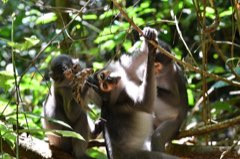 Tiwai Island — eleven primates and the Moa river dawnOne of the densest primate soundscapes in Africa: Diana monkeys' explosive alarm calls, red colobus chatter, the roar of king colobus, chimps' pant-hoots across the river, hornbills whooshing overhead, and the Moa river's rapids underneath.
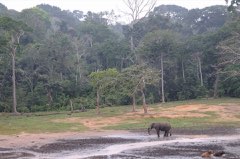 Sapo National Park — pygmy hippo, elephants and the deepest forest in West AfricaPrimary Upper Guinea rainforest with nothing man-made within a day's walk: casqued hornbills, chimps, Diana monkeys, the whistles of duikers, elephants rumbling at night, tree hyrax, and the full insect and frog layer of a forest that has never been logged.
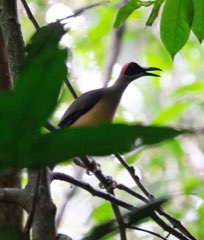 Korup: drills, red colobus and the oldest rainforest dawn in AfricaDrill and mangabey troops crashing and grunting through the understorey, red colobus shrieks, chimpanzee pant-hoots at a distance, hornbills, the buzz of cicadas at first light and, from the Rengo camp, a night of tree hyrax and frogs over the Mana river.
More: all spectacles in Ghana · dawn choruses · Ghana in January · Ghana in February · Ghana in March · Ghana in December