
Loango: forest elephants, buffalo and hippos on the ocean beach
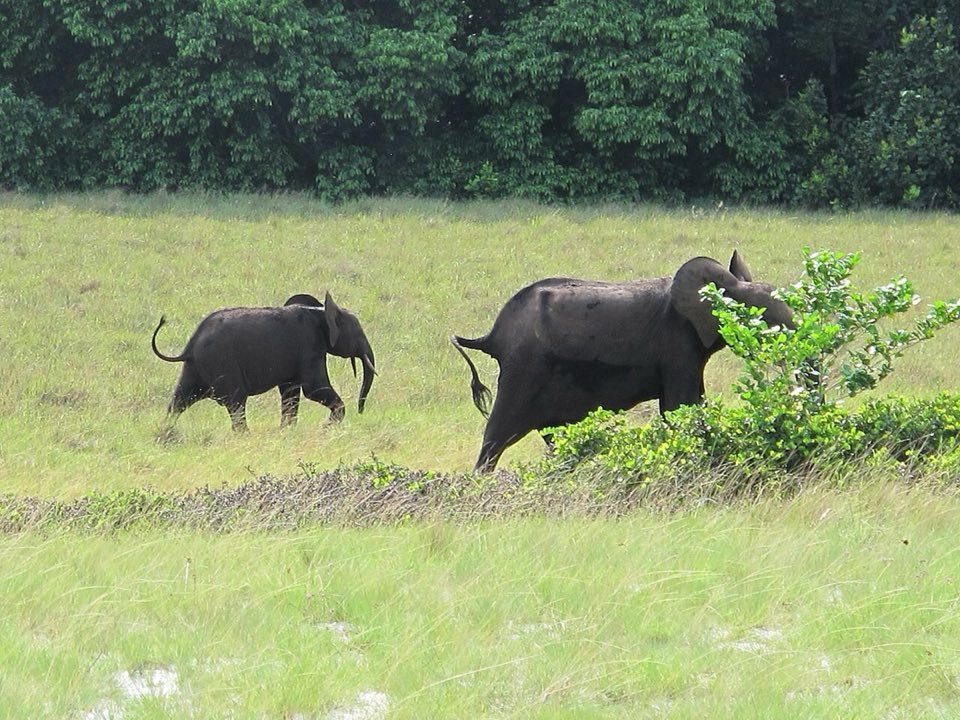
Forest elephant (Loxodonta cyclotis), forest buffalo, hippopotamus, red river hog, sitatunga; western lowland gorilla and chimpanzee in the forest; African river martin and rosy bee-eater flocks on the lagoon shores in August–October. Loango National Park, Ogooué-Maritime, Gabon.
Best time: 15 Oct – 31 Mar and 1 Aug – 31 Oct (August to March). Where: Iguéla – lagoon and beach (northern sector), Sette Cama / Petit Loango – southern sector beach, Omboué – Fernan Vaz lagoon (Gabon). Time of day: Elephants and buffalo walk the beach in the first two hours after sunrise and again from about 16:30 to dusk.
- Partly on your own
- Entry fee
- Binoculars helpful
- Sound 3/5
Open it in the interactive calendarSunrise and sunset listening times for the day you pick, and the map.
When is the best time?
- Peak 1: 15 Oct – 31 Mar — Rainy season: elephants and buffalo on the beach most days (Iguéla records)
- Peak 2: 1 Aug – 31 Oct — African river martin and rosy bee-eater flocks on the lagoon shores; dry, walkable, whales offshore
Active from 1 Jan to 31 Dec (all year) in a typical year.
Time of day
Elephants and buffalo walk the beach in the first two hours after sunrise and again from about 16:30 to dusk; hippos leave the lagoons after dark and are back by dawn; the savanna and lagoon edge are busiest at first light
- Beach at dawn: sunrise → 2 h after sunrise
- Evening beach: 16:30 → last light
- Hippos leave the lagoon: last light → 3 h after last light
What will you hear?
Surf behind everything. Elephants are near-silent on sand, but the rumbles and the crack of branches at the forest edge carry at dawn; hippo grunts from the lagoons at dusk; red river hog groups snuffling through the leaf litter; the chatter of river-martin flocks over the water in August–October and chimpanzee pant-hoots from the forest behind Akaka in the wet season.
Binoculars?
Binoculars helpful. Elephants on an open beach are seen from hundreds of metres; binoculars for buffalo at the forest edge and the martin flocks over the lagoon.
Where to go
- Iguéla – lagoon and beach (northern sector) — Walking safaris and lagoon boats start at the Iguéla lagoon; the beach from the lagoon mouth northwards is the classic elephants-on-the-beach stretch. Map
- Sette Cama / Petit Loango – southern sector beach — Village camps outside the southern boundary; long beach walks with a local guide into the park's Petit Loango stretch, where hippos occasionally cross the surf. Map
- Omboué – Fernan Vaz lagoon — Access town; boats to the park and to the Fernan-Vaz gorilla sanctuary island (rehabilitation project — not a wild sighting). Map
How to go on your own, and what it costs
Inside the park: ANPN permit plus eco-guide, arranged at Iguéla or the Sette Cama camps. Cheapest legal way: bush taxi Port-Gentil/Libreville–Gamba (or fly), pirogue across the Ndogo lagoon to Sette Cama, stay in the village camp and hire a village guide for beach walks along the southern boundary; the park permit is paid at the ANPN post.
Cost: ANPN park entry per person per day plus guide; accommodation at Iguéla runs to several hundred euros a night — check current prices. Village camps at Sette Cama are a fraction of that.
Free or no-guide alternative: The beach north of Sette Cama village at first light: elephants and buffalo tracks are on the sand most mornings and the animals themselves often enough, with no permit needed until the park boundary post.
Field-recording notes
Inside the park an ANPN eco-guide is compulsory and all walking is in daylight; recording at night is from camp only. Elephants on the beach are approached on foot with the guide — stay downwind and stop at the guide's distance; these are forest elephants, nervous and fast. Sand, salt spray and 100% humidity: dry bags and a salt-safe rig. The surf is a 60–70 dB bed on the beach; the quiet work is at the lagoon edge and the forest margin at dawn. 'Surfing hippos' are a rare event, not a plannable one — the camps' own records say so. Gorilla trekking at Loango is a habituation programme still in progress; treat any gorilla as a chance encounter and do not use playback for anything.
Sources
Similar spectacles
 Comoé: elephants, hippos and the savanna-forest mosaicHippos bellowing on the Comoé at dusk, elephants at the river pools, lions are not to be expected but spotted hyena whoop; the ground hornbill's booming duet at dawn and the harmattan wind in the gallery forest.
 Sapo National Park — pygmy hippo, elephants and the deepest forest in West AfricaPrimary Upper Guinea rainforest with nothing man-made within a day's walk: casqued hornbills, chimps, Diana monkeys, the whistles of duikers, elephants rumbling at night, tree hyrax, and the full insect and frog layer of a forest that has never been logged.
 Pendjari: lions, elephants and hippos at the dry-season poolsLions roaring across the Pendjari plain in the small hours — one of the few places in West Africa where this is still likely — hippos bellowing at Mare Bali, elephants at the pools, hyena whoops and a savanna dawn of francolins, ground hornbills and doves.
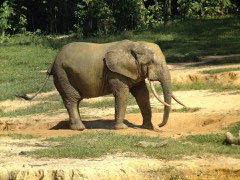 Lobéké bais: elephants, gorillas and grey parrots at the clearingsGrey parrot flocks whistling and screeching over Djangui, elephants splashing, rumbling and trumpeting in the mud of Petite Savane, gorilla chest-beats from the edge, forest hogs grunting, and the rainforest dawn behind it all.
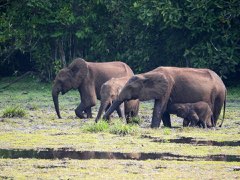 Odzala-Kokoua: forest elephants and grey parrots at Lango baiElephants blowing, splashing and rumbling in the bai's mineral pools a few metres below the deck, families greeting with trumpets and roars, grey parrot flocks whistling in to drink, forest buffalo grunting in the sedge, and a night of frogs, hyrax and distant hyena.
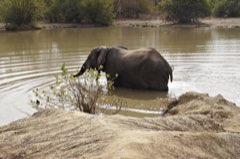 Elephants at the Mole waterholesElephants splashing, rumbling and trumpeting at the waterhole, baboon alarm barks off the escarpment, hyena whoops after dark, and a savanna dawn of helmeted guineafowl, hornbills and doves.
More: all spectacles in Gabon · elephants · hippos · mountain wildlife · Gabon in January · February · March · Gabon in August · Gabon in September · October · November · Gabon in December