
Akanda and the Mondah bay flats: Gabon's wader wintering ground on Libreville's doorstep
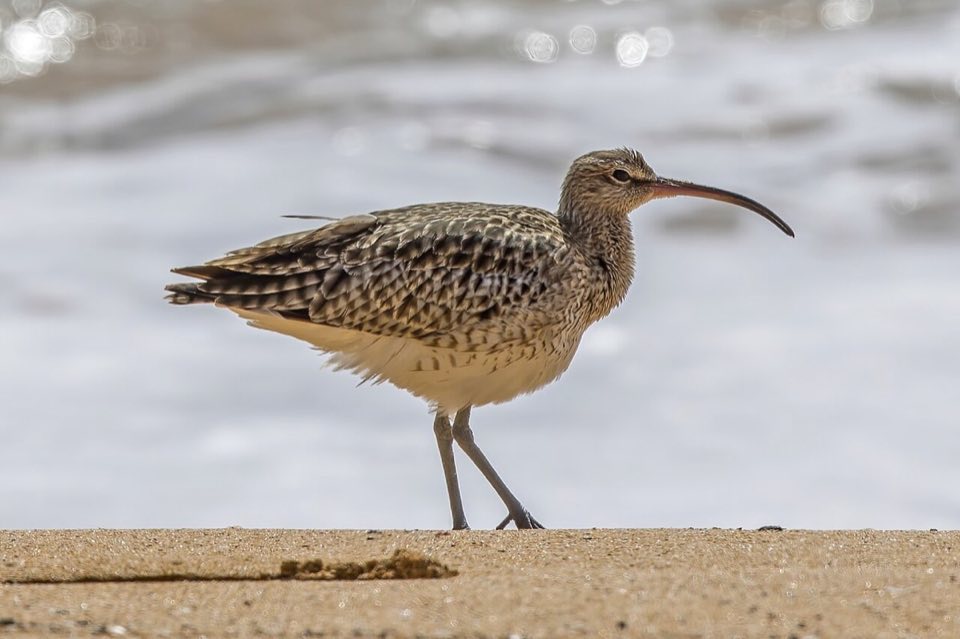
Palearctic waders — little stint, curlew sandpiper, grey plover, whimbrel, bar-tailed godwit, sanderling — with royal and Caspian terns, African skimmer, grey-headed gulls; Loango weaver in the mangrove edge; red-capped mangabey in the mangroves. Akanda National Park, Mondah and Corisco bays, Estuaire, Gabon.
Best time: 1 Nov – 15 Mar (November to March). Where: Moka river mouth – high-tide roost sandbank, Cap Estérias – beach and rocky point, Akanda / Baie de la Mondah shore – Libreville's northern suburbs (Gabon). Time of day: Two hours either side of high tide, when the flocks are pushed off the flats onto the sandbank roost at the Moka river mouth.
- Partly on your own
- Low cost
- Telescope recommended
- Sound 3/5
Open it in the interactive calendarSunrise and sunset listening times for the day you pick, and the map.
When is the best time?
Peak: 1 Nov – 15 Mar. November to mid March: the wintering flocks are complete — surveys put 34,000–40,000 Palearctic waders on the Corisco and Mondah bay mudflats, the largest concentration in Gabon — with passage pulses in October and late March
Active from 15 Sep to 15 Apr (September to April) in a typical year.
Time of day
Two hours either side of high tide, when the flocks are pushed off the flats onto the sandbank roost at the Moka river mouth; the falling tide at dawn spreads them back across the mud
- Dawn flats: 30 min before sunrise → 10:00
- Evening roost: 150 min before sunset → sunset
Depends on the tide: best around high tide. Check local tide tables.
What will you hear?
The massed calls of stints and sandpipers lifting off the flats as the tide comes in, whimbrel and godwit over the mangroves, tern colonies shrieking on the sandbank; behind it the drip and click of the mangrove at low water and mangabeys crashing in the Rhizophora.
Binoculars?
Telescope recommended. Flocks on open mud and a sandbank 200–800 m away — a telescope from the beach, binoculars from the pirogue.
Where to go
- Moka river mouth – high-tide roost sandbank — The main roost of waders and terns in the park, in Mondah bay; reached by pirogue from the Akanda shore. Coordinates are the Moka village/estuary on OSM. Map
- Cap Estérias – beach and rocky point — Road access at the end of the Libreville peninsula; waders on the beach and rocks at low tide, terns offshore, and pirogues for hire into the bay. Map
- Akanda / Baie de la Mondah shore – Libreville's northern suburbs — Where the city meets the mangrove; pirogue owners at the landing stages take birders into the park. Map
How to go on your own, and what it costs
Cap Estérias is a public beach at the end of the tarmac from Libreville (taxi, about 45 minutes): free wader and tern watching on the beach and rocks at low tide. The roost at the Moka mouth is inside the park: hire a pirogue at Cap Estérias or the Akanda landing stages and pay the ANPN park fee; no guide rule for the beach, a boatman is the guide on the water.
Cost: Beach free; pirogue hire by the half-day negotiable (a few tens of euros), ANPN park entry — check current prices.
Free or no-guide alternative: Low tide at Cap Estérias beach: stints, sanderling, whimbrel and grey plover on the sand and rock pools, terns fishing offshore, no boat, no fee.
Field-recording notes
A pirogue at high tide is the way to the roost: engine off and drift onto the sandbank from downwind, never land on it in the tern season. The park is 25 minutes from Libreville's airport, so aircraft noise is a constant; the mangrove channels further north around the Moka mouth are quieter. Tide and daylight rarely coincide ideally — plan for a dawn high tide in the second half of the month. The KBA sheet lists urban pressure, illegal fishing and turtle poaching as the threats; expect fishing camps in the mangroves. Oil-exploration seismic surveys have been run offshore.
Sources
- Akanda National Park (Wikipedia) — Ramsar site 1652, largest migratory bird populations in Gabon
- Akanda-Mbanié Key Biodiversity Area factsheet
- Ramsar Sites Information Service – Akanda (35,000–40,000 Palearctic waders; page loads in a browser, blocks scripts)
- Pongara National Park (Wikipedia) — up to 10,000 wintering waders on the estuary's south shore
Similar spectacles
 Spring crane staging: Hornborgasjön and PulkenThousands of cranes bugling in chorus — trumpeting that carries for kilometres, rising to a roar when a flock lifts; unison calls of pairs, wing noise of landing flocks, whooper swans and lapwings in the background.
 Cranes at Lac du DerTens of thousands of cranes bugling as they leave the lake at first light in wave after wave, then the evening return with the sky full of trumpeting skeins.
 Cranes at Laguna de GallocantaUp to 100,000 cranes lifting off the salt lagoon at first light in a continuous trumpeting roar that lasts half an hour, then skeins bugling over the steppe villages.
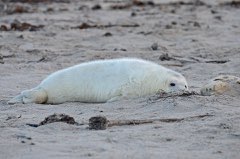 Helgoland migration falls and grey seal winterNocturnal flight calls of thrushes (redwing 'seep', song thrush, blackbird) in the thousands over the island, goldcrests in every bush at dawn; on the Düne, grey seal pups wailing and bulls roaring in December.
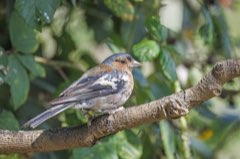 Spring migration counts: Col de l'Escrinet, Pointe de Grave and Le HucelA river of chaffinch flight calls over the col at dawn, meadow pipits, serins and linnets in the flocks, woodpigeon wing-clatter, cranes bugling northwards in March, and at Pointe de Grave the May sound of swifts screaming low over the dunes and bee-eaters calling in off the Gironde — one of the few places in France where spring migration is a sound you can stand under.
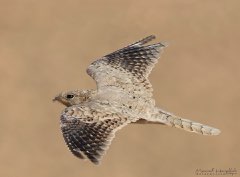 Spring passage and desert night birds around MerzougaThe desert's two great night voices — the endless churring of Egyptian nightjar and the deep hoot of pharaoh eagle-owl — over a noise floor close to nothing; by day, the surprise of a full Palearctic passerine chorus grounded in a dune-edge tamarisk oasis, sandgrouse arriving to drink, and flamingo and shelduck on the salt lake in a wet year.
More: all spectacles in Gabon · bird migration hotspots · Gabon in January · February · March · November · Gabon in December