
Lama forest and Lokoli swamp: red-bellied monkeys and the last forest chorus of the Dahomey Gap
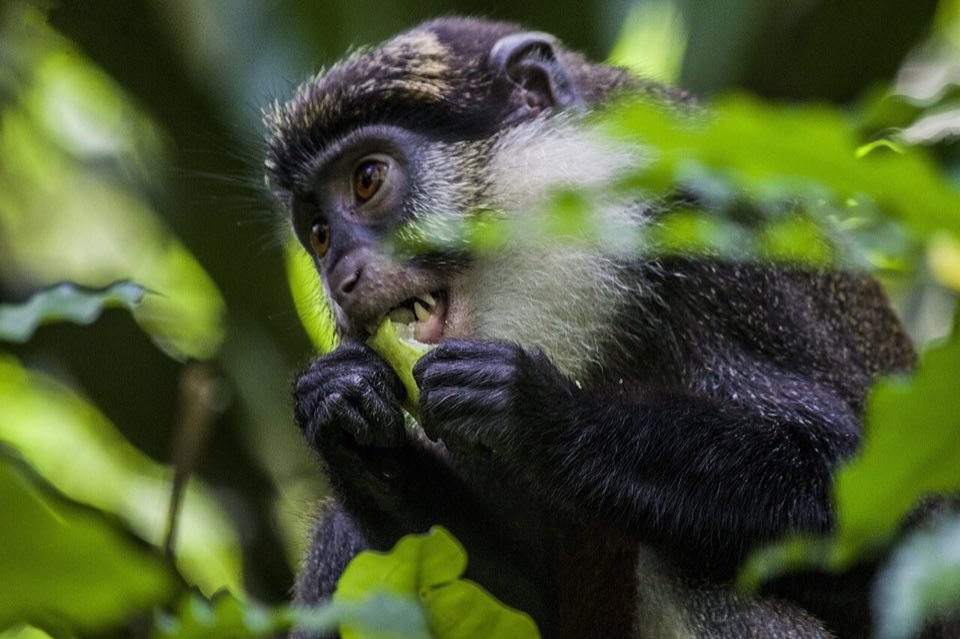
Red-bellied monkey (Cercopithecus erythrogaster erythrogaster), mona monkey, sitatunga; yellow-casqued hornbill, great blue turaco, forest robins; frogs in the swamp forest. Forêt classée de la Lama and Lokoli swamp forest, Zou, Benin.
Best time: 15 Nov – 31 Mar (November to March). Where: Lama forest – Centre de Recherche / core reserve near Koto, Lokoli swamp forest – Koussoukpa, Zogbodomey (Benin). Time of day: From 30 minutes before sunrise to about 09:00.
- Guide, ranger or boat needed
- Entry fee
- Binoculars helpful
- Sound 4/5
Open it in the interactive calendarSunrise and sunset listening times for the day you pick, and the map.
When is the best time?
Peak: 15 Nov – 31 Mar. Mid November to March: dry mornings and the most song; Lokoli is best by dugout when the water is still high (Nov–Dec)
Active from 1 Jan to 31 Dec (all year) in a typical year.
Time of day
From 30 minutes before sunrise to about 09:00; hornbills and turacos again in the last hour before sunset
- Dawn chorus: 30 min before sunrise → 09:00
- Evening hornbills: 1 h before sunset → sunset
What will you hear?
Great blue turacos and yellow-casqued hornbills in a 2,000 ha island of semi-deciduous forest surrounded by farmland — the fullest forest chorus in Benin — with red-bellied monkeys' soft calls in the understorey and, at Lokoli, a swamp forest of frogs, kingfishers and dripping trees from a dugout.
Binoculars?
Binoculars helpful. Turacos and hornbills in a tall closed canopy; binoculars help, red-bellied monkeys are in the understorey.
Where to go
- Lama forest – Centre de Recherche / core reserve near Koto — The 'noyau central' is a strict reserve; guided entry via the forestry post (ONAB) on the Bohicon–Cotonou road. Map
- Lokoli swamp forest – Koussoukpa, Zogbodomey — Community-run dugout trips through flooded forest; red-bellied monkeys and sitatunga. Map
How to go on your own, and what it costs
Entry to the Lama core is with a forestry guide from the ONAB post (reserve rule); Lokoli is by community dugout. Cheapest legal way: bus Cotonou–Bohicon, drop at the Lama forestry post, pay the guide there.
Cost: Guide fee at the post; Lokoli community dugout fee; check current prices.
Free or no-guide alternative: The forest edge along the public Cotonou–Bohicon highway and the Koussoukpa village edge at Lokoli give the hornbills and turacos at dawn for free, with the road.
Field-recording notes
Lama is managed by the national timber office (ONAB) with a protected core; entry through the forestry post with a guide, and research recording needs a written authorisation from the Direction Générale des Eaux, Forêts et Chasse. The Cotonou–Parakou highway runs along the forest's edge, and teak plantations with chainsaws surround it: get deep into the core before dawn. Lokoli is quieter but the dugout itself and the village are close; the flooded forest's acoustics are remarkable. Red-bellied monkeys are Endangered and shy — no feeding, no playback.
Sources
Similar spectacles
 Cranes dancing on the dune heaths and bogsCrane pairs duetting and bugling across the wet dune slacks at first light, the dance's wing-flaps, curlew, golden plover and snipe drumming around them; ravens; the North Sea in Thy.
 Bitterns boomingThe deep boom (fundamental around 150 Hz, carrying over 3 km), plus water rail squeals, reed and sedge warblers, and marsh harriers.
 Steppe dawn: Dupont's lark and the Belchite larksDupont's lark's strange nasal, ventriloquial phrases from the dark steppe, then a wall of calandra lark song at sunrise, sandgrouse and stone-curlews — one of Europe's rarest dawn choruses.
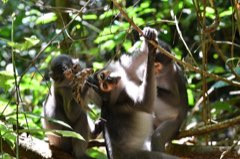 Tiwai Island — eleven primates and the Moa river dawnOne of the densest primate soundscapes in Africa: Diana monkeys' explosive alarm calls, red colobus chatter, the roar of king colobus, chimps' pant-hoots across the river, hornbills whooshing overhead, and the Moa river's rapids underneath.
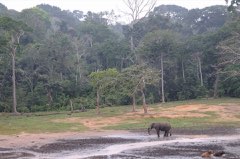 Sapo National Park — pygmy hippo, elephants and the deepest forest in West AfricaPrimary Upper Guinea rainforest with nothing man-made within a day's walk: casqued hornbills, chimps, Diana monkeys, the whistles of duikers, elephants rumbling at night, tree hyrax, and the full insect and frog layer of a forest that has never been logged.
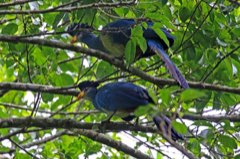 Upper Guinea rainforest dawn chorus — Kakum & AnkasaGreat blue turacos bubbling from the emergents, the far-carrying wailing of white-crested hornbills, yellow-casqued hornbills' whooshing wingbeats, chattering monkeys, cicadas switching on with the light and the screaming of tree hyrax at night.
More: all spectacles in Benin · dawn choruses · Benin in January · Benin in February · Benin in March · Benin in November · Benin in December