
Baie du Lévrier — 37,000 gulls, terns and waders in Nouadhibou's bay
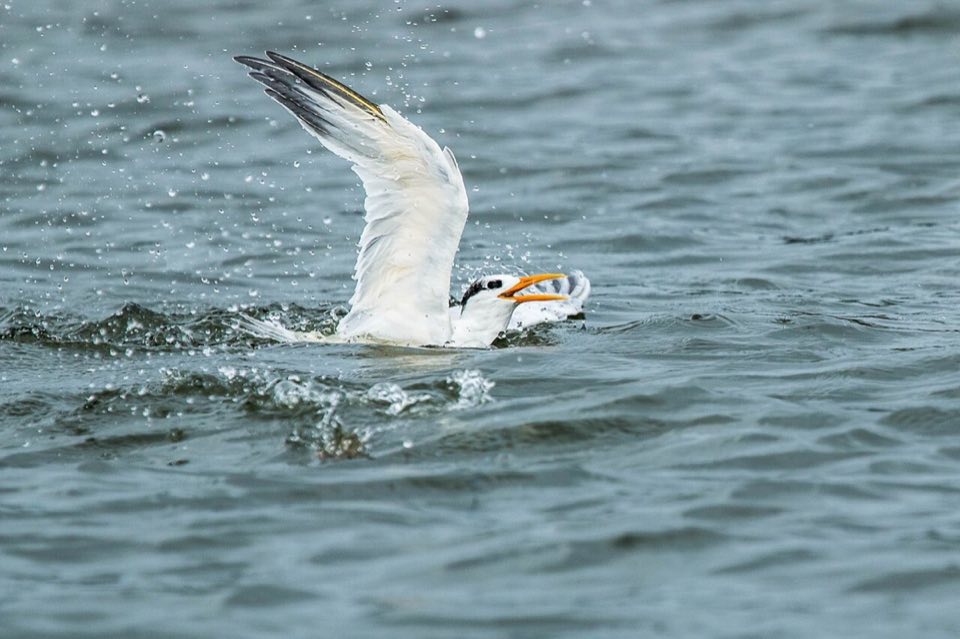
Gulls (yellow-legged, lesser black-backed, Audouin's, slender-billed), royal, Caspian and Sandwich terns, waders (dunlin, knot, bar-tailed godwit, grey plover), cormorants, flamingos; Atlantic humpback dolphins in the Baie de l'Étoile. Nouadhibou — Baie du Lévrier and Baie de l'Étoile (Dakhlet Nouadhibou), Mauritania.
Best time: 1 Dec – 15 Feb (December to February). Where: Baie de l'Étoile, Cansado bay, Nouadhibou fishing harbour and town shore (Mauritania). Time of day: High tide for the gull and tern roosts on the Cansado and Baie de l'Étoile sandbanks.
- You can go on your own
- Free
- Telescope recommended
- Sound 3/5
Open it in the interactive calendarSunrise and sunset listening times for the day you pick, and the map.
When is the best time?
Peak: 1 Dec – 15 Feb. December to mid February — the IMROP / Wadden Sea Flyway Initiative count found 36,776 waterbirds of 55 species in the bay, well above the Ramsar 20,000 threshold
Active from 1 Oct to 31 Mar (October to March) in a typical year.
Time of day
High tide for the gull and tern roosts on the Cansado and Baie de l'Étoile sandbanks; low tide in the morning for the feeding waders; dolphins at any time on calm water in the Étoile bay
- Morning (check tide): sunrise → 3 h after sunrise
- Evening roost: 2 h before sunset → sunset
Depends on the tide: best around high tide. Check local tide tables.
What will you hear?
A big gull and tern roost — royal and Caspian tern screams, slender-billed and Audouin's gulls, knot and godwit flocks — beside one of West Africa's busiest fishing ports; the iron-ore train and the harbour are the backdrop, the Baie de l'Étoile north of town is the quiet, dolphin-haunted end.
Binoculars?
Telescope recommended. The bay is 10 km wide — roosts are hundreds of metres out on the sandbanks; a scope from the shore road, binoculars for the dolphins.
Where to go
- Baie de l'Étoile — Shallow bay and marine reserve 12 km north of town inside the peninsula: seagrass, sandbanks, flamingos, tern roosts and the site's Atlantic humpback dolphin records. Track off the Nouakchott road. Map
- Cansado bay — Sheltered bay south of the city by the SNIM ore port: wader and gull roosts on the flats at high water. Public shore road. Map
- Nouadhibou fishing harbour and town shore — The artisanal port and fish market draw thousands of gulls and terns; the taxi stand for Cansado is on the Cheikh Zayed road. Map
How to go on your own, and what it costs
Nouadhibou has flights and the N2 from Nouakchott (about 5 h). Taxis to Cansado (south) and along the peninsula road north to the Baie de l'Étoile turn-off; the shore is public. Check tides at Nouadhibou. Combine with the monk seals at Cap Blanc (separate entry).
Cost: Free (2026); taxi to Cansado or the Étoile turn-off a few hundred MRU (check current prices).
Field-recording notes
Port, naval base, ore terminal and the border with the Dakhla–Western Sahara zone running down the peninsula: photograph and record only the birds, stay on public roads and beaches, and expect to be asked what you are doing (keep your passport and a polite explanation ready). The Baie de l'Étoile is the one quiet place — wind and the surf on the ocean side are the noise. Hydrophone off the Étoile sandbanks on a calm high tide for Sousa teuszii (unrecorded here). Cold wind in winter; no permits for the bay, PNBA permit if you continue south into the park at Cap Blanc's satellite reserve.
Sources
- Wadden Sea Flyway Initiative – IMROP waterbird count in Baie du Lévrier (36,776 birds, 55 species, 2025)
- Sousa teuszii consortium – Mauritania (Baie de l'Étoile and Banc de la Corbine dolphin records)
Similar spectacles
 Wadden Sea autumn: geese, waders and whooper swans in the marshBarnacle goose yapping in flocks of tens of thousands over the Ballum marsh, brent geese growling on the flats, golden plover flocks whistling, whooper swan families bugling on the polders at night, curlew; the tide.
 Pink-footed goose dawn flightsTens of thousands of geese lifting off the mudflats at first light in a wall of 'wink-wink' calls, wave after wave overhead.
 Whooper swans & barnacle geeseBugling whoopers and yapping barnacle flocks like a huge crowd; the whole Svalbard barnacle population is on one estuary.
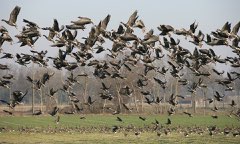 Arctic geese on the Lower RhineWhite-fronted geese's high yelping in skeins of thousands, bean geese's deeper 'kayak', the roar of a roost lifting off the Rhine at first light, whooper swans on the Bislicher Altrhein; barges and the A57 underneath.
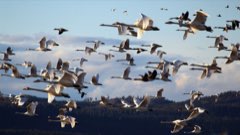 Lower Oder Valley: whooper swans, geese and the flooded poldersWhooper swan bugling in chorus over the polder ice-edge, geese lifting at dawn by the thousand, smew and goldeneye wing-whistle, eagle yelps; in October, cranes; in May, corncrakes at night.
 Wintering cranes at ArjuzanxWaves of cranes dropping into the flooded roost after dark, a continuous rolling chorus that carries for kilometres over the pine plantations.
More: all spectacles in Mauritania · winter geese, swans and ducks · Mauritania in January · Mauritania in February · Mauritania in December