
Wildlife to see in Mauritania in February
3 spectacles at their peak in Mauritania in February, and 2 more still going on. Wild animals only: no zoos, no wildlife parks, no hunting. Open Mauritania in February in the interactive calendar for listening times on the day you pick.
At their peak in February
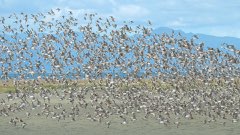 Two million waders wintering on the Banc d'ArguinA roar of wings when a roost of tens of thousands lifts, knot and godwit flocks calling on the move, flamingos and spoonbills in the shallows, and the only human sound the creak of an Imraguen lanche's sail. Night roosts murmur continuously.
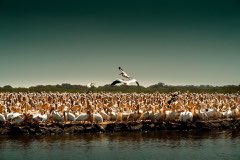 Diawling floodplain — pelicans, flamingos and Palearctic ducksPelican flotillas grunting, garganey and pintail flocks whirring off the flooded basins, flamingo chorus, and the low background of the Diama dam and the Senegal river.
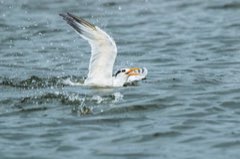 Baie du Lévrier — 37,000 gulls, terns and waders in Nouadhibou's bayA big gull and tern roost — royal and Caspian tern screams, slender-billed and Audouin's gulls, knot and godwit flocks — beside one of West Africa's busiest fishing ports; the iron-ore train and the harbour are the backdrop, the Baie de l'Étoile north of town is the quiet, dolphin-haunted end.
Also going on in February
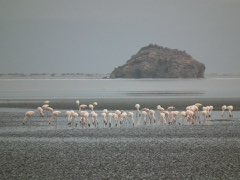 Aftout es Saheli — West Africa's only lesser flamingo breeding colonyFourteen thousand flamingo chicks and their parents: a continuous honking, growling roar from the colony islets that carries over a kilometre of flat water at dawn, the wing-thunder of a few thousand adults lifting at a jackal, and the lesser flamingos' higher yapping among the greater flamingos' goose-like calls. Around it, the silence of the Sahel coast.
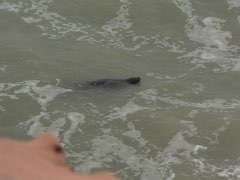 Mediterranean monk seal colony, Cap BlancThe world's largest monk seal colony (around 300 animals) in a few sea caves and cliff-foot beaches: barks, snorts and pup bleats over surf — but mostly heard from above, at a distance, on the viewing platforms.