
Lower Oder Valley: whooper swans, geese and the flooded polders
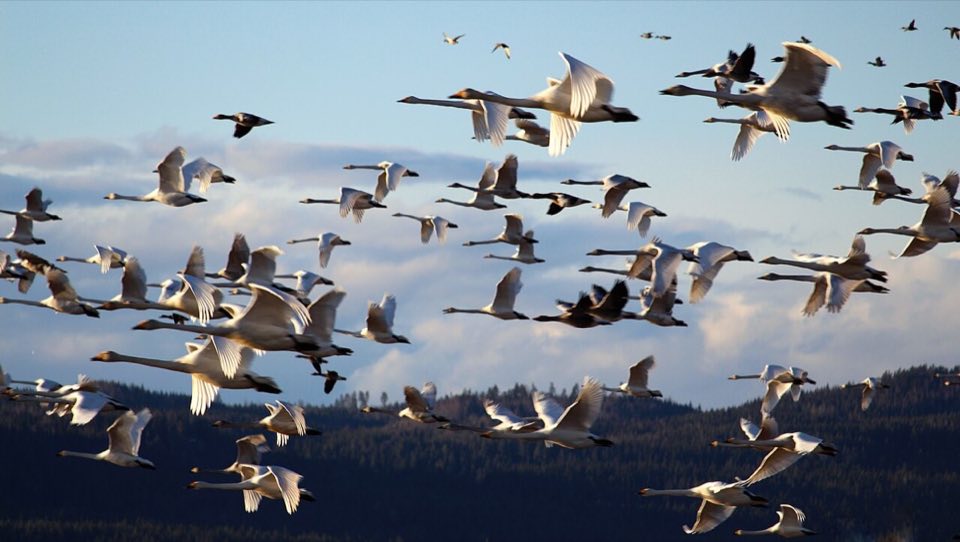
Whooper swan (400+), Bewick's swan, white-fronted, bean and greylag geese, smew, goosander, white-tailed eagle; cranes in autumn; corncrake and aquatic warbler in summer. Nationalpark Unteres Odertal, Uckermark (German–Polish border), Germany.
Best time: 10 Jan – 20 Feb (January to February). Where: Nationalparkhaus Criewen and the Polder 10 dyke, Stützkow observation tower, Schwedt – Zützen polders (Polder A/B) (Germany). Time of day: Geese lift from the polders from 45 min before sunrise to 30 min after.
- You can go on your own
- Free
- Telescope recommended
- Sound 5/5
Open it in the interactive calendarSunrise and sunset listening times for the day you pick, and the map.
When is the best time?
Peak: 10 Jan – 20 Feb. Mid January to 20 February, when the polders are deliberately flooded (Singschwan-Tage in early February)
Active from 1 Nov to 15 Mar (November to March) in a typical year.
Time of day
Geese lift from the polders from 45 min before sunrise to 30 min after; swans call through the night and are loudest in the hour before sunset and the first hours of dark. Dyke paths are open all hours.
- Dawn goose departure: 45 min before sunrise → 30 min after sunrise
- Evening swans and geese: 1 h before sunset → 2 h after last light
What will you hear?
Whooper swan bugling in chorus over the polder ice-edge, geese lifting at dawn by the thousand, smew and goldeneye wing-whistle, eagle yelps; in October, cranes; in May, corncrakes at night.
Binoculars?
Telescope recommended. Swans and geese on the flooded polders are 200 m to 1 km from the dyke; scope from the Stützkow tower, binoculars minimum.
Where to go
- Nationalparkhaus Criewen and the Polder 10 dyke — Visitor centre; the dyke path south to Stützkow runs along the flooded polders. Map
- Stützkow observation tower — Tower on the escarpment with a view over the whole polder; the classic swan site. Map
- Schwedt – Zützen polders (Polder A/B) — Largest whooper swan and goose flocks near the town; PCK refinery flare visible/audible to the north. Map
How to go on your own, and what it costs
Park at the Nationalparkhaus Criewen or in Stützkow and walk the dyke paths along the flooded polders — open at all hours, free; the Stützkow tower is on the escarpment path. Zone I beyond the dykes is closed. Train to Schwedt, then bus or bike.
Cost: Free; park Singschwan-Tage tours (check current prices).
Who runs access
- Nationalpark Unteres Odertal – guided tours (Singschwan-Tage) (park authority) — Whooper swan days in early February with access to closed-side viewpoints.
Field-recording notes
Polders are flooded from roughly mid November to mid April and the dyke paths remain open, including at night, but the wilderness zone (Zone I) beyond the dykes is closed. Ice conditions decide: a partial freeze concentrates swans on open leads close to the dyke. Noise: the Schwedt PCK refinery (a broadband hum in north wind) and the rail line; the southern polders around Stützkow–Gatow are cleaner. The Polish bank has hunting in winter — shots carry across the river. -10 °C mornings: keep batteries warm. Singschwan-Tage tours are run by the park and are worth joining for access to closed-side viewpoints.
Sources
Similar spectacles
 Pink-footed goose dawn flightsTens of thousands of geese lifting off the mudflats at first light in a wall of 'wink-wink' calls, wave after wave overhead.
 Whooper swans & barnacle geeseBugling whoopers and yapping barnacle flocks like a huge crowd; the whole Svalbard barnacle population is on one estuary.
 Doñana in winter: geese and the marismasTens of thousands of greylags calling at first light, wigeon whistling in rafts, flamingos honking, glossy ibis colonies grunting, and the near-total absence of roads in the marsh core.
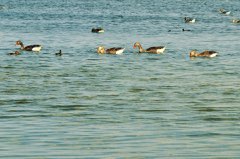 Wintering greylags at VillafáfilaWaves of greylags leaving the saline lagoons at first light in a continuous honking chorus, with great bustards grunting on the stubble and cranes overhead.
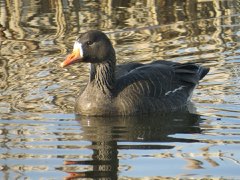 Greenland white-fronted geese on the Wexford SlobsThe high, laughing, musical yelps of thousands of white-fronts lifting off the harbour and dropping onto the fields; brent geese's low growl along the shore; whooper swan bugling; wigeon whistling; curlews over the sand flats.
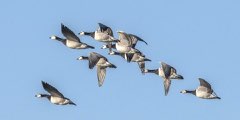 Lauwersmeer in winter: barnacle geese, wigeon and sea eaglesBarnacle geese yapping in a continuous chorus on the polder and the roar of 10,000 lifting at once; greylags and white-fronts honking in the dawn flight; wigeon whistling in the dark; eagles' yelps; the Dark Sky Park is genuinely quiet at night.
More: all spectacles in Germany · wild geese · winter geese, swans and ducks · Germany in January · February