
Sidi Moussa–Oualidia lagoons — 10,000 waders, flamingos and the salt-pan roosts
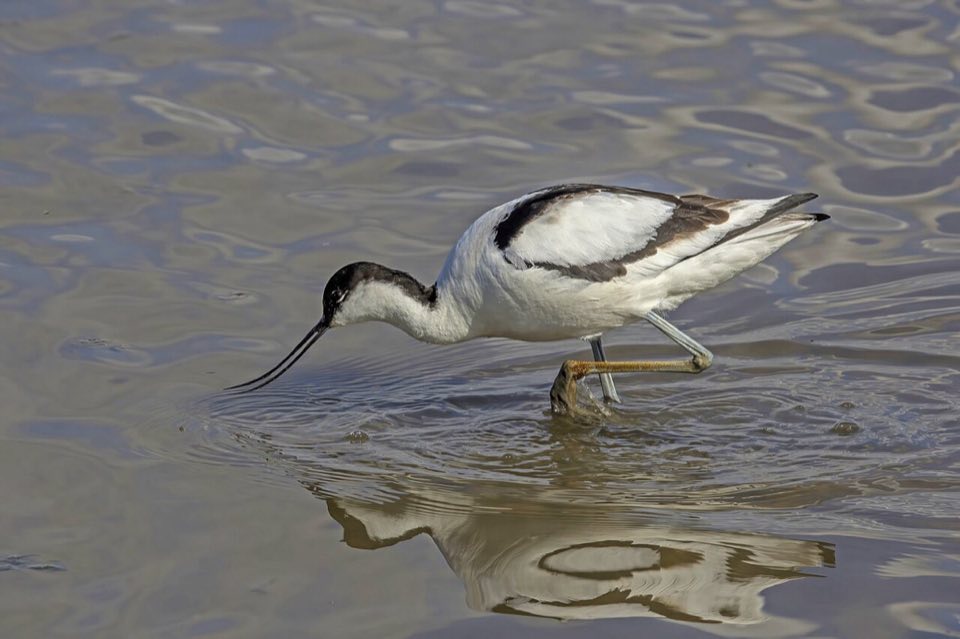
Dunlin, black-tailed godwit, black-winged stilt, pied avocet, ringed and Kentish plover, little stint (international importance for stilt, avocet, Kentish and ringed plover); greater flamingo, spoonbill, slender-billed gull, up to 3–4,000 ducks of 11 species incl. marbled teal. Atlantic coast between El Jadida and Safi (Doukkala), Morocco.
Best time: 1 Nov – 28 Feb (November to February). Where: Oualidia lagoon, Salt pans between Sidi Moussa and Oualidia, Sidi Moussa lagoon (northern lagoon, near Sidi Abed) (Morocco). Time of day: The two hours either side of high tide, when the waders leave the lagoon mud and pack into the salt pans and marsh roosts.
- You can go on your own
- Free
- Binoculars essential
- Sound 3/5
Open it in the interactive calendarSunrise and sunset listening times for the day you pick, and the map.
When is the best time?
Peak: 1 Nov – 28 Feb. November to February for the wintering flocks; waders peak again on passage in September–October and March–April. Almost empty of waterbirds in summer
Active from 1 Sep to 15 Apr (September to April) in a typical year.
Time of day
The two hours either side of high tide, when the waders leave the lagoon mud and pack into the salt pans and marsh roosts; flamingos feed all day
- Morning roost and feeding: sunrise → 3 h after sunrise
- Evening flight to roost: 2 h before sunset → sunset
Depends on the tide: best around high tide. Check local tide tables.
What will you hear?
Avocet and stilt yelping over the salt pans, godwit and dunlin flocks whirring up at each marsh harrier, flamingo honking from the lagoon, slender-billed gulls — against surf on the dune bar and the oyster farms' outboards.
Binoculars?
Binoculars essential. Roosts are 100–500 m across the pans; a scope helps with the godwit and plover flocks. Flamingos are close from the lagoon boats.
Where to go
- Oualidia lagoon — The southern lagoon by the resort town: small boats take you round the fringes (about Dh50); flamingos and waders on the mud inside the bar. Oyster restaurants on the shore. Map
- Salt pans between Sidi Moussa and Oualidia — Central section of the Ramsar complex: marshes and working salines along the coast road where the high-tide roosts form. Coordinates for the KBA centre; pull off the R301 coast road. Map
- Sidi Moussa lagoon (northern lagoon, near Sidi Abed) — Quieter northern lagoon 35 km south of El Jadida; the inter-dune marsh behind the village of Sidi Abed. Map
How to go on your own, and what it costs
Bus or grand taxi from El Jadida or Safi to Oualidia (R301 coast road); the lagoon shore, the dune bar and the coast road past the salines are public. Boatmen on the Oualidia shore run short lagoon trips. No fees, no hides.
Cost: Free from the shore; lagoon boat trip about Dh50 per person (Lonely Planet, undated — check current prices).
Field-recording notes
Oualidia is a weekend resort (Casablanca traffic, jet-skis in summer, oyster boats): the Sidi Moussa end and the salt pans are quieter. The dune bar stops the surf only partly — put the rig in the lee of the salines' dykes. It is a permanent hunting reserve on paper but illegal shooting is listed as a threat; gunfire at dawn in winter is possible around the edges. Night access along the coast road is unproblematic; stay off the saline dykes without asking the workers. No playback, keep well back from the roosts at high water (one flush costs the birds the whole tide).
Sources
- KBA factsheet – Sidi Moussa-Oualidia (c. 10,000 waders, 3–4,000 ducks, hunting reserve)
- Wader Study Group – Phenology of waders in the Sidi Moussa–Walidia coastal wetlands
- MaghrebOrnitho – Birding the Oualidia region
Similar spectacles
 Flamingo colonies & courtshipGoose-like gabbling of big flocks, and the synchronised 'marching' displays with a constant honking.
 Diawling floodplain — pelicans, flamingos and Palearctic ducksPelican flotillas grunting, garganey and pintail flocks whirring off the flooded basins, flamingo chorus, and the low background of the Diama dam and the Senegal river.
 Tagus estuary in winter: flamingos, avocets and 100,000 waterbirdsFlamingo flocks honking as they move between the estuary and the Lezíria rice fields, avocet and godwit roosts chattering on the salinas at high tide, teal whistling on the lagoons and the great winter silence of the open marsh broken by hunters' shots outside the reserve.
 Somone lagoon — pelicans, flamingos and the sandbank roost on the Petite CôtePelican wings and bill-clapping as the flock lands, tern and gull roost clamour, flamingo honks, spoonbills and herons in the mangrove, osprey whistles — small-scale next to the Saloum but the closest proper lagoon roost to the Saly resorts, and quiet at dawn before the jet-skis.
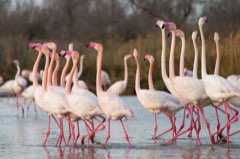 Flamingo colonies of the CamargueGoose-like honking from thousands of birds, the massed 'marching' displays, and flights of hundreds passing low over the étangs at dusk.
 Marchica lagoon, the Moulouya mouth and the Mohammed V reservoir — the Mediterranean east in winterFlamingo honking across a lagoon the size of a city, wigeon whistling, shelduck, the bugling of common cranes at the Mohammed V shore at dusk, and in spring a booming bittern and avocet colony clamour at the Moulouya mouth. Nador's traffic and the fishermen's outboards are the backdrop; the Moulouya is quieter.
More: all spectacles in Morocco · flamingos · winter geese, swans and ducks · Morocco in January · Morocco in February · Morocco in November · Morocco in December