
Tagus estuary in winter: flamingos, avocets and 100,000 waterbirds
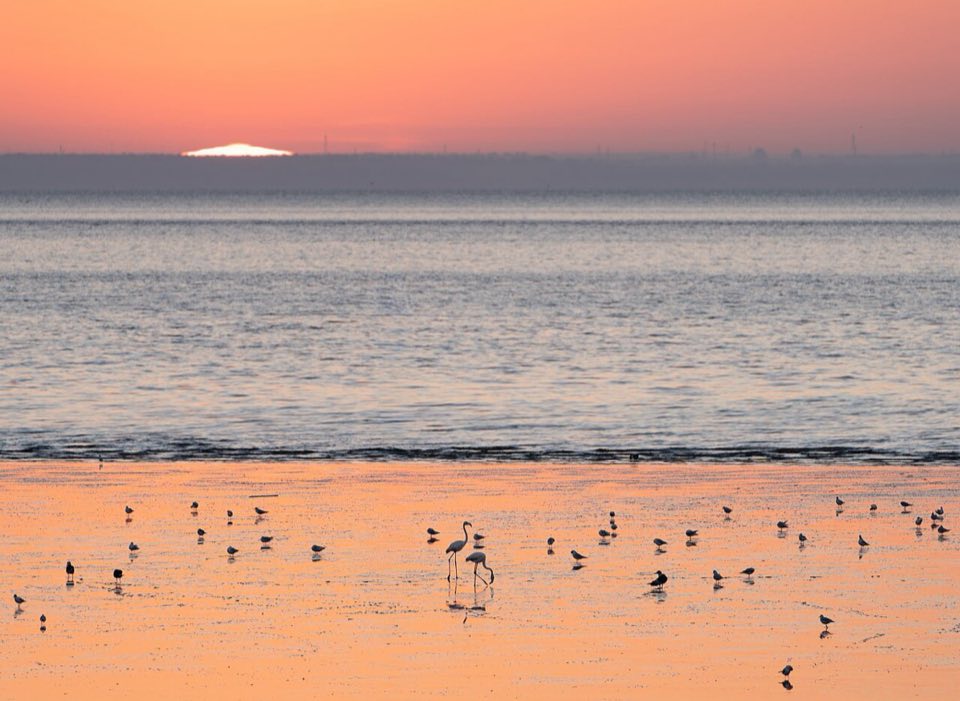
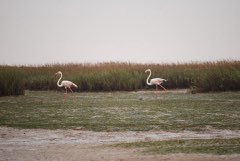
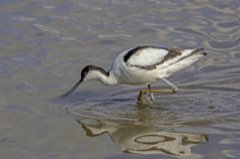
Greater flamingo (Phoenicopterus roseus), pied avocet, black-tailed godwit, dunlin, grey plover, teal, wigeon, spoonbill, glossy ibis, marsh harrier. Estuário do Tejo, Vila Franca de Xira / Alcochete, Lisbon, Portugal.
Best time: 15 Nov – 28 Feb (November to February). Where: EVOA – Espaço de Visitação e Observação de Aves (Lezíria Grande), Ponta da Erva, Salinas do Samouco, Alcochete (Portugal). Time of day: Waders are pushed up on to the salinas and lagoons in the 2 h either side of high tide.
- You can go on your own
- Free
- Telescope recommended
- Sound 3/5
Open it in the interactive calendarSunrise and sunset listening times for the day you pick, and the map.
When is the best time?
Peak: 15 Nov – 28 Feb. Mid November to end of February; the godwit build-up on the rice stubble and the flamingo flocks are largest in January–February
Active from 1 Oct to 31 Mar (October to March) in a typical year.
Time of day
Waders are pushed up on to the salinas and lagoons in the 2 h either side of high tide; flamingos feed all day on the shallows and fly between the estuary and the rice fields at dawn and dusk. EVOA's hides open 10:00–17:00 (Nov–Feb; 09:00–17:30 Mar–Oct, closed Mondays).
- Dawn flights: 30 min before sunrise → 90 min after sunrise
- EVOA hides: 10:00 → 17:00
- Evening roost flights: 90 min before sunset → sunset
Depends on the tide: best around high tide. Check local tide tables.
What will you hear?
Flamingo flocks honking as they move between the estuary and the Lezíria rice fields, avocet and godwit roosts chattering on the salinas at high tide, teal whistling on the lagoons and the great winter silence of the open marsh broken by hunters' shots outside the reserve.
Binoculars?
Telescope recommended. The estuary is wide and the roosts distant from the dykes; EVOA's hides bring avocets and flamingos within binocular range, elsewhere a scope.
Where to go
- EVOA – Espaço de Visitação e Observação de Aves (Lezíria Grande) — Visitor centre and hides on Companhia das Lezírias land; entry via the Cardal gate, Vila Franca de Xira; fee, closed Mondays. Map
- Ponta da Erva — End of the public dirt road down the Lezíria; free, open at all hours, the classic winter wader and harrier drive — the road is rough. Map
- Salinas do Samouco, Alcochete — Old salt pans on the south shore with footpaths and flamingo and avocet roosts; free. Map
- Alcochete waterfront — Town promenade on the mudflats; flamingos and waders at close range on a rising tide. Map
How to go on your own, and what it costs
Ponta da Erva: from Vila Franca de Xira cross to the Lezíria and follow the dirt road south for about 20 km to the end — public, free, no gates. Salinas do Samouco: signed from Alcochete, free walking trails. EVOA: book online (evoa.pt), entry through the Cardal gate; transfer from Vila Franca de Xira station on request. Alcochete: the waterfront promenade on foot.
Cost: Ponta da Erva, Samouco and Alcochete free; EVOA entry and guided visits paid (check current prices at evoa.pt).
Who runs access
- EVOA – Tagus Estuary Birdwatching and Conservation Area (Companhia das Lezírias) (park authority) — Visitor centre, hides, guided visits; 'Lezíria Tour: in search of flamingos' 3 h Tue–Sun
Field-recording notes
Lisbon's airport and the A10/Vasco da Gama bridges are audible on still days across the estuary, and the Lezíria is working farmland with tractors and pumps. The Ponta da Erva road is public and open at night — the quietest option for a dawn rig on the dyke. Hunting is allowed on parts of the Lezíria outside the reserve in winter (shots at dawn are normal). Flamingos do not breed here; no playback needed or wanted. Salt-pan footpaths are free but close to the village; the mud is soft and the tide comes in fast.
Sources
- EVOA – opening hours and contacts
- EVOA – Lezíria Tour: in search of flamingos
- KBA factsheet – Tejo estuary (100,000+ wintering waterbirds)
Similar spectacles
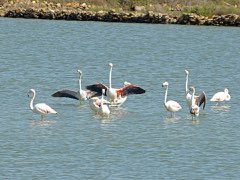 Flamingo colonies & courtshipGoose-like gabbling of big flocks, and the synchronised 'marching' displays with a constant honking.
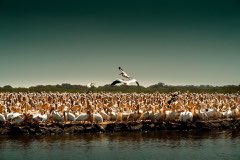 Diawling floodplain — pelicans, flamingos and Palearctic ducksPelican flotillas grunting, garganey and pintail flocks whirring off the flooded basins, flamingo chorus, and the low background of the Diama dam and the Senegal river.
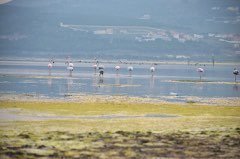 Marchica lagoon, the Moulouya mouth and the Mohammed V reservoir — the Mediterranean east in winterFlamingo honking across a lagoon the size of a city, wigeon whistling, shelduck, the bugling of common cranes at the Mohammed V shore at dusk, and in spring a booming bittern and avocet colony clamour at the Moulouya mouth. Nador's traffic and the fishermen's outboards are the backdrop; the Moulouya is quieter.
 Saharan lagoons — Khnifiss and Dakhla Bay in winterFlamingo honking in the hundreds across a lagoon with no other sound at all, wader flocks lifting, the rattle of royal and Caspian terns, and on Dakhla Bay the blow of a humpback dolphin close to shore.
 Sidi Moussa–Oualidia lagoons — 10,000 waders, flamingos and the salt-pan roostsAvocet and stilt yelping over the salt pans, godwit and dunlin flocks whirring up at each marsh harrier, flamingo honking from the lagoon, slender-billed gulls — against surf on the dune bar and the oyster farms' outboards.
 Somone lagoon — pelicans, flamingos and the sandbank roost on the Petite CôtePelican wings and bill-clapping as the flock lands, tern and gull roost clamour, flamingo honks, spoonbills and herons in the mangrove, osprey whistles — small-scale next to the Saloum but the closest proper lagoon roost to the Saly resorts, and quiet at dawn before the jet-skis.
More: all spectacles in Portugal · flamingos · winter geese, swans and ducks · January · February · November · December