
Lauwersmeer in winter: barnacle geese, wigeon and sea eagles
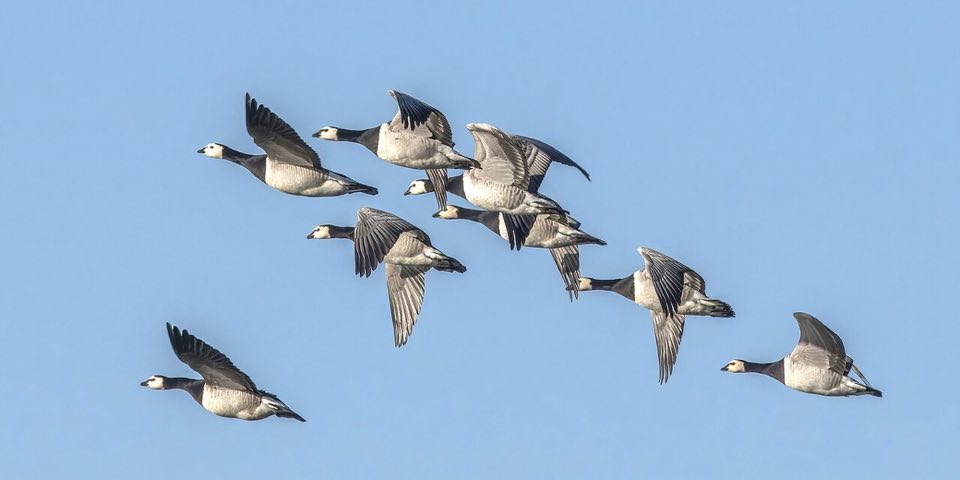
Barnacle goose (Novaya Zemlya population, c. 15,000 at the Bantpolder in November; roosts of up to ~88,000 counted in the park), greylag and white-fronted geese, wigeon (nocturnal calling), white-tailed eagle, peregrine. Nationaal Park Lauwersmeer, Friesland/Groningen, Netherlands.
Best time: 1 Nov – 31 Jan (November to January). Where: Bantpolder (Anjum), viewed from the parallel road and Wadden dike, Vogelkijkhut Jaap Deensgat, Ezumakeeg (north part, viewing mound) (Netherlands). Time of day: Geese fly from the lake roosts to the polders in the 40 minutes around sunrise and return in the half hour after sunset.
- You can go on your own
- Free
- Telescope recommended
- Sound 4/5
Open it in the interactive calendarSunrise and sunset listening times for the day you pick, and the map.
When is the best time?
Peak: 1 Nov – 31 Jan. November for the Bantpolder barnacle peak; November–January for the full winter scene; big departures in early March
Active from 1 Oct to 15 Mar (October to March) in a typical year.
Time of day
Geese fly from the lake roosts to the polders in the 40 minutes around sunrise and return in the half hour after sunset; wigeon call all night from the water. The Jaap Deensgat hide faces south, so morning or evening light.
- Dawn goose flight: 40 min before sunrise → 40 min after sunrise
- Evening return to roost: 20 min before sunset → 30 min after last light
- Wigeon calling after dark: last light → 23:00
What will you hear?
Barnacle geese yapping in a continuous chorus on the polder and the roar of 10,000 lifting at once; greylags and white-fronts honking in the dawn flight; wigeon whistling in the dark; eagles' yelps; the Dark Sky Park is genuinely quiet at night.
Binoculars?
Telescope recommended. The Bantpolder is viewed from the parallel road and the Wadden dike, geese 200 m+ away; Jaap Deensgat hide looks over a wide water — scope recommended, binoculars minimum.
Where to go
- Bantpolder (Anjum), viewed from the parallel road and Wadden dike — Polder itself not open (bird rest); up to ~15,000 barnacle geese in November. Map
- Vogelkijkhut Jaap Deensgat — Hide 5 min from the car park on the Lauwersoog–Anjum service road; spoonbills Aug–Sept, geese and peregrine in winter; wheelchair accessible. Map
- Ezumakeeg (north part, viewing mound) — Geese, ducks, white-tailed eagles; viewable from the road and mound. Map
How to go on your own, and what it costs
Base at Lauwersoog or Anjum. Bantpolder: drive the parallel road along the Wadden dike west of Lauwersoog and watch from the road/dike (do not enter the polder). Jaap Deensgat: signed off the Lauwersoog–Anjum road, park by the hide path. Ezumakeeg: road south of Ezumazijl, viewing mound. All free, open at all hours; Activiteitencentrum Lauwersnest for maps.
Cost: Free.
Field-recording notes
Lauwersmeer is a certified Dark Sky Park: the reserve roads and dikes are open at night and the only noise is the fishing port at Lauwersoog and occasional traffic on the N361. The goose roosts are on the open water — a mic on the Jaap Deensgat path at dusk gets the drop-in; the Bantpolder morning lift-off is better recorded from the dike. Wigeon calling after dark is a bonus most people never hear. Hunting: parts of the surrounding polders outside the park see goose shooting — ask locally. Cold, wind, and no shelter but the hide.
Sources
- Nationaal Park Lauwersmeer – birds by area (Bantpolder, Jaap Deensgat, Ezumakeeg)
- Nationaal Park Lauwersmeer – Beleef de trekvogels (arrival months, wigeon at night)
- Birdingplaces – Jaap Deensgat
- Nationaal Park Lauwersmeer – Dark Sky Park
Similar spectacles
 Wadden Sea autumn: geese, waders and whooper swans in the marshBarnacle goose yapping in flocks of tens of thousands over the Ballum marsh, brent geese growling on the flats, golden plover flocks whistling, whooper swan families bugling on the polders at night, curlew; the tide.
 Pink-footed goose dawn flightsTens of thousands of geese lifting off the mudflats at first light in a wall of 'wink-wink' calls, wave after wave overhead.
 Whooper swans & barnacle geeseBugling whoopers and yapping barnacle flocks like a huge crowd; the whole Svalbard barnacle population is on one estuary.
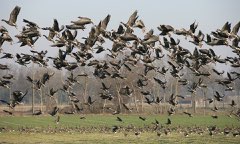 Arctic geese on the Lower RhineWhite-fronted geese's high yelping in skeins of thousands, bean geese's deeper 'kayak', the roar of a roost lifting off the Rhine at first light, whooper swans on the Bislicher Altrhein; barges and the A57 underneath.
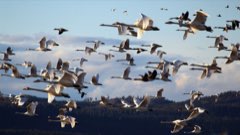 Lower Oder Valley: whooper swans, geese and the flooded poldersWhooper swan bugling in chorus over the polder ice-edge, geese lifting at dawn by the thousand, smew and goldeneye wing-whistle, eagle yelps; in October, cranes; in May, corncrakes at night.
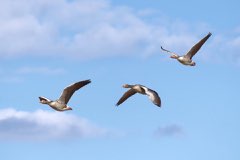 Goose autumn at the Lange Lacke, SeewinkelGeese in skeins of thousands crossing the pastures at dusk, greylag chatter on the soda lake roost through the night, cranes trumpeting overhead in late October, eagle calls; the salt-steppe silence in between.
More: all spectacles in the Netherlands · wild geese · eagles · winter geese, swans and ducks · January · November · December