
Greenland white-fronted geese on the Wexford Slobs
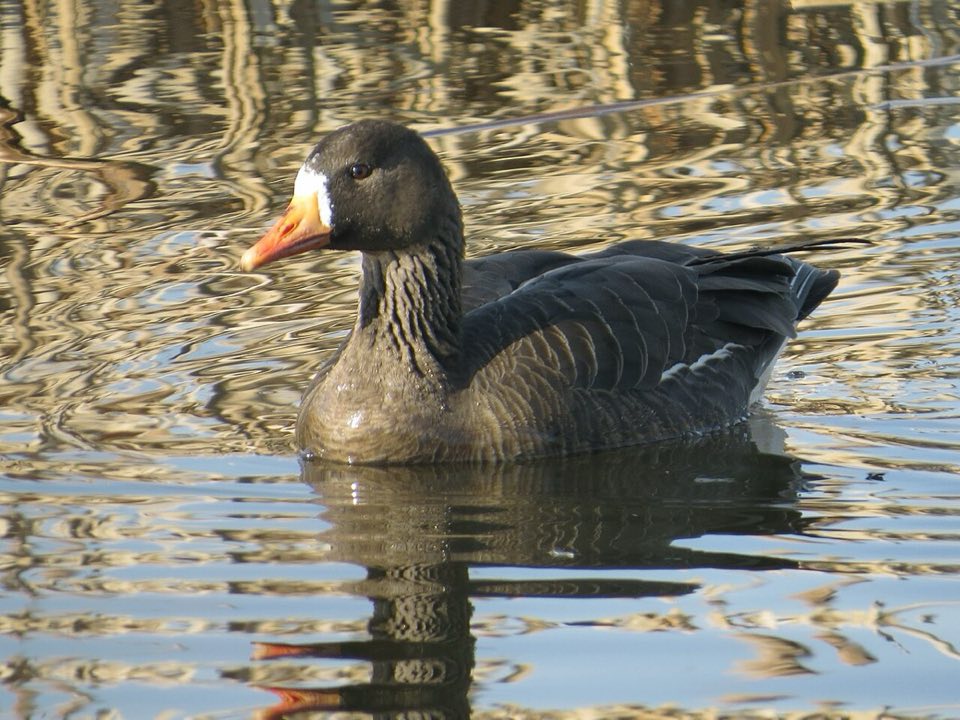
Greenland white-fronted goose (Anser albifrons flavirostris) — at least two-thirds of Ireland's ~7,800 wintering birds, up to 10,000 in past years; light-bellied brent, whooper and Bewick's swans, pink-footed geese, wigeon. North Slob, Wexford Harbour, Co. Wexford, Ireland.
Best time: 1 Nov – 15 Mar (November to March). Where: Wexford Wildfowl Reserve (NPWS), North Slob, Ardcavan, Pat Walsh Hide – on the sea wall 1 km before the centre, Raven Point nature reserve (south-east tip of the Slob) (Ireland). Time of day: The geese roost on the sandbanks of Wexford Harbour and fly onto the Slob fields in the half hour after sunrise, then back out at sunset — the two flights are the sound events.
- You can go on your own
- Free
- Telescope recommended
- Sound 4/5
Open it in the interactive calendarSunrise and sunset listening times for the day you pick, and the map.
When is the best time?
Peak: 1 Nov – 15 Mar. November to mid March; geese arrive from Greenland via Iceland in October and leave in April
Active from 5 Oct to 15 Apr (October to April) in a typical year.
Time of day
The geese roost on the sandbanks of Wexford Harbour and fly onto the Slob fields in the half hour after sunrise, then back out at sunset — the two flights are the sound events. The reserve is open 09:00–17:00, so the dawn flight is watched from the public sea wall and roads outside it.
- Dawn flight in from the harbour: 20 min before sunrise → 1 h after sunrise
- Evening flight to roost: 30 min before sunset → 20 min after last light
- Reserve hours (hides and tower): 09:00 → 17:00
What will you hear?
The high, laughing, musical yelps of thousands of white-fronts lifting off the harbour and dropping onto the fields; brent geese's low growl along the shore; whooper swan bugling; wigeon whistling; curlews over the sand flats.
Binoculars?
Telescope recommended. Flocks graze 100–600 m from the hides and the 8 m tower; scope recommended. The flight calls at dawn need nothing.
Where to go
- Wexford Wildfowl Reserve (NPWS), North Slob, Ardcavan — Free; open 09:00–17:00 daily; visitor centre, 8 m tower, Pump House and Robert Jobson hides by the car park. Map
- Pat Walsh Hide – on the sea wall 1 km before the centre — Overlooks the main channel and the harbour roost; reached along the sea wall. Map
- Raven Point nature reserve (south-east tip of the Slob) — Pine dunes and the harbour mouth; brent geese and divers; free, car park at the north end. Map
How to go on your own, and what it costs
From Wexford town take the R741 towards Castlebridge, then the signed turn to the North Slob/Ardcavan; park at the reserve car park (free). Reserve, hides, tower and centre open 09:00–17:00 every day, free entry. For the dawn and dusk flights walk the sea wall (public) before or after hours.
Cost: Free (NPWS reserve and centre; 2026).
Field-recording notes
Dawn and dusk flights happen outside reserve hours — use the public sea wall and the Ardcavan roads. Wexford town, the N11 and Rosslare traffic sit to the south-west; the harbour side is quieter and the roost calls carry over water at night. Fields on the Slob are farmed and private: stay on the wall, roads and reserve paths. Wildfowling takes place on parts of Wexford Harbour in season; the reserve itself is a sanctuary. Wind off the Irish Sea is the constant — the hides are the shelter, the wall is not.
Sources
- Wexford Wildfowl Reserve – homepage (hours, hides, free entry)
- Wexford Wildfowl Reserve – Greenland white-fronted goose (numbers, roost flights)
Similar spectacles
 Wadden Sea autumn: geese, waders and whooper swans in the marshBarnacle goose yapping in flocks of tens of thousands over the Ballum marsh, brent geese growling on the flats, golden plover flocks whistling, whooper swan families bugling on the polders at night, curlew; the tide.
 Pink-footed goose dawn flightsTens of thousands of geese lifting off the mudflats at first light in a wall of 'wink-wink' calls, wave after wave overhead.
 Whooper swans & barnacle geeseBugling whoopers and yapping barnacle flocks like a huge crowd; the whole Svalbard barnacle population is on one estuary.
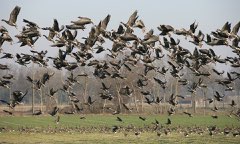 Arctic geese on the Lower RhineWhite-fronted geese's high yelping in skeins of thousands, bean geese's deeper 'kayak', the roar of a roost lifting off the Rhine at first light, whooper swans on the Bislicher Altrhein; barges and the A57 underneath.
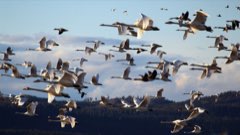 Lower Oder Valley: whooper swans, geese and the flooded poldersWhooper swan bugling in chorus over the polder ice-edge, geese lifting at dawn by the thousand, smew and goldeneye wing-whistle, eagle yelps; in October, cranes; in May, corncrakes at night.
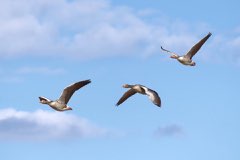 Goose autumn at the Lange Lacke, SeewinkelGeese in skeins of thousands crossing the pastures at dusk, greylag chatter on the soda lake roost through the night, cranes trumpeting overhead in late October, eagle calls; the salt-steppe silence in between.
More: all spectacles in Ireland · wild geese · winter geese, swans and ducks · Ireland in January · February · March · Ireland in November · Ireland in December